
Indigenous peoples, autonomies and collective rights
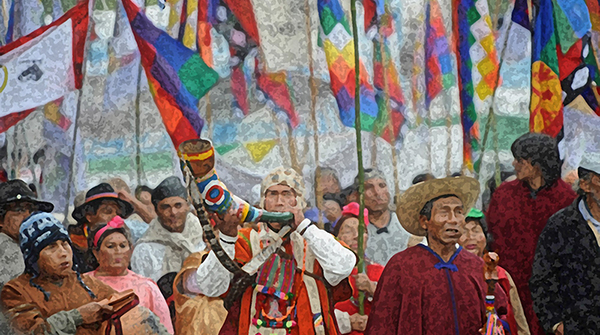
The issue of indigenous emergencies and the struggle for autonomy has occupied a central place in the international debate on the collective rights of peoples in the last 30 years.
Within that framework, since 2013 the
The CLACSO Working Group on Indigenous Peoples, Autonomies and Collective Rights raises the need to reflect on the importance of indigenous struggles for the fulfillment of their rights, renewing and updating the questions to continue analyzing the role of indigenous autonomy processes and their influence on broader social and political processes.
Based on the diversity of existing experiences, we find that, through collective organization and daily resistance, indigenous autonomous processes represent a strategy to confront the dominant ideologies and hegemonic schemes that legitimize, naturalize and perpetuate the relations of domination, subalternization and exclusion of native peoples.
The idea of autonomy has been renewed and assumed not only as discourse, but as a daily practice and construction of political and territorial action and organization, of sociocultural identity, of critical sense, of potential societal alternative or as a modality of socio-territorial resistance and defense of collective rights as peoples.
Thus, as a critical and plural academic collective, we aspire to accompany the autonomous processes of indigenous peoples, as well as the requirements for the exercise of their collective rights in diverse national contexts and from a Latin American perspective.
coordinate
Fatima Teresa Monastery Market
Planning and Management Center
School of Economics
Major University of San Simón
Bolivia
[email protected]
Luciana García Guerreiro
Gino Germani Research Institute
Faculty of Social Sciences
University of Buenos Aires
Argentina
[email protected]
Waldo Lao Fuentes Sánchez
Post-Graduation Program in the Integration of Latin America
University of São Paulo
Brazil
[email protected]
Social networks: Facebook
Work Plan 2023-2025

