
Why are more men than women dying from Covid-19? Because of sexism.
Georgina Alfonso González[1]
The question leads to that single answer, even when one attempts to supplement it with biological criteria. Patriarchal culture is deeply ingrained in human behavior, reproduced socially without significant questioning of its oppressive, exclusionary, and predatory essence. Were it not for the conviction we feminists hold that society can be conceived, acted upon, and desired differently, one could say that sexism is embedded in human DNA.
Women's daily lives are not exempt from patriarchal domination, which is naturalized and entrenched in values, norms, and symbols assigned to men and women, and reproduced by all socializing institutions (families, schools, religion, the media, and state political structures). The patriarchal culture that prioritizes profit maximization over life devalues, enslaves, and exploits women, whose care work has been the foundation of humanity.
The care of life is essentially a concern of women. Although the humanist tradition of thought defends the care of life as a universal value, the cynical patriarchal economic rationality of profit maximization prevails, rendering care work invisible and morally demanding a traditional family model where women take on these responsibilities without economic recognition. Machismo attributes to women alone, "by their nature," the capacity for selflessness, sacrifice, and dedication to caring for others. As women, being essentially caregivers, we are obligated to care for ourselves.
The analysis of care work, in any society, is linked, above all, to economic objectives; therefore, the search for solutions to care problems does not escape the contradiction of moving between the market economy and the economy of the sustainability of human and natural life.
The Covid-19 pandemic is an expression of the global crisis that threatens human and natural life, stemming from a patriarchal model of economic, historical, and cultural development from which even the most progressive social movements have failed to escape. Care work is caught between life and the market, between staying home and going out to shop.
The separation of the spheres that make human life sustainable and the false understanding of the autonomy of the economic and social worlds, in which marked differences are established for women and men, prevents measures and solutions from being coherent and comprehensive, which would facilitate reducing the planning, organization and execution times of the most effective solutions to prevent the spread of the pandemic.
Care work unfolds through a wide range of subjective actions, mediated by gender, race, social class, traditions, and other factors. Care has diverse meanings related to affections, emotions, and feelings, all absolutely essential for human development. However, these subjective experiences are obscured as care work is undervalued and commodified. If we aspire to live differently, we must be willing to learn to care for ourselves in new ways.
Cuban women have integrated into public and social life while continuing to shoulder care work. This translates into an increased workload and constant movement between different spheres of relationships. It's a perpetual back-and-forth between paid and unpaid work. This has compelled us to establish support networks for care among ourselves (mothers-daughters-grandmothers; daughters-in-law-mothers-in-law-sisters-in-law; friends-neighbors; school mothers; others…) participating in various spaces while simultaneously carrying out the care activities necessary for daily life to continue.
Care work falls under the umbrella of "women's time," encompassing invisible tasks that nonetheless demand wisdom, patience, love, and energy. This time also includes far more intangible aspects, represented by subjectivity and materialized in lived experience.
The burden of domestic and care work, violence, harassment, underestimation, and disrespect towards women are exacerbated by the pandemic. All of this necessitates a comprehensive and differentiated approach to community-based prevention of infection. Some initiatives that promote integrated work within communities include:
- The incorporation of a person from the community with authority and information on the health status of the neighborhood into the investigations of the health personnel.
- Strengthening research with community psychologists and sociologists, monitoring the physical and mental state of individuals and the community.
- Differentiated monitoring of families and different age groups.
- The provision of community telephones for emotional support.
- The use of neighborhood associations (community projects, popular educators, youth groups, grandparents' circles, religious groups, lodges, designers) to occupy the time of children and the elderly in their homes.
- Promoting community self-esteem initiatives (e.g., decorating balconies, doorways, windows; creating thank you messages, encouraging those who are sick; using neighborhood phones for support, creating neighborhood Facebook groups, WhatsApp groups).
- Attention to cases of violence and conflicts that appear or worsen (especially against women and girls).
- The incorporation of private workers into non-profit support in food services, transportation and access to medicines for people in need.
- The creative and collective use of ICTs.
The multiple linkages that exist between the State, family, community and companies to face Covid-19 reaffirm the importance of strengthening work networks for the sustainability of life, the construction of solidarity economies, collective processes of self-organization and initiatives capable of increasing the autonomy of collective life in the face of selfishness.
Asking ourselves how caregiving responsibilities are distributed within families or communities is closely linked to the question of how we live. During the pandemic, family and social care networks become the material and spiritual foundation of life, fostering creative initiatives to address issues and problems of human coexistence. Cuban women are promoting numerous initiatives to foster a culture of care in the face of COVID-19 and to increase collective co-responsibility for life by differentiating and coordinating the potential of various stakeholders.
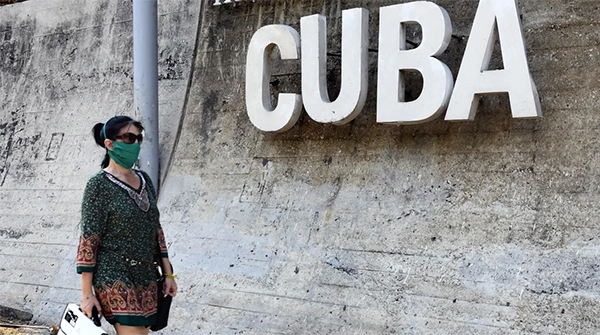
Cuban women are at the highest risk and have been the most infected to date, and we are also more numerous in domestic, healthcare, community, scientific, and social work. The fact that we represent a smaller number of deaths does not mean we should stop taking care of ourselves and demanding our right to be cared for.
[1] Researcher and Director of the Institute of Philosophy of Cuba, a member center of CLACSO.
If you would like to receive more information about CLACSO's training programs:
[widget id=”custom_html-57″]
to our email lists.

