
Peru: Cultural Policies and Citizenship
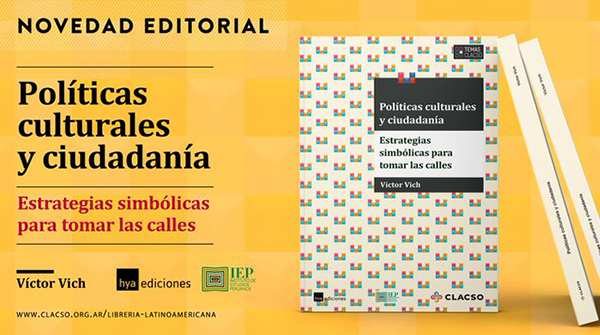
This book discusses a series of initiatives that, using diverse symbolic and artistic strategies, have intervened in the streets of Lima, Peru, to highlight various power relations. These initiatives—as Víctor Vich suggests—contribute to shaping a different kind of public action and can be appropriated by cultural policies to transform perceptions of the existing order and build a new society.
“I have written this book to affirm that cultural policies are crucial for intervening in this context and changing society,” states Víctor Vich in the prologue to “Cultural Policies and Citizenship: Symbolic Strategies for Taking to the Streets.” He continues: “In the following pages, I will discuss a series of initiatives that, using different symbolic strategies, have intervened in the streets of Lima, Peru, in order to make visible various power relations embedded in social life. I have been interested in understanding them as examples that cultural policies could appropriate and creatively replicate in other contexts. These are interventions that appropriate public space in order to rethink the conditions under which we inhabit the world—that is, to draw attention to local situations where power, the shortcomings, and the limitations of the prevailing social system are concentrated. In these pages, I have set out to reflect on 'their historical inscription, their narrative density, and their ethical dimensions' (Escobar, 2004, p. 149).”
Activism is urgent and necessary, but it is essential to clearly define the field of action in which we are called to act (Groys, 2016, p. 39). In the ongoing search for new languages of protest, I maintain that these interventions stage—with commitment, but also with anguish—the loss of the sense of 'the common good' and the profound unease with current living conditions. Through their daring formal languages, their symbolic density, and the disruption that the staging itself aims to cause, these interventions propose 'the primacy of the social bond over the individualistic and competitive impulses that prevail in contemporary society' and, therefore, attempt to envision alternative ways of inhabiting the world (Jameson, 2013, p. 470). All of these interventions aimed to address those practices that impede the construction of a just and democratic society.
If you would like to receive more information about CLACSO's training programs:
[widget id=”custom_html-57″]
to our email lists.

