
Critical thinking and transformative action
From October 27 to 29, the Latin American Council of Social Sciences and the CLACSO Member Centers in Chile convened in Santiago, Chile, the meeting “ Critical Thinking and Transformative Action ” which consists of two activities.
– Forum “ Democracy in Latin America and the Caribbean in the face of the polycrisis – Rights, territories and participation in the face of new forms of violence ” on October 27 and 28.
– International colloquium “Fidel 100 years. Critical thought and current political affairs” on Thursday, October 29.
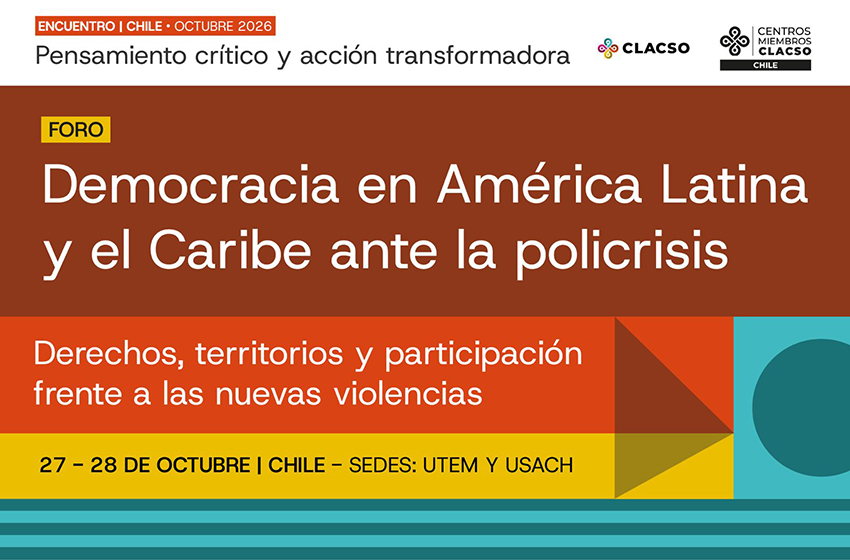
-The Forum “Democracy in Latin America and the Caribbean in the face of the polycrisis – Rights, territories and participation in the face of new forms of violence” , organized by CLACSO together with other academic and regional cooperation networks on October 27 and 28 in Santiago, Chile, proposes a space for dialogue between academia, civil society, local governments, international organizations and social movements to discuss the main contemporary challenges to democracy and build shared agendas from a territorial, human rights and social justice perspective.
Democracy in Latin America and the Caribbean faces profound transformations within a context of multiple crises. The democratic, social, economic, climate, ecological, migration, and care crises do not unfold in isolation: they overlap, reinforce each other, and produce unequal impacts depending on territory, gender, ethnic and racial background, age, and socioeconomic status. This scenario manifests itself in the shrinking of civic space, institutional weakening, an increase in various forms of violence, the erosion of rights, and the deepening of territorial inequalities.
At the same time, experiences of social organization, local governments, citizen movements, and academic actors are emerging, articulating innovative responses to strengthen participation, protect human rights, sustain life, and build more democratic and resilient societies marked by the closure of civic space, institutional weakening, the increase in various forms of violence, and growing territorial inequalities. Likewise, experiences of social organization, local governments, citizen movements, and academic actors have emerged that generate innovative responses to strengthen participation, the protection of human rights, and the construction of more democratic societies.
-Tuesday, October 27st
Auditorium of the Metropolitan Technological University (UTEM) – Dr. René Zorrilla, Dieciocho 390, Santiago, Chile
Inaugural Panel: Democracy and narratives in times of polycrisis: recovering the common in fragmented societies
- Pablo VommaroExecutive Director of CLACSO
- Pilar Barba BuscagliaVice-Rector for Outreach and Communications, University of Chile
- Marisol Durán SantisRector, Metropolitan Technological University
- Claudio Herrera JarpaVice-Rector for Community Engagement, University of Santiago, Chile
- Laura Moreno RodríguezAmbassador of Mexico to Chile
Moderator: Gloria Amézquita , Academic Director of CLACSO
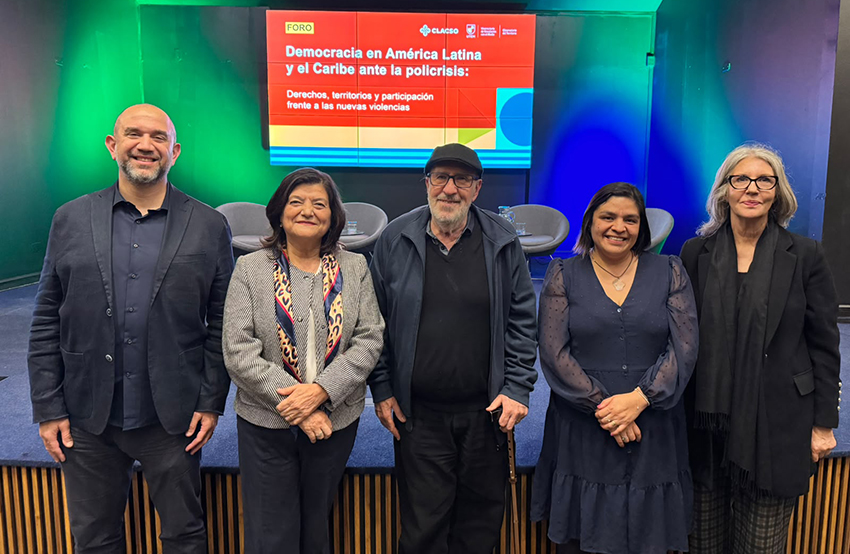
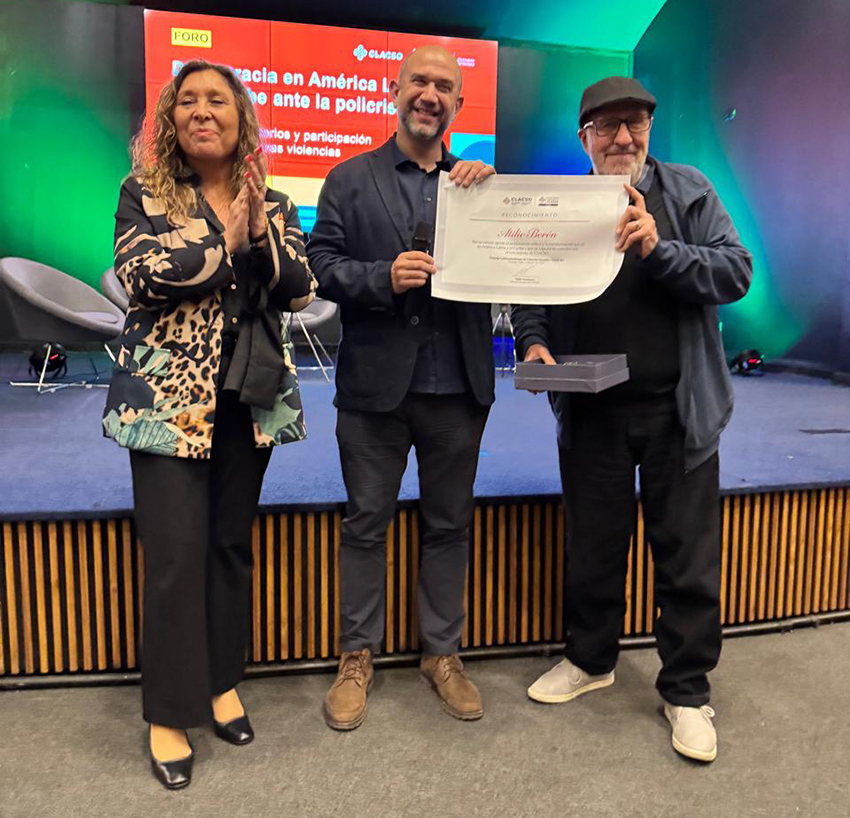
Recognition of Atilio Borón
- Words of recognition: Oscar Vega, Metropolitan Technological University (UTEM)
- Award ceremony: Pablo Vommaro, Executive Director of CLACSO, and Gina AlfonsoMember of the Steering Committee of CLACSO, Cuba
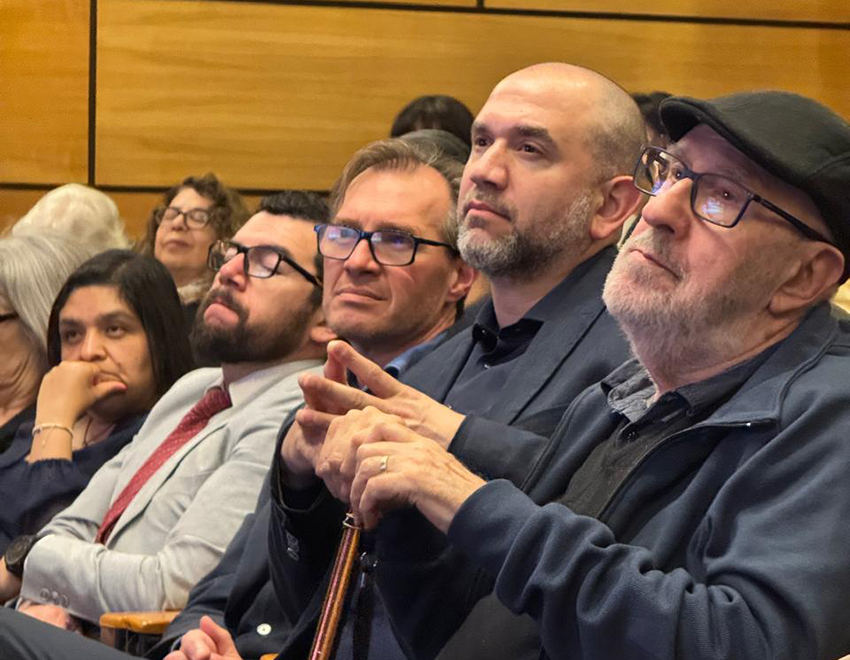
-Wednesday, October 28st
CEPEC Auditorium – University of Santiago de Chile (USACH), Cruz del Sur 77, Las Condes district, Santiago, Chile
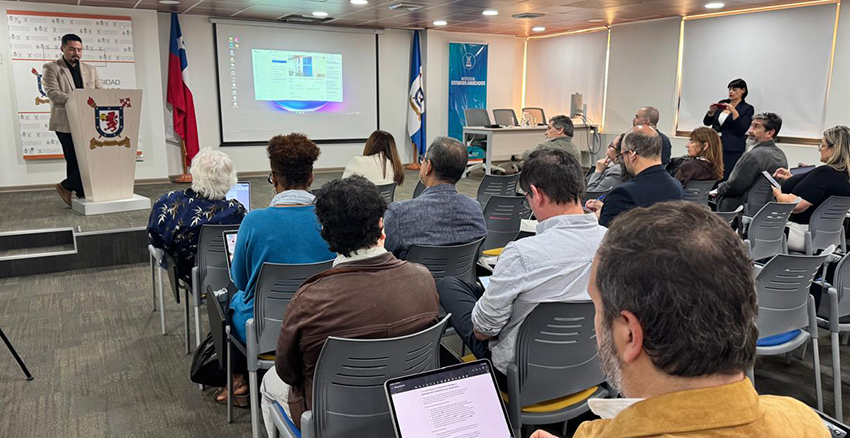
Opening words
Fernando Ortiz Director of the Directorate of Scientific and Technological Research, USACH
Pablo VommaroExecutive Director of CLACSO
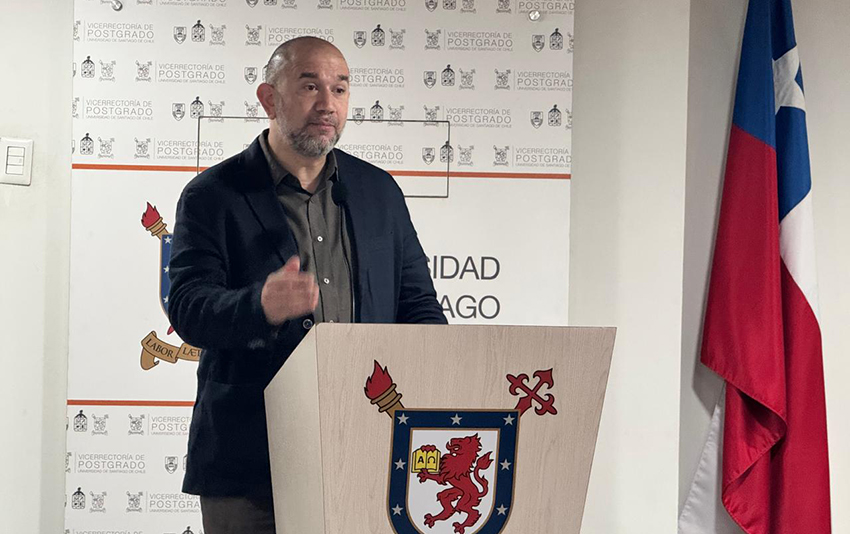
Dialogue 1. Participation and civic space in times of polycrisis
To discuss democracy, it is essential to discuss participation. This dialogue addressed how the overlapping of political, social, economic, environmental, and security crises accelerates the closure of civic spaces, restricts collective action, and affects different sectors in distinct ways. It also identified opportunities, alliances, and strategies to broaden citizen participation and strengthen democratic capacity to respond.
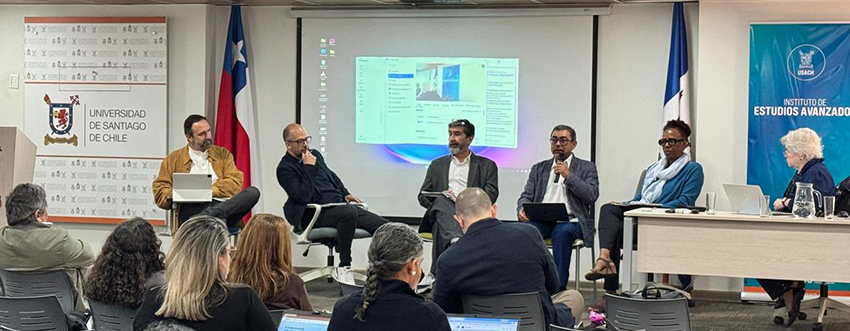
They spoke:
Roberto Oswaldo López SalazarMember of the Steering Committee of CLACSO, El Salvador
Tania Pierre-CharlesMember of the Steering Committee of CLACSO, Haiti
Miguel UrrutiaAlternate member of the Steering Committee of CLACSO, Chile
Matias BoschCLACSO Working Group on Imperialism, Neocolonialism and Intervention Policies. Dominican Republic/Chile
Pablo ColladaObservatory of Cognitive Rights, Chile
Moderated by: Silvia Borelli , member of the CLACSO Steering Committee of Brazil
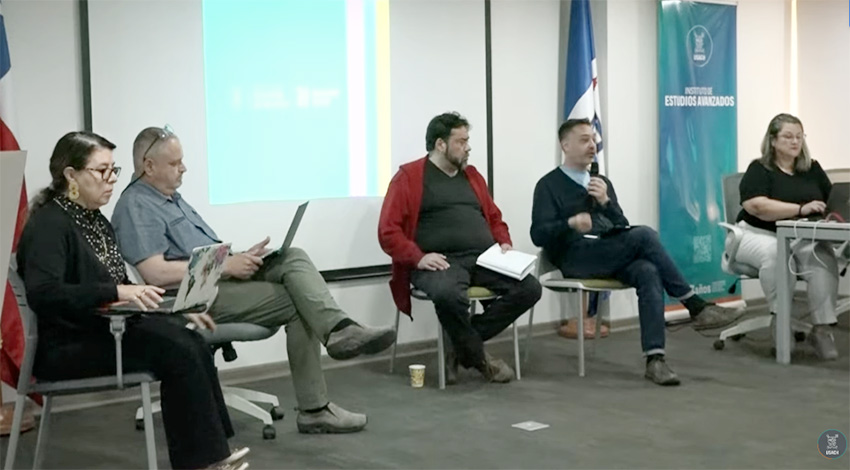
Dialogue 2. Without rights there is no democracy
The aim was to analyze the human rights situation in the region, with particular attention to Chile, and to examine how the multiple crises can be used to justify setbacks, fragment public policies, and weaken the universal guarantee of rights. The dialogue addressed the dismantling of rights, their defense as public goods, and the ways in which structural violence conditions their exercise, especially among the most affected populations and territories.
They spoke:
Juan GonzálezDepartment of Education, University of Chile
Nayeli QuevedoMember of the Steering Committee of CLACSO, Mexico
Francis CorreaInstitute of Religious Sciences and Philosophy, Chile
Fernando CarmonaAlejandro Lipshutz Institute of Sciences (ICAL)
Moderated by: Libia González , member of the Steering Committee of CLACSO, Puerto Rico
-Dialogue 3. Democracies and territorial disputes in the context of polycrisis
This analysis examines how the climate crisis, extractivism, land concentration, and mining concessions converge with historical inequalities and conflicts over the control of common resources. From a perspective situated in the Southern Cone, it incorporates the experiences of local governments, civil society, and Indigenous peoples, as well as their proposals for territorial, environmental, and democratic justice.
Dialogue among:
Jorge LealMember of the Steering Committee of CLACSO, Uruguay
Nelson CarrozaUniversity of Playa Ancha, Chile
Ricardo RivasCEDER University of Los Lagos, Chile
Paulina Cárdenas OvalleUTEM Territory Observatory, Chile
Nanette LiberonaUniversity of Tarapacá, Chile
Moderator: Gissela Dávila , Member of the Steering Committee of CLACSO, Ecuador
-15:30 PM to 17:00 PM. Dialogue 4. Democracy in the face of multiple forms of violence
This dialogue will analyze how political, social, territorial, economic, digital, and gender-based violence intertwine and intensify in a context of multiple crises. It will examine their manifestations at the national and local levels, institutional and community responses, and the role of academia and civil society in knowledge production, prevention, and the construction of democratic alternatives.
Dialogue among:
Nicholas TrottaNational Deputy of the Argentine Republic
Wilson GomezMember of the Steering Committee of CLACSO, Colombia
Alexis CortésDepartment of Sociology, Alberto Hurtado University, Chile
Manuela BadillaVioDemos, Chile
Moderator: Francisca Mancilla , VioDemos, Chile
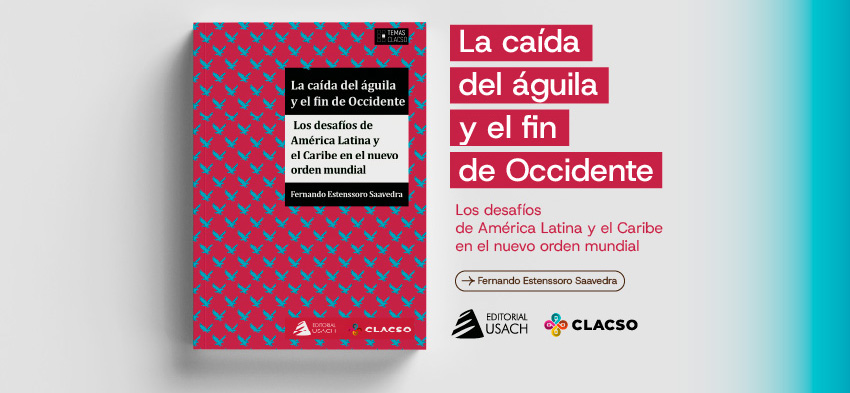
-17:10 PM to 18:00 PM. Book presentation: The Fall of the Eagle and the End of the West by Fernando Estenssoro
Jorge Montealegre IrrutaEditorial Director, USACH, Chile
Fernanda PampínDirector of Publications, CLACSO, Argentina
Fernando EstenssoroUSACH, Chile
Atilio BoronFormer Executive Secretary of CLACSO, Argentina
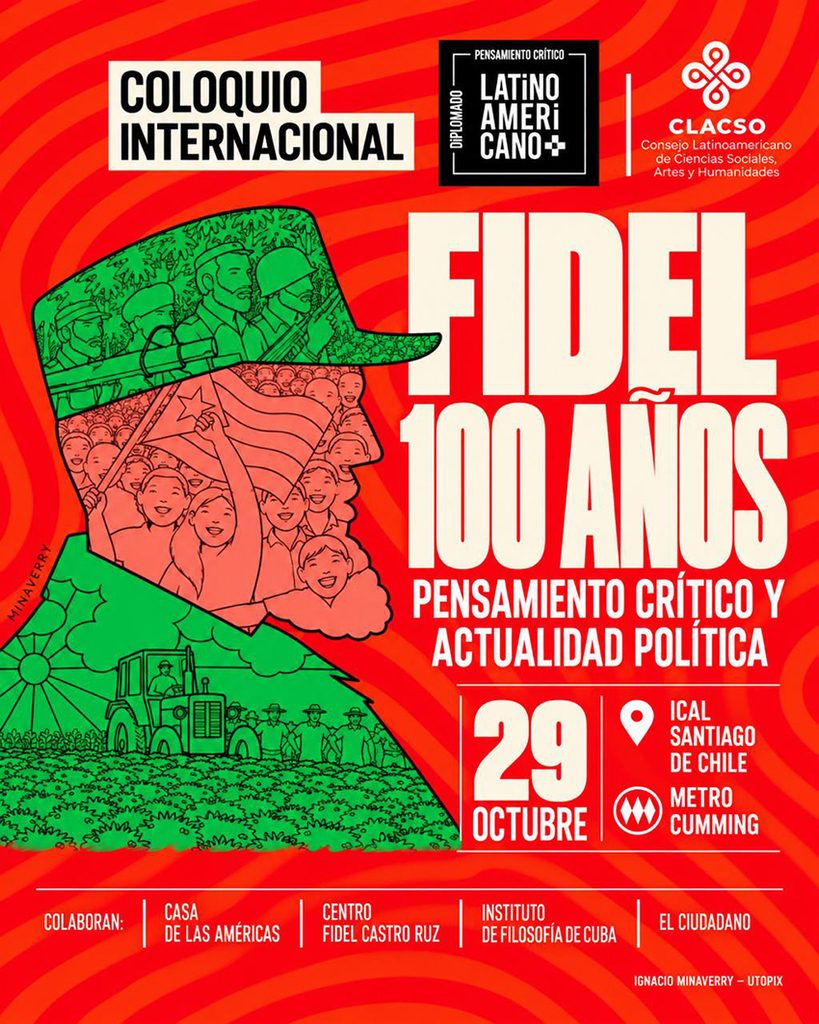
-Thursday, October 29 – International Colloquium “Fidel 100 Years: Critical Thought and Current Political Issues”
Organized by CLACSO and the Diploma in Latin American Critical Thought of the University of Chile.
Collaborators: Casa de las Américas, Institute of Philosophy of Cuba, El Ciudadano (Chile) and the Fidel Castro Ruz Center (Cuba).
International guests:
Georgina Alonso (Cuba) – Alina Duarte (Mexico) – Atilio Borón (Argentina) – Tania Pierre-Charles (Haiti) – Fernando Rojas (Cuba) – Ximena González (Venezuela) – Gloria Amézquita (Dominican Republic) – Pablo Vommaro (Argentina) – Pablo Henrique (Brazil) – Hernán Ouviña (Argentina) – Pilar Lizárraga (Bolivia) – Gissela Dávila (Ecuador)
From 10:00 am. – ICAL – Alejandro Lipschutz Institute of Sciences
Cumming 350, Santiago de Chile.
Thursday, October 29, 2026, from 09:30 a.m. to 12:30 p.m. – Institutional Framework in Human Rights: Global Challenges for its Strengthening
Comparative analysis of the cases of El Salvador and Chile
Faculty of Law Room of the University of Chile

