
Pandemic and everyday life: critical areas to analyze and address
Gisela Spasiuk and Zulma Cabrera[1]
Given the sudden event that changed our daily lives, it is necessary to raise some reflections from a gender and rights perspective that contribute to thinking about its implications, differential impacts, as well as the specific actions suggested to address this situation.
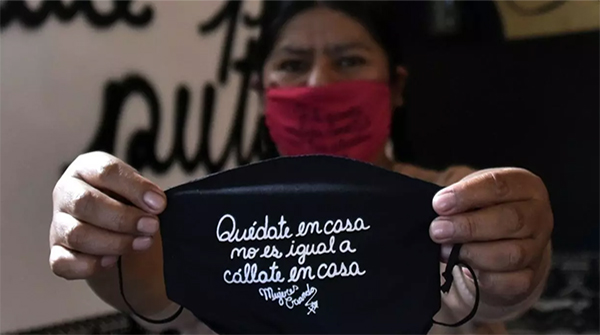
Social isolation and preventative measures, as the cornerstone of the response to the COVID-19 pandemic, have different effects on the lives of women, men, and other gender identities. One of these effects is the centrality and form that caregiving tasks take; women are the ones who predominantly perform these tasks in the home. With schools closed, educational activities must be carried out at home, in addition to caring for those considered at risk and performing domestic chores during confinement, among other activities related to community service; thus exacerbating the unequal distribution of labor, which is particularly acute in this situation.[2]It is precisely in this difficult quarantine situation that we must take advantage of the opportunity to decisively take up the fight against patriarchy: sharing tasks equitably as an expression not only of rights but also as a necessity to reconcile public and private life.
- The pandemic is affecting the means of sustaining daily life, as job suspensions lead to layoffs. In this regard—and as a recent ILO report points out—women also constitute the largest percentage of part-time and informal workers worldwide (precarious and low-paying); a situation that undoubtedly places us, as women and diverse identities, in a vulnerable and disadvantaged position.
.
Additionally, considering the evolution of other crises, women and gender identities find it more difficult and time-consuming to reintegrate into the labor market. In other words, crises affect women's economic autonomy and their participation in different spheres, thus repositioning them in new, vulnerable situations. This situation is further complicated by other factors, including social position and race, among others, which intensify the conditions of vulnerability and also amplify the impact on the lives of women and gender identities.
- Many women in various countries around the world will see their access to contraception and prenatal and postnatal care reduced due to the saturation of health services.
- The contexts of domestic violence and increased tension in the home, due to confinement, have led to a rise in the risk of gender-based violence against women. In this regard, and among its most brutal manifestations, the number of femicides in the country has been increasing since this situation began.
- If we examine the issue of caregiving within the healthcare system, we can observe that the burden of caregiving (both in the private sector and in public healthcare services) falls disproportionately on women compared to men, a reality that is also invisible in most analyses of the crisis. This situation is explained by its connection to the performance of feminized professions such as nursing, which, along with other contributing factors, exacerbates conditions of vulnerability.
- The situation of domestic workers (an extension of domestic work performed in other people's homes) warrants a special chapter. Especially in Argentina, they are not included in the Executive Branch's decree as essential activities, and therefore, they must comply with the isolation measures. These women face pressure and are forced to work, or they are not paid their wages (the national government has taken economic assistance measures that help, but do not resolve the discrimination and violation of their rights to which they are exposed, in a context where the abuse is perpetrated by other women).
The fear of the unknown, the uncertainty and the aforementioned confinement conditions, among other aspects, result in a different and disproportionate pressure on women, with a high risk to their mental health conditions.
It is a fact that situations of vulnerability against women, girls, and other non-binary individuals constitute an overwhelming and unjust social reality that must be addressed in policy measures for this time of crisis. The pursuit of equality is not a policy "only for times of prosperity"; the inclusion of a gender perspective becomes even more crucial, especially in crisis contexts. It is essential that these issues be addressed from multiple perspectives that allow us to identify a turning point and find the path and strategies to overcome them.
As societies, we react to this new situation haphazardly and as events unfold. We will not be the same once the health emergency is over. It is to be expected that this crisis will change (and is already changing to a great extent) the way we organize ourselves in the future to make decisions and care for one another. Ultimately, we require a shift in the current tolerable limits of collective social interaction. Crises are, without a doubt, opportune moments to stop taking our daily lives for granted, because, to paraphrase Susy Shock, we no longer want to be this kind of humanity. We no longer want to be this humanity that needs to confront death up close to finally take responsibility for making other lives possible. This, and much more, is what the struggle for social democratization is about.
[1] UNAM. Flora Tristán Center for Studies and Promotion of Gender Equality, Argentina. CLACSO Working Group on Anti-Patriarchal Struggles, Families, Genders, Diversities and Citizenship.
[2] Studies such as the INE Time Use Survey.5 in Spain give an account of the situation under normal conditions.
If you would like to receive more information about CLACSO's training programs:
[widget id=”custom_html-57″]
to our email lists.

