
Another science is possible (and necessary)
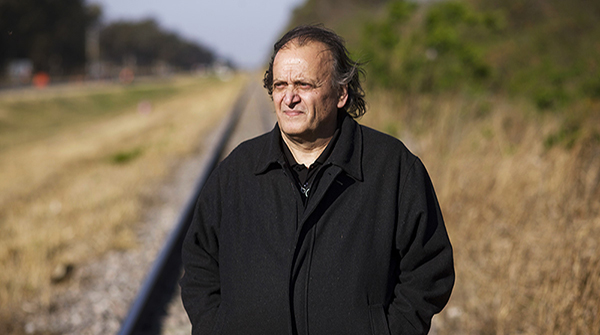
Argentina: Festival to support the blockade of the construction of the Monsanto plant in the town of Malvinas Argentinas in the province of Cordoba

Andrés Carrasco at the Primavera Sin Monsanto festival – 2013. Photo: Sub Coop
Philosophy of Biology Group (UBA-Conicet) 1
Argentina's scientific model is inextricably linked to extractivism and persists across different administrations. What kind of science do we have? What kind of science would be desirable? This is a discussion that goes far beyond funding and the pandemic.
1. The global environmental problem and the role of science
The various wildfires in Argentina have been making headlines for weeks, just as the global climate change protests dominated the national news agenda a few months ago. Shortly before that, the brutal fires started by landowners in Brazil on "Día do Fogo" (Day of Fire) had also garnered significant attention. Greta Thunberg, the 16-year-old Swedish activist, became a social media sensation. Bruno Rodríguez, a 19-year-old Argentinian, was one of the 500 young people who traveled to the United States to participate in the summit on the current environmental crisis. In his speech at the UN, Bruno emphasized the need to understand local environmental conflicts within the context of a long history of domination, and he addressed the role of science in these conflicts. He specifically mentioned "the clarity of the scientific community" in warning about the severity of the current crisis and the need for political leaders to act accordingly, based on the scientific evidence.
Some sectors are demanding greater participation from the scientific community while still suffering the severe cuts imposed by Mauricio Macri's government on state research institutions, with a serious deterioration in the working conditions of researchers and professors at all levels—a situation that is only worsening as 2020 unfolds in a very challenging year. Science, then, emerges as one of the pillars to cling to. However, given the reduced resources allocated to local research, it is imperative to consider what sciences and technologies we have, and what we want, with a view to a different relationship with nature and a better quality of life.
2. Local environmental problems
The advance of deforestation in Chaco, the fires in Córdoba and the Delta, and the cyanide spills in Jáchal (San Juan) elicit less local empathy than pronouncements made at the UN and the fires in the Amazon by current leaders and the mainstream media. These cases, both because of their territorial scope and the economic structures to which they belong, constitute some of Argentina's most significant environmental problems: agribusiness, based primarily on the production of genetically modified soy (accompanied by subsidiary crops such as wheat, rice, and corn), and open-pit mining. Both are examples of extractivism, which, in short, is the predatory exploitation of common natural resources. And in both, the role of certain scientific and technological disciplines has been fundamental.
In 1996, Felipe Solá, then Secretary of Agriculture, Livestock, and Fisheries, authorized the introduction of a new variety of soybean to Argentina. This was the now-famous Roundup Ready (RR) soybean: a genetically modified variety, created using transgenesis to make it resistant to the herbicide glyphosate, marketed under the Roundup Ready brand by Monsanto (now merged with the German company Bayer). Thus began the agricultural model that would turn soybeans into an expanding monoculture, which would later be characterized as a "green desert."
Between 1996 and 2011, the area planted with Roundup Ready soybeans increased from just under five million hectares to almost nineteen million; and production rose from 10,9 million tons to 40,1 million. The rest is history. Since then, our country has experienced unprecedented social and environmental consequences: contamination of land, water, and air; concentration of land ownership and use; forced migration to urban peripheries; increased social inequality; erosion of food sovereignty; and ailing bodies and territories. An endless list of silenced, normalized, and ever-growing effects. So entrenched and widespread is this model that it is none other than Felipe Solá himself who is promoting a new agreement with China to install mega-pig farms that will be part of the same scheme, and its associated consequences. And in all of this, science has played a key role, both through action and inaction.
3. More than one science
Globally, science has emerged as a key player in denouncing global warming and highlighting some of the associated environmental problems. However, science, as a human activity, is embedded in political, economic, and social contexts, and therefore its connection to environmental issues is far from merely critical: some scientists are complicit in the problem, while others remain indifferent. In fact, the policy implemented by the Ministry of Science, Technology, and Productive Innovation, headed by Lino Barañao, prioritized collaboration with sectors associated with biotechnology, nanotechnology, and information and communication technologies. These areas were designated as priority sectors, strongly linked to production and consumption patterns. More science applied to this type of production was supposed to improve our quality of life and that of our territories. But none of that happened.
Indeed, the productive transformations of recent decades, particularly those related to agribusiness and mining, have required scientific and technological knowledge to expand, some of it produced with state funds. In this context, the discourses and validations that currently promote both the soybean model and mining extractivism insist on highlighting the contributions of “excellence” that Argentine science can offer by developing efficient products, applied research for the “productive sector,” and so on. One of the most promoted examples is the drought-resistant soybean variety developed by researchers from the National Scientific and Technical Research Council (CONICET) in partnership with the company Bioceres. Apparently, if we remove transnational corporations like Bayer/Monsanto from the equation and incorporate “sustainable” corporate responsibility policies, there would be no cause for alarm to abandon a production model that is jeopardizing our vital ecosystems.
In parallel, while the introduction of innovations like genetically modified organisms (GMOs) was not preceded by research into their potential health and environmental risks, the demands of communities are met with the same request: that they provide scientific evidence demonstrating the damage caused by the extractive model, thus reversing the burden of proof. According to this logic, it would have to be proven that glyphosate (or the corresponding agrochemical) is poisonous in order for its use to cease, when by law (and common sense) it is necessary to demonstrate that it is harmless before it is used, not after the disaster has occurred. This is a remarkable maneuver in a country that lacks official data on agrochemical use, and where—for example—the Ministry of Health has never had a say in the approval of GMOs (or in any other business dealings within this extractive model).
There are multiple ways in which corporate actions, with state complicity, are validated by dominant sectors of Argentine science. Undoubtedly, these validations stem from a series of exclusions of critical perspectives. If we closely examine how science and technology are produced in universities and national research institutions, we find that certain branches of knowledge and specific approaches within them are prioritized, while critical voices are minimized. These exclusions also extend to those outside the "community" of experts, whose demands and knowledge remain far removed from decision-making. Furthermore, these exclusions occur within the framework of certain alliances. Thus, representatives of local power brokers wield concrete influence in the organization of research plans and agendas. In the agricultural sector, one need only analyze the composition of the boards of directors of the main research institutions to see this (as in the National Institute of Agricultural Technology – INTA – dominated by businesspeople from the sector).
4. A desirable science
Power and science have always been intertwined. But just as power can be built and contested, the kind of science we need is a fundamental pillar that must be constructed. This pursuit requires fighting for greater funding, but it is by no means limited to that aspect. Argentina's science policies have largely excluded environmental issues, leaving them as a problem for communities and certain organizations. Nor has the quality of life in these territories and for those who inhabit them been prioritized. Therefore, it is essential to have a science that acknowledges its relationship with other sectors of our society, that addresses the needs of communities, and that does not impose its own diagnostic and intervention methods.
The question of what science we should seek also includes the list of problems of our bodies and our territories, the link with the modes of production and consumption, the dialogue with the voices of those people and organizations in the territory, and their search for living well.
1-Paula Blois, Leonardo Bloise, Tomás Busan, Daniela del Castillo, Ailín Delvitto, Federico di Pasquo, Guillermo Folguera, Christian Francese, Cecilia Gárgano, Lilén Gómez, Gabriela Klier, Nicolás Lavagnino, Ana Belén Martínez, Agustín Martínez, Carolina Ocampo, Nahuel Pallitto, Alejandra Petino Zappala, Constanza Rendón, Esteban Rodríguez, Ana Liza Tropea, Martina Villahoz. Published in Agencia Tierra Viva, a media outlet created to report on what happens in the countryside from the perspective of those who produce food: farming families, small producers, indigenous communities, and cooperatives.
If you would like to receive more information about CLACSO's training programs:
[widget id=”custom_html-57″]
to our email lists.

