
New publication: “Academic and scientific evaluation in transition: Institutional configurations, evaluative practices and guidelines for change in Argentina”
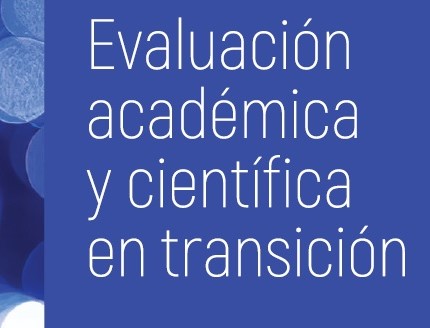
From FOLEC-CLACSO, we recommend reading the book Academic and Scientific Evaluation in Transition: Institutional Configurations, Evaluative Practices, and Guidelines for Change in Argentina , coordinated by Laura Rovelli and Pablo Vommaro , with a foreword by Karina Batthyány . This publication is part of the FOLEC-CLACSO “Evaluation in Context” Collection and was published in May 2025. It is a collaborative work that brings together the contributions of 45 researchers from 12 universities and public science and technology institutions in Argentina, all members of the CLACSO network.
The book offers a critical analysis of academic evaluation models in the country, examining their institutional evolution, their effects on teaching and research, and proposing guidelines for fairer, more inclusive, and contextualized systems. Throughout its chapters, structured in three sections (institutional evaluation, evaluation of university teaching, and fair and responsible evaluation of research), it presents diagnoses, case studies, and proposals for improving evaluation practices in the country's higher education institutions.
This publication is the result of a research project developed by the Latin American Forum for Scientific Evaluation (FOLEC) within the framework of the Research Program on Contemporary Argentine Society (PISAC) , in its CTI 2022 call of the National Plan of Science, Technology and Innovation 2030 of the former Ministry of Science, Technology and Innovation.
It is worth noting that the research and editing process for this book took place in an extremely critical context for the public scientific and university system in Argentina. During 2024, the budget allocated to science, technology, and innovation (STI) was reduced by 30,5%, reaching its lowest level since 1972. Investment in higher education fell by 33,1% in real terms, and research subsidies decreased by 61,2%. Furthermore, more than 2600 jobs were lost, the Ministry of Science was downgraded to a Secretariat, and key agencies such as the National Agency for Scientific and Technological Promotion (ANPCyT) were paralyzed.
These budgetary and institutional setbacks were compounded by serious attacks on academic freedom and epistemic pluralism, including attempts to censor research in gender and diversity studies, and smear campaigns against CONICET and the social sciences and humanities. In this context, characterized by what various actors have described as “ scientificide ,” this book stands as a testament to resistance and a key tool for sustaining and projecting an evaluation agenda focused on institutional strengthening, equity, and the social relevance of knowledge.
As part of FOLEC's commitment to transforming evaluation models, one of the book's main contributions is a set of practical , open-access tools designed to improve evaluation processes in the academic and scientific fields. These tools are a practical application of the Declaration of Principles, "A New Academic and Scientific Evaluation for Socially Relevant Science in Latin America and the Caribbean ." The links are shared below:
- Recommendations for a fair evaluation of initial careers.
- Tool for the evaluation of university teaching.
- Recommendations to mitigate gender inequalities in academic assessment.
- Guide for the design and evaluation of a narrative CV.
We invite the academic and scientific community to read this essential work for rethinking evaluation in terms of epistemic justice, equity, and social relevance. The complete book can be downloaded in open access at the following link: Academic and Scientific Evaluation in Transition – CLACSO

