
New spiral of the blockade against Cuba
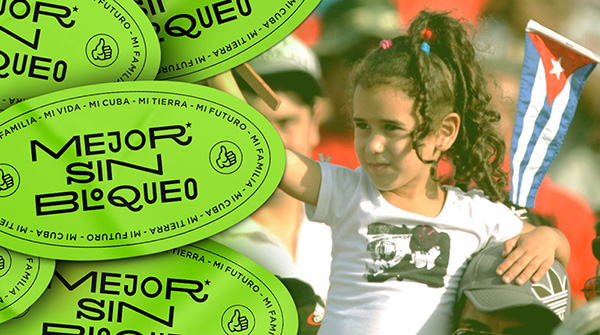

The Cuban government rejected the “No Stolen Trademarks Recognized” law, recently signed by US President Joe Biden, calling it a “unilateral coercive” measure that strengthens Washington’s embargo against the island’s economy. A statement from the Cuban Foreign Ministry described the law as “a license to plunder” to “consolidate the theft of legitimately registered Cuban trademarks” in the US Patent and Trademark Office.
In the next article, Magda Arias Rivera, PhD in Economic Sciences and full professor at the Center for Management Techniques Studies (CETED) of the University of Havana, explains the nationalization process carried out by the Cuban government in 1961 and the economic, commercial and financial blockade of the United States against Cuba to contextualize the Stolen Trademarks Act signed by President Biden in December 2024.
US “Stolen Trademark Act”, a new spiral in the blockade against Cuba
Magda Arias Rivera
Introduction
Since 1959, the United States has waged a war in times of apparent peace to subjugate the Cuban people. Its foundations lie in the Monroe Doctrine, the "ripe fruit" policy, and the designs of the country's founding fathers since its inception in the 18th century. Over time, this has manifested itself within the framework of disputes between colonial powers, the Cold War in the 20th century, and continues to this day. This belligerence manifests itself in the political, economic, social, legal, media, and cultural spheres, including armed actions and terrorism. Diplomatic and legal instruments are widely used, as well as covert acts of economic sabotage, smear campaigns, and any means that obstructs Cuba's natural and legitimate paths to independent economic and social development.
In a “skillful and discreet” manner (State Department, 1960), they have used all means at their disposal, including the most sophisticated technologies. They rely on legal and institutional mechanisms to create punishable offenses; they refine the methods for discovering violations of the law, identifying alleged offenders, sanctioning them, and stigmatizing them. Through the fear instilled by sanctions, they manipulate the actions, perceptions, and preferences of individuals to their advantage and operate against their victims.
The Stolen Trademarks Act is then contextualized.[1] (Public Law 118 – 137 – No Stolen Trademarks Honored in America Act of 2023), approved by Congress and signed by President Biden on December 1, 2024. It also explains the process of nationalizing foreign companies carried out by the Cuban government in 1961 and summarizes the unilateral coercive measures that underpin the economic, commercial, and financial blockade against Cuba, as well as the implications of applying this new law.
Legal framework that codifies the blocking
To understand the blockade, one must know the history and details of the conflict between the United States and Cuba. A brief chronological review of the most significant moments in its evolution points to the cancellation of the Cuban sugar quota destined for the U.S. market in June 1959, which marked the beginning of a new phase of the conflict. The then-ambassador in Havana, Philip Bonsal, warned his superiors of the consequences: “The possibility that the executive branch might eliminate the sugar quota as a form of retaliation and punishment related to Cuban domestic legislation would, in my opinion, be disastrous not only for our relations with Cuba but also for our relations with other Latin American countries. Indeed, we would permanently diminish the resources of the entire Cuban people and open a wound that would take a long time to heal. Regardless of the outcome of the legislation, it seems to me that the Government must defend the Cuban quota as long as Cuba is able to supply us” (Bonsal, 1959).
Because Cuba continued implementing nationalization laws, Bonsal pressured the Cuban government to consult him on its sovereign decisions, publicly objected to them, and demanded “prompt, adequate, and effective” compensation, insisting on preferential “considerate” treatment for the American owners. They never heeded Cuban explanations that the form of compensation was due to the country's chaotic economic and financial situation, its inability to obtain development loans, and its unfavorable balance of payments with the United States. They never responded to the request to recover the funds embezzled from the Cuban public treasury and deposited in foreign banks, primarily American ones. The tone of the political exchanges and the diplomatic notes addressed to the Cuban Foreign Ministry expressed an interventionist and threatening language that encapsulated all of Washington's animosity and official rejection of Cuba's sovereign acts (Garza, 1969).
While the United States government was publicly insisting that it was within its purview to intervene in Cuba's internal affairs and issuing ultimatums, an amendment was introduced to the Mutual Security Act of 1954, creating section 552, according to which no aid could be granted to a country that expropriated American property without satisfactory compensation.
Therefore, the cancellation of the sugar quota was followed by the prohibition of imports of goods of Cuban origin in February 1962, through the application of Section 620a of the Foreign Aid Act approved by President John F. Kennedy in September 1961; The “Cuba Democracy Act” or “Torricelli Act” of 1992, which extended sanctions to third countries where subsidiaries of U.S. companies are located and to ships that trade with Cuba; the “Cuban Freedom and Solidarity Act” or “Helms-Burton Act” of 1996, which codified all previous acts related to the blockade, extraterritorialized it, strengthened it, and intensified it; Section 211 of the Supplemental and Emergency Appropriations Act for Fiscal Year 1999, which prohibited U.S. courts from recognizing the rights of Cuban companies to trademarks related to nationalized properties and hindered the harmonious development of trademark, patent, and intellectual property rights relations, violating basic principles of the World Trade Organization (WTO); the Trade Sanctions Reform and Export Expansion Act of 2000; and the Presidential Memorandum on National Security on Strengthening the Policy of The United States' 2017 actions towards Cuba put a stop to the process of restoring diplomatic relations between the two countries, initiated in 2014 by President Obama (LeoGrande, 2022).
Each of these actions, through pressure and the harm inflicted by their implementation, aims to define the political, economic, social, and cultural system that the island should have, disregarding the Cuban people's right to independently determine their national project. The 2017 memorandum signed by Trump was a return to the more aggressive policies exhibited by his predecessors. With the approval of these measures, the government sought to project an image of supposed strength domestically, entrenching its ultraconservative supporters, while simultaneously projecting an image abroad that reinforced its willingness to act unilaterally, without considering the opinion of the international community (Morgenfeld, 2017).
The United States' blockade actions have focused on severely limiting the island's ability to maintain its vitality and inflicting the greatest possible suffering on the population to incite rebellion. Since then, measures have been implemented such as: the elimination of cruise ship travel and flights by US airlines to the island; the cancellation of US consular services in Cuba and their relocation to third countries; the obstruction of banking transactions; the initial limitation and subsequent cessation of bank transfers by citizens (private individuals); and the eventual closure of the company's operations. Western UnionThe sanctions against Cuban companies; the persecution of oil companies, insurance companies, shipping companies, and even crews transporting fuel to the island (MINREX, 2021). These actions were reinforced by Cuba's inclusion on a State Department list of countries that allegedly sponsor international terrorism (Ramírez, 2017), which severely damages Cuba's relations with the international financial system. In this way, in addition to disrupting bilateral relations, the groundwork was laid for a more adverse scenario for remittances, travel, communication, and trade in both directions, not only between Cuba and the United States, but with any other country in the world.
It is no coincidence that the U.S. Government Accountability Office (USGAO, 2007) considers the embargo “one of the most comprehensive sets of sanctions imposed by the United States on any country, including other countries designated by the U.S. government as state sponsors of terrorism.” Similarly, the Office of the United Nations High Commissioner for Human Rights (OHCHR) identifies it as the most comprehensive, prolonged, arbitrary, and damaging embargo applied to date worldwide (OHCHR, 2024), and for 32 consecutive years, the United Nations General Assembly has called for its end through a majority vote of its members.
To survive, Cuba, without access to credit or even with access to funds, must resort to convoluted channels and intermediaries to obtain certain products, paying inflated prices to its suppliers and additional costs for insurance, freight, commissions, and fees. This substantially and unnaturally increases the opportunity and transaction costs that must be borne by a small, open economy with a high level of obsolescence and very limited access to inputs, technologies, and new developments.
The blockade violates the foundations and ethical and legal principles of international law, the national laws of the United States and other countries that suffer its extraterritorial effects, and demonstrates the contempt of the political class in Washington for the independence, sovereignty, and self-determination of Cubans, who have suffered the violation of their human rights for several generations.
Political decisions regarding Cuba and the actions that implement them become increasingly sophisticated each year and cause serious harm; they employ coercion, manipulation of public opinion, and the shaping of human behavior. The aim is to instill fear and discipline through constant threats to what is most valued by human beings, influencing them to refrain from acts that violate the norms the United States wishes to impose, or to resist the blockade, for fear of the punishment they might receive.
It must be considered that the US sanctions imposed by President Donald Trump were essentially maintained by his successor, Joseph Biden. The parallel reality constructed on the basis of fear leads the US Congress, the President of that country, and their supporters to believe it is possible to overcome the resilience and the firmness of the Cuban government and people.
The Stolen Trademark Law
On Sunday, December 1, 2024, nearing the end of his term after his party lost the national elections, President Biden signed the Stolen Trademarks Act. This is another action to facilitate lawsuits in U.S. courts for anyone who considers themselves affected by what they call “trademark theft,” and it also subjects the validation power of the U.S. Patent and Trademark Office (PTO) to U.S. jurisdiction. In the White House press release (The White House, 2024), the president thanked all the Representatives and Senators who helped pass this legislation, which reaffirms the bipartisan agreement on policies toward Cuba.
The direct antecedent of this law is the Cuban Liberty and Democratic Solidarity (LIBERTAD) Act (1996), introduced by Republican Senator Jesse Helms and Democratic Representative James Burton in March 1996. This text integrates into a single legal body all previous political, legal, and legislative decisions against Cuba and rules out the possibility of modifying and eventually eliminating presidential jurisdiction to confine it to Congress.
That 1996 law demonstrated the growing influence of anti-Cuban political action committees in the United States Congress and the financial resources that some companies can mobilize to strengthen international sanctions against the island, impede or hinder its commercial relations with companies and banks from third countries, discourage the entry of foreign capital into the Cuban economy and curb the opening and internationalization of its economy, as well as the participation of private capital and the formation of joint ventures and foreign direct investment in Cuba.
The Cuban Freedom and Solidarity Act (GovTrack, 1996) establishes an illicit, unilateral mechanism for recovering compensation for U.S. and Cuban-American owners whose properties were confiscated after the triumph of the Revolution. This is the same compensation that the Washington government prohibited its own citizens from receiving in 1960, and it represents an intrusion on the rights of Cuban nationals who later obtained U.S. citizenship.
It should be noted that by extending its jurisdiction to the rest of the world, the Helms-Burton Act compels third countries to restrict trade and credit relations with Cuba, urges the imposition of sanctions against nations that assist Cuba, prohibits the importation of Cuban products and the exportation of U.S. products, cancels trade relations between Cuba and companies that have their parent company or subsidiary in the United States, and imposes civil penalties on any person who violates any license, order, rule, or regulation issued pursuant to the provisions of said law.
It also prohibits any indirect financing of Cuba by U.S. nationals, foreigners with permanent residence in the United States, and U.S. entities. It even restricts Cuba's potential access to international financial institutions, violating the rules of the International Monetary Fund, the World Bank, the International Development Association, and the International Finance Corporation. Furthermore, it contravenes the Convention Establishing the Multilateral Investment Guarantee Agency and the Convention Establishing the Inter-American Development Bank, which prohibit restrictions, controls, or moratoria of any kind against their shares or property.
In addition, it establishes the framework for protecting the property rights of U.S. nationals. It does not consider legitimate the nationalizations carried out by the Cuban government, internationally recognized as acts of sovereign state law based on national interest, for which the U.S. need not be held accountable, as they were carried out within its borders.
Based on the foregoing, the legislation empowers the Attorney General to deny entry into U.S. territory to principal shareholders and corporate officers of companies, parent companies or subsidiaries, provided that the Secretary of State unilaterally determines that they “traffic” in confiscated property of a U.S. national; that they are a corporate officer, principal or shareholder with controlling ability of an entity “involved” in the alleged trafficking of confiscated property; or that they are the spouse, child or agent of a person declared inexcusable.
Its punitive force also lies in the establishment of penalties of up to 10 years in prison, fines for legal entities of up to one million US dollars and for natural persons of up to 250.000 dollars, in addition to civil penalties of up to 55.000 dollars, for noncompliance with the rule.
In May 2019, the president Trump activated Titles III Protection of Property Rights of U.S. Nationals and IV Exclusion of Certain Aliens of the Helms-Burton ActBiden did not reverse that decision. Both titles had been suspended since 1996 by an agreement between Washington and the European Union. Although a statute exists that protects EU operators from secondary US sanctions (Iriarte, 2020), its effectiveness is limited because it protects assets located within the Union, but not those located outside of it, and the right to receive compensation for damages resulting from extraterritorial US sanctions is, in practice, restricted (European Union, 2019). The same is true for similar laws adopted by countries such as Argentina, Canada, and Mexico.
While the Stolen Trademark Act has legal weaknesses and could generate controversy for violating international law and the international system for the protection of industrial property, its primary purpose is intimidation: to prevent potential competition from prestigious Cuban brands within the U.S. market and to continue hindering Cuba's economic development in order to fulfill the objectives of the embargo. Although it is sometimes reduced to a result of political manipulation by the Cuban-American lobby in Miami, it is an act that enjoys bipartisan political consensus throughout the United States, stemming from the historical perspective of those in power regarding the type of relationship to establish with Cuba and its people. Of course, its implementation will be complex and costly, and will constitute a legal and commercial challenge that could affect its operation and international expansion.
Evolution of the approval process
In May 2021, Senators Marco Rubio[2]Bob Menendez[3] Together with Representatives Debbie Wasserman Schultz and Darrell Issa, they introduced a bicameral, bipartisan bill called the Stolen Trademark Act, Similar to others presented to Congress since 2011, to strengthen the blockade and reverse what was achieved during the last period of Barack Obama's government.
The objective of this project is to prohibit U.S. courts from recognizing, enforcing, or otherwise validating trademark rights related to “businesses or property confiscated” by Cuba (Rubio, 2021), which they consider a “crime” of “theft”.
Based on the jurisprudential foundations provided by the investigations of (Santana, 1992), (Bullard, 2004) and (Cacciali, 2018) it is demonstrable an inadequate use of categories such as theft, registration and use of trademark, which show the interest in discrediting and delegitimizing, from the very name of the law, the nationalizations carried out in 1960 by Cuba.
An example of this can be seen in the statement by Congressman Issa, who, in presenting the case of Havana Club rum, accuses Cuba “of selling stolen products to the United States and the world,” and therefore, the passage of this law corrects “a historical error” regarding the “inherent value of intellectual property” (Wasserman-Schultz, 2021). However, the mere mention of Cuban rum brings to mind the Bacardi Group (Calvo-Ospina, 2000) and its role in formulating policies and laws against Cuba.
The law on stolen trademarks is contrary to the spirit of Resolution 1803 (UN, 2012), which recognizes the right of peoples and nations to permanent sovereignty over their wealth and natural resources in the interests of national development and the well-being of the people of the respective State. Therefore, the exploitation, development, and disposal of such resources, as well as the importation of foreign capital to carry them out, “should conform to the rules and conditions that those peoples and nations freely consider necessary or desirable to authorize, limit, or prohibit such activities.”
This resolution states that “nationalization, expropriation, or requisition must be based on reasons or grounds of public utility, security, or national interest, which are recognized as superior to mere private or individual interest, whether national or foreign. In these cases, the owner will be paid the corresponding compensation, in accordance with the rules in force in the State that adopts these measures in the exercise of its sovereignty and in conformity with international law. In any case where the question of compensation gives rise to a dispute, the national jurisdiction of the State that adopts these measures must be exhausted. However, by agreement between sovereign States and other interested parties, the dispute may be settled by arbitration or international judicial settlement” (Fernández, 1998).
Cuban Law 851 of July 6, 1960, empowered the President of the Republic and the Prime Minister to order the nationalization, through forced expropriation, of American properties in Cuba. Its content conformed to internationally accepted legal principles and the provisions of the 1940 National Constitution, which was in effect at the time. (Fernández, 1998) explains that Law 890 of October 13, 1960, nationalized sugar companies, distilleries, factories of all kinds, maritime companies, construction companies, railroads, retail businesses, etc. Regardless of the nationality of their owners, Law 891 declared banking a public function and nationalized the national banks. On October 14, 1960, the Urban Reform Law was enacted, guaranteeing tenants the right to enjoy, for a fair price, the homes they possessed as usufructuaries or purchasers, paying compensation to the former owners and mortgage holders, both domestic and foreign. This compensation included payment for the value of the affected properties and, subsequently, the right to a lifetime annuity or pension. On October 6, 1961, the Law for the Nationalization of Education was passed, declaring education public, establishing free tuition, and nationalizing private educational institutions.
The nationalization process undertaken included the recovery, through confiscation, of assets illicitly acquired by the tyrant Fulgencio Batista, his front men, torturers, mobsters, and criminals. These were legal and legitimate decisions, adopted by sovereign decree and for the benefit of the majority of the population.
Additionally, three joint resolutions issued between August and October of that same year nationalized 26 companies, three banks, and approximately 160 properties belonging to U.S. citizens (Capote, 2023). Furthermore, various companies and properties from other countries were nationalized, all of which completed the compensation processes agreed upon with the Cuban government during the 80s.
Within the framework of the international practice known as Global Compensation Agreements, Cuba arranged for the appointment of experts to appraise the assets to be amortized by the National Bank of Cuba through Republic Bonds over a period of 30 years. (Fernández, 1998) explains that this fund would be formed “with 25% of the foreign currency corresponding to the excess of sugar purchases that the U.S. would make each calendar year over three million long tons of Spanish sugar for its domestic consumption at a price no lower than 5.5 cents USD per pound. The bonds would be amortized over a period of no less than 30 years, in the manner and proportion determined by the President of the National Bank of Cuba.”
Although Washington claims to recognize the right to expropriation, it has since argued, questioned, and maintained that the expropriation carried out by Havana was discriminatory, disregarding the fact that the nationalization process included properties belonging to both Cubans and foreigners. It refused to accept the Cuban proposal or negotiate because it demanded immediate payment of compensation, solely on its own terms. It considered the nationalization an arbitrary action by Cuba, motivated by the United States government's decision to reduce the island's sugar quota; however, the nationalization was a lawful action consistent with international law, even though it affected its interests, and the payment method proposed by law was appropriate for Cuba's financial situation. Another complaint is that no avenue for judicial appeal was offered (Lopez-Civeira, 2015), when the issues could have been resolved bilaterally through negotiations.
Cuba's ability to pay compensation depended entirely on sugar exports. The treasury was depleted, as representatives of the ousted regime had siphoned over $300 billion to the United States in just a few days. Had it not been for their unwillingness to negotiate and their insistence on maintaining the embargo, the affected Americans would have been able to collect the corresponding compensation.
In 1972, the U.S. Foreign Claims Settlement Commission ruled on claims from 5,911 affected individuals (Ojeda, 2006) totaling approximately $1.8 billion. However, starting in the 1990s, it was decided to include Americans of Cuban origin, which modified the claims (Ritter, 1994).
Throughout these years, the Cuban government has maintained its willingness to discuss with the United States government, without reservations and on the basis of established law and mutual respect, the differences arising from the nationalizations. To this end, bilateral talks on mutual economic compensation were initiated in 2015 (Becquer, 2016), with sessions held in 2016 and 2017. In response to the U.S. claims, Cuba presented the Cuban People's Claim against the United States Government for human damages (Mendoza, Pérez-Gallardo, Iserne, & Pérez, 1999) and for material damages caused by the prolonged blockade (CubaMINREX, 2024). With Trump's rise to power, this process stalled and was not resumed under Biden.
Consequently, the appearance of the Law on Stolen Trademarks and others that preceded it, as well as the seizure of Cuban trademarks, constitute actions aimed at ensuring their hegemony.
More than six decades after the establishment of the blockade, the need remains to negotiate fair formulas for compensation for the assets expropriated from natural and legal persons who in 1960 were citizens or nationals of the U.S.
Richard Feinberg, a professor at the University of California, San Diego, and former White House official for Inter-American Affairs from 1993 to 1996, considers calling the process “theft” an oversimplification, because the Cuban government acknowledged compensation to the expropriated American owners (Lindsay & Montero, 2023), and suggests rethinking strategies beyond economic sanctions (Infobae, 2024). Under U.S. law, “theft” is a crime that consists of taking another person’s property without their consent using force or the threat of force. Under Latin American law, it is a crime against property, consisting of the fraudulent appropriation of another person’s property, using force against things or violence or intimidation against persons. Neither of these circumstances applies to the nationalizations in Cuba.
(Setty, 2023) explains that the prohibitions currently in force apply only to Cuban nationals, but the new law will modify the prohibition of trademark enforcement to any person or entity that attempts to enforce a registered trademark that it knows is linked to a business or asset nationalized by Cuba.
In November 2023, Representatives Darrell Issa, a Republican from California, and Debbie Wasserman Schultz, a Democrat from Florida, introduced the bill, which was supported by 17 other members of Congress, including Cuban-Americans María Elvira Salazar, Mario Díaz-Balart, and Carlos Giménez (Congress-U.S., Approval in Congress of the No Stolen Trademarks Act, 2023). The bill passed unanimously in both houses and was sent to President Biden in October 2024, culminating in his signature on December 1, 2024.
Effects of the approved law
Those who support the embargo and hope its effects will cause irreversible damage leading to the destruction of the Cuban socialist model celebrate the enactment of the law as a victory. At the same time, they perceive it as a setback for Cuba's aspirations to maintain control over some key brands in the United States, even though these brands cannot be sold there due to the embargo.
Therefore, the Stolen Trademarks Act becomes yet another unilateral coercive measure that underpins the United States' economic, commercial, and financial blockade against Cuba. Various actors participated in its creation, intervening in congressional political committees and financing legislators. They skillfully leveraged their ability to influence public opinion and forged the necessary consensus to move forward under the existing conditions, considering the ultimate cost-benefit. It is an active, aggressive, and biased measure against trademarks that have been in litigation for a long time. Its spirit reduces the scope of action of the PTO and other U.S. federal agencies, including its courts, to validate trademark rights linked to confiscated properties.
The law satisfies the interests of the ongoing legal battle promoted by the Bacardi company, which involves the Cuban companies CubaExport and Pernod Ricard of France, regarding the registration in the United States of the trademark "Havana Club" (Jahner, Bacardi is protected from the claim of the registered trademark 'Havana Club' by embargo, 2024), which influences Cuban rum exports.
In the specific case of the Havana Club brand, it is claimed as an asset of the company José Arechabala SA (JASA). In a history of the company, Arechabala & Santamaria (2024) acknowledge the "failure in the effort to increase exports to the United States" in the mid-40s and that by the late 50s, they had ceased marketing the brand because its "reputation and sales volume" did not match the competition. The "decrease in profits" from 1957 onward led them to suspend the marketing of the rum before the 1959 revolution nationalized the company. In this regard, Bu (2014) notes that its owners were indebted and had no confiscable assets.
In 1976, the Cuban company Cubaexport registered the Havana Club trademark in the U.S. More than twenty years later, due to the growth of Cuban exports and the increasing popularity of the rum, Bacardi bought the Havana Club trademark from the owners of JASA for $1.25 million and began producing rum under that brand in Puerto Rico and marketing it in the United States. Since then, Bacardi has been involved in numerous lawsuits with Pernod Ricard, which markets the Havana Club brand in the rest of the world, regarding the use of the trademark.
When Cuba applied to renew its registration in 2006, it was unable to complete the process due to the lack of a license from the U.S. Treasury Department's Office of Foreign Assets Control (OFAC). This situation delayed the renewal of the registration and the granting of the license until 2016.
Bacardi has maintained its legal battle over the trademark. In December 2021, it filed a lawsuit with the Patent and Trademark Office because the trademark registration had been renewed ten years after it had expired. This lawsuit was dismissed by the courts and dealt a blow to the multinational corporation.
In June 2023, Bacardi won another claim in the Fourth Circuit Court of Appeals, resuming its efforts two years after its previous lawsuit to renew the trademark registration in favor of Cuba was dismissed. In May 2024, another Court of Appeals ruled that Bacardi could challenge the PTO's decision in federal court, alleging "fraudulent and deceptive activities" employed by the Cuban government and its business partner, Pernod Ricard, in connection with obtaining, maintaining, and renewing the Havana Club trademark in the U.S. As of now, there has been no response from the courts.
Similarly, the Stolen Trademark Act could expedite the dispute over the Cohiba trademark (Jahner, Cubatabaco wins the removal of the 'Cohiba' trademark from a U.S. company under a treaty, 2022), used to label premium cigars created by the Cuban tobacco industry in 1966. With no prior connection to Cuba or the brand, General Cigar registered its first Cohiba trademark in the United States in 1981 to market cigars produced in the Dominican Republic. This was a clear case of trademark theft, which sparked a legal battle between the U.S. company and the Cuban Tobacco Company (Cubatabaco), the sole owner of the trademark. In subsequent trials and appeals, Cubatabaco demonstrated that the cases cited by the U.S. plaintiffs addressed issues related to international treaties protecting foreign trademarks. Therefore, the U.S. Supreme Court ruled in favor of Cubatabaco, declining to intervene in the litigation brought by General Cigar.
These two examples illustrate the level of conflict surrounding the issue of industrial property between the two countries and that the inclusion of lawsuits in US courts by those who were Cuban citizens at the time of nationalization lacks legal validity and constitutes an additional obstacle to resolving the compensation issue for US companies, while also preventing the legitimate renewal of registered trademarks.
For all these years, the idea that Cuba illegally deprived foreign or Cuban citizens of their possessions on the island was disseminated in international public opinion (Ojeda, 2006). The US administrations and the far right in Miami assumed the role of victims of the nationalization process. The Helms-Burton Act codified "trafficking in property of US nationals nationalized, confiscated or expropriated by the Cuban government," which obliges those who acknowledge their guilt to pay compensation for an amount three times greater than the value of the property claimed, plus interest, court costs and attorney's fees.
Closing remarks
The legislation against Cuba under analysis is the result of agreements between Democrats and Republicans in Congress. Should they be repealed, their complexity requires the same formalities followed for their approval. Both parties have legislators with the influence, resources, and cunning to oppose any relaxation or elimination of these measures, and behind them lie powerful economic and political interests for whom, since 1783, it has remained “almost impossible to resist the conviction—enunciated by John Quincy Adams—that the annexation of Cuba to the Federal Republic would be indispensable for the continuation of the Union” (González, 2023).
The current US president, Joe Biden, could have used his prerogatives during his years in office to mitigate the embargo through licenses or new regulations, as he pledged during his election campaign, but he did not. Instead, he lied to his voters, renewed the Trading with the Enemy Act of 1917 annually—the basis of the embargo against Cuba—strictly enforced anti-Cuban laws, maintained most of the regulations passed by his predecessors, and added this new one concerning Intellectual Property.
Cuba believes that the United States has no right to trample on the foundations and principles of international law and commerce, to impose its laws on the rest of the world, to dictate to Cubans how they should organize their own country, to finance and organize subversion in Cuba, to sanction businesspeople from other countries for having relations with the island, to prevent ships from other countries from calling at Cuban ports, to prohibit subsidiaries of U.S. companies in third countries from trading with Cuba, in violation of the national laws of the countries where they are based, to prevent its citizens from traveling freely to Cuba, to threaten and sanction citizens of third countries who travel to the island, to obstruct the World Bank and the Inter-American Development Bank from granting loans, to prevent its banks from making loans, to encourage trademark and patent disputes, to withhold frozen assets for illicit purposes, to illegally occupy the territory of the Guantanamo Naval Base, to apply the Cuban Adjustment Act to encourage illegal, irregular, and unsafe emigration and human trafficking between Both countries continue their aggression, which prevents Cubans from living in peace and forces them to accept their lives as an enormous sacrifice.
Bibliography
Aponte, A. (2006). War and enemy criminal law. Bogotá: Grupo Editorial Ibañez. Retrieved from https://www.redalyc.org/journal/5350/535055491005/html/
Arechabala, MV, & Santamaria, A. (October 17, 2024). Havana Club. Origin and marketing of a genuine Cuban rum: export and business 1934-1959. 53-94. doi:https://doi.org/10.14482/memor.53.159.597
Arias, M. (January-March 2023). Blockade, coercion and traps of the empire against Cuba. International Politics, V
Becquer, L. (August 1, 2016). Mutual compensations, a complex issue between Cuba and the United States. GranmaRetrieved on December 13, 2024, from https://www.granma.cu/relaciones-diplomaticas-cuba-eeuu/2016-08-01/compensaciones-mutuas-complejo-tema-entre-cuba-y-estados-unidos-01-08-2016-22-08-15
Bonsal, PW (September 24, 1959). Memorandum From the Ambassador in Cuba to the Assistant Secretary of State for Inter-American Affairs (Rubottom). Retrieved December 14, 2024, from history.state.gov: https://history.state.gov/historicaldocuments/frus1958-60v06/d364
Bu, J. (8 of 2, 2014). Property Claims Between Cuba and the United States: A Literature ReviewRetrieved December 10, 2024, from papers.ssrn.com: https://papers.ssrn.com/sol3/papers.cfm?abstract_id=2392782
Bullard, A. (2004). A vindication of pirates. Is intellectual property theft? Andean Yearbook of Intellectual Property Rights Counterfactual, I(1), 307-337. Retrieved from https://www.anuarioandino.com/Anuarios/Anuario01/art15/ANUARIO%20ANDINO%20ART15.pdf
Cacciali, A. (2018). “Dead Brands”. The exploitation of other people's prestige. (UN Cuyo, Ed.) Republic and Law Magazine, III, 1-29. Retrieved on December 10, 2024, from www.revistaryd.derecho.uncu.edu.ar
CaféFuerte. (December 2, 2024). Biden signs law to protect trademarks confiscated by the Cuban regime. Retrieved on December 4, 2024, from cafefuerte.com: https://www.cafefuerte.com/cuba/biden-firma-ley-para-proteger-marcas-confiscadas-por-el-regimen-cubano/
Calvo-Ospina, H. (2000). Bacardi Rum: The "Hidden" War Havana: Abril Publishing House.
Capote, R. (10/27/2023). The truth about the nationalization and compensation processes in Cuba. Retrieved on December 2, 2024, from cubaenresumen.org: https://cubaenresumen.org/2023/10/27/la-verdad-sobre-los-procesos-de-nacionalizacion-e-indemnizacion-en-cuba/
CDH. (October 10, 2024). The OHCHR and unilateral coercive measures. Retrieved from Ohchr.org: https://www.ohchr.org/es/unilateral-coercive-measures
Congress-USA (3 of 12, 1996). Cuban Liberty and Democratic Solidarity (LIBERTAD) Act. Retrieved December 10, 2024, from congress.gov: https://www.congress.gov/bill/104th-congress/house-bill/927
Congress-USA (13 of 11, 2023). Congressional Approval of the Law Against Stolen TrademarksRetrieved December 3, 2024, from congress.gov: https://www.congress.gov/bill/118th-congress/house-bill/1505?q=%7B%22search%22%3A%22No+Stolen+Trademarks+Honored+Act%22%7D&s=1&r=1
CubaMINREX. (7 of 2024). Report of Cuba pursuant to United Nations General Assembly resolution 78/7 entitled "Necessity of ending the economic, commercial and financial embargo imposed by the United States of America against Cuba." Retrieved from https://cubaminrex.cu/sites/default/files/2024-09/InformeB2024es.pdf
Fernández, S. (December 12, 1998). The nationalization process in Cuba, the opening to foreign investment and the dispute with the United States. Cuban Journal of Law(12), 101-119. Retrieved December 5, 2024, from https://cuba.vlex.com/vid/nacionalizador-apertura-inversion-diferendo-47191688#footnote_1
Garza, L. (April-June 1969). Causes and development of the Cuban-American conflict from January 1959 to June 1969. (EC Mexico, Ed.) Retrieved December 10, 2024, from forointernacional.colmex.mx: https://forointernacional.colmex.mx/index.php/fi/article/download/441/431
González, A. (April 23, 2023). Two centuries of the coveted “ripe fruit”Retrieved on December 14, 2024, from cubadebate.cu: http://www.cubadebate.cu/opinion/2023/04/28/dos-siglos-de-la-codiciada-fruta-madura/
GovTrack. (1996). HR 927 — 104th Congress: Cuban Liberty and Democratic Solidarity (LIBERTAD). Retrieved December 6, 2024, from govtrack.us: https://www.govtrack.us/congress/bills/104/hr927
Infobae. (February 21, 2024). The Interamerican Institute for Democracy debated US foreign policy towards Latin America. Retrieved on December 1, 2024, from https://www.infobae.com/america/america-latina/2024/02/21/el-interamerican-institute-for-democracy-realiza-un-coloquio-sobre-la-politica-exterior-de-estados-unidos-hacia-america-latina/
Iriarte, JL (September 2020). The Helms-Burton Act and the European Response to Its Extraterritorial Effects. https://doi.org/10.18543/ced-63-2020pp81-112. European Notebooks of Deusto(63), 81-112. doi:https://doi.org/10.18543/ced-63-2020pp81-112
Jahner, K. (12/21/2022). Cubatabaco secures the removal of the 'Cohiba' brand from the US company under a treatyRetrieved December 3, 2024, from news.bloomberglaw.com: https://news.bloomberglaw.com/ip-law/cubatabaco-gets-us-firms-cohiba-trademark-axed-under-treaty
Jahner, K. (10/16/2024). Bacardi is protected from the 'Havana Club' trademark claim by embargoRetrieved December 3, 2024, from bloomberglaw.com: https://news.bloomberglaw.com/ip-law/bacardi-shielded-from-havana-club-trademark-claim-by-embargo
Jimenez, RR (July-August 2016). REVOLUTION: United States, Cuba, and the Future of Trademarks. (AB (BAR), Ed.) Landslide, 8(6). Retrieved from https://www.americanbar.org/groups/intellectual_property_law/publications/landslide/2015-16/july-august/revolution-united-states-cuba-future-trademarks/
LeoGrande, W. (2 of 2, 2022). A Brief Chronological History of the US Embargo Against Cuba. Retrieved December 2, 2024, from nsarchive.gwu.edu: https://nsarchive.gwu.edu/briefing-book/cuba/2022-02-02/cuba-embargoed-us-trade-sanctions-turn-sixty
Lindsay, R., & Montero, D. (9 of 10, 2023). In broad daylight and in the shadows: the depths of the lobbying campaign to crush investment in Cuba. Retrieved December 3, 2024, from oncubanews.com: https://oncubanews.com/cuba-ee-uu/a-plena-luz-y-en-la-sombra-lo-profundo-de-la-campana-de-lobby-para-aplastar-la-inversion-en-cuba
Lopez-Civeira, F. (August 9, 2015). Ambassador Bonsal and the Change in Cuba. Retrieved December 4, 2024, from https://www.trabajadores.cu/20150809/el-embajador-bonsal-ante-el-cambio-en-cuba/
Mendoza, J., Pérez-Gallardo, L., Iserne, M., & Pérez, I. (31 of 5, 1999). The Cuban people's demand to the United States government for compensation for human damages. Retrieved from cubadebate.cu: http://www.cubadebate.cu/especiales/2019/05/24/tenemos-memoria-demanda-del-pueblo-de-cuba-al-gobierno-de-estados-unidos-por-danos-humanos/
MINREX. (12 of 11, 2021). Learn about Trump's 243 sanctions against Cuba, in addition to the suffocating blockade. Retrieved on December 10, 2024, from misiones.cubaminrex.cu: https://misiones.cubaminrex.cu/es/articulo/conozca-las-243-sanciones-de-trump-contra-cuba-adicionales-al-asfixiante-bloqueo
Morgenfeld, L. (24 of 6, 2017). Cuba and Trump's new aggression against our America. Retrieved on December 1, 2024, from revistabordes.unpaz.edu.ar: https://revistabordes.unpaz.edu.ar/cuba-y-la-nueva-agresion-de-trump-contra-nuestra-america/
Ojeda, I. (August 28, 2006). Havana Club: What's hidden behind a trademark dispute. Retrieved on December 15, 2024, from rebelion.org: https://rebelion.org/havana-club-lo-escondido-tras-el-litigio-de-una-marca/
UN. (2012). Resolution 1803 of the General Assembly. Retrieved December 7, 2024, from legal.un.org: https://legal.un.org/avl/pdf/ha/ga_1803/ga_1803_ph_s.pdf
Ramírez, E. (November 14, 2017). The Trump administration's policy toward Cuba: a necessary assessment. Retrieved from Cubadebate.cu: http://www.cubadebate.cu/opinion/2017/11/14/la-politica-de-la-administracion-trump-hacia-cuba-un-balance-necesario/
Ritter, A. (1994). The problem of compensations: who compensates whom, why and how? International Studies, 27(107/108), 496–512. Retrieved December 11, 2024, from http://www.jstor.org/stable/41391491
Rubio, M. (May 20, 2021). rubio.senate.govRetrieved December 3, 2024, from Press Release: https://www.rubio.senate.gov/english-espa-ol-rubio-menendez-reintroduce-bill-to-prohibit-us-courts-from-recognizing-trademarks-confiscated-by-the-cuban-regime/
Santana, L. (September 1992). Burglary or theft? An interesting controversy. Cuban Journal of Law(7), 55-57. Retrieved December 6, 2024, from https://cuba.vlex.com/vid/robo-cosas-hurto-polemica-interesante-47006293#footnote_1
Setty, R. (March 9, 2023). Restrictions on brands linked to Cuba would be expanded under a new bill. Retrieved December 3, 2024, from news.bloomberglaw.com: https://news.bloomberglaw.com/ip-law/cuba-linked-trademark-restrictions-would-expand-under-new-bill
StateDepartment. (6 of 4, 1960). Memorandum, “The Decline and Fall of Castro,” Secret,. Retrieved December 3, 2024, from nsarchive.gwu.edu: https://nsarchive.gwu.edu/document/27400-document-1-state-department-memorandum-decline-and-fall-castro-secret-april-6-1960
The-White-House. (1 of 12, 2024). Press ReleaseRetrieved December 3, 2024, from whitehouse.gov: https://www.whitehouse.gov/briefing-room/statements-releases/2024/12/02/press-release-bill-signed-hr-1505/
European Union. (April 17, 2019). Joint statement by High Representative/Vice President Federica Mogherini and European Trade Commissioner Cecilia Malmström on the United States' decision to implement Title III of the Helms-Burton Act (Freedom Act). (European Commission, Ed.) Retrieved December 8, 2024, from ec.europa.eu: https://ec.europa.eu/commission/presscorner/api/files/document/print/es/statement_19_2171/STATEMENT_19_2171_ES.pdf
USGAO. (2007). Economic Sanctions: Agencies Face Competing Priorities in Enforcing the US Embargo on Cuba. Washington:: USGAO. Retrieved from https://www.gao.gov/products/gao-08-80#summary_recommend
Wasserman-Schultz, D. (2021-05-20). News pressRetrieved December 3, 2024, from wassermanschultz.house.gov: https://wassermanschultz.house.gov/news/documentsingle.aspx?DocumentID=2706
[1] The name “Stolen Trademarks Act” is assumed, which is the Spanish translation published by Hispanic media in the U.S.
[2] Marco Rubio, Republican Senator from Florida. Ranking member of the Subcommittee on the Western Hemisphere, Transnational Crime, Civilian Security, Democracy, Human Rights, and Global Women's Issues. Republican presidential nominee in 2016. He influenced the shift in policy toward Cuba during Donald Trump's first term. He was nominated by President-elect Donald Trump as Secretary of State for his second term. He is considered a political hawk.
[3] Robert "Bob" Menendez, former Democratic Senator from the state of New Jersey, is currently facing charges of bribery of legislative acts and other offenses.
If you would like to receive more information about CLACSO's training programs:
[widget id=”custom_html-57″]
to our email lists.

