
Neoliberalism and exclusion
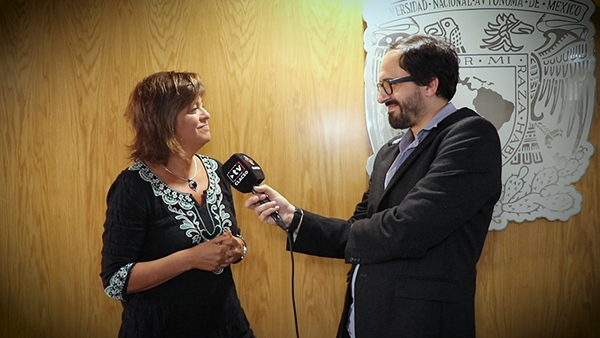
“We must study neoliberalism not only from an economic point of view, but also from a cultural, political and social perspective,” Karina Batthyány, Executive Secretary of CLACSO, highlighted this when consulted by CLACSO TV after her intervention in the Conversation “Neoliberal Authoritarianism or Democratizing Democracy?: the dispute for the future in Latin America”, which met in early February 2020 in Mexico City, jointly organized by CLACSO and the “University Program of Studies on Democracy, Justice and Society” (PUEDJS-UNAM).
Interviewed by Gustavo Lema
Karina Batthyány called for an analysis of how the concept of democracy, which from its beginnings was characterized by “The exclusion of many population groups. Perhaps the most significant is that of women; I'm speaking about Latin America and the Caribbean, when the first democratic governments were established after the colonial period in our countries. If there is one group that is excluded, it is women. And one might think that this is a thing of the past. And yes, that expression is part of the past, but in reality, we continue to find—and not only with women, but also with other groups—mechanisms of exclusion from current democratic systems. Exclusion in terms of the actual exercise, and not just the formal exercise, of citizens' rights.”
If you would like to receive more information about CLACSO's training programs:
[widget id=”custom_html-57″]
to our email lists.

