
Women are opõem à barbarism de Cláudio Castro and the balance of the operation follows in aberto
By Joshua Medeiros[I]
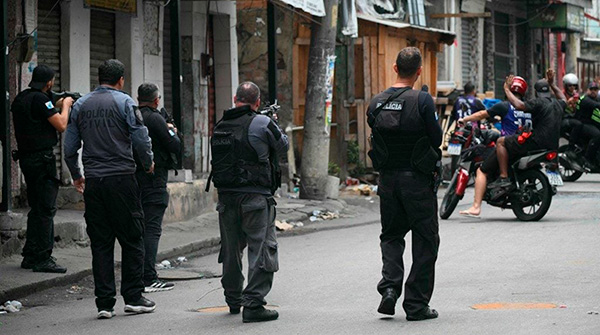
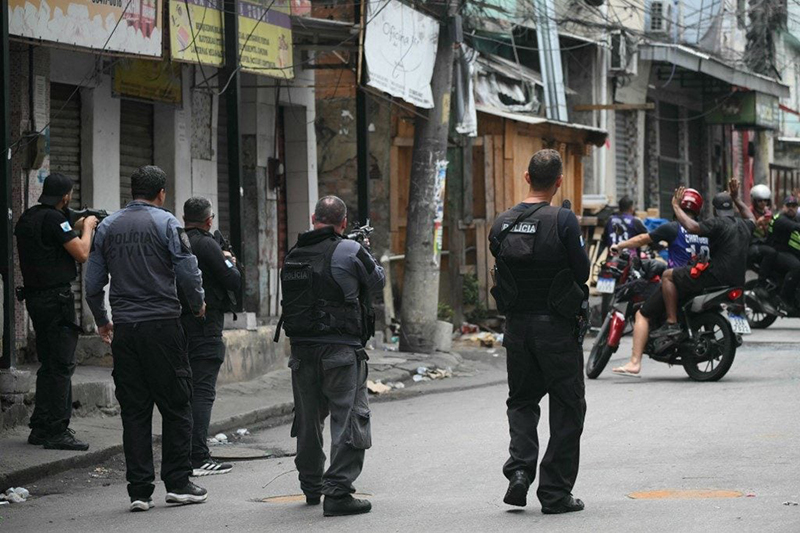
After a week of barbarism perpetrated by the government of Cláudio Castro in Rio de Janeiro, at the end of the day, we must face the challenge of analyzing the political effects of what happened. From now on, an extreme situation has been used to reunify and defend itself. At the business level, in turn, we see this vision reverberating, presenting numbers from various investigations that prove popular support for the PM's action, or strengthening the popularity of the Fluminense governor and a defensive Lula government.
In fact, the photography of the moment is of popular support for the “megaoperação” in Rio de Janeiro. But, even with this support, there is a lot of water passing under the bridge, indicating that the political disputes around this issue are more open to what we know about the debate in the media and where we want the governors to be extremely direct, especially when we analyze the gender reduction. Observing the difference in position between women and men further evidences the symbolic and worldview disputes taking place in Brazil – both in general politics and in particular security issues.
The Atlas Institute was the only one that disseminated research with national scope. Their field was carried out on October 29 and 30, immediately after the events, which took place on October 28. In its sample, the women are 48,5% and the men, 51,5%, while they represent 53,6% of the electorate and the men, 46,4%. The Atlas shows that 55,2% of people approve of this and 42,3% disapprove. These numbers, in themselves, already reveal that the support for this type of violent action is not as overwhelming as it seems at the first moment, indicating that there is space to dispute an alternative vision of public security. When the gender reduction is observed, this hypothesis is strengthened: the majority of women disapprove of the operation, with 50,2% expressing this position against 48,1% who approve; Among the men, the support was 61,9%, against 34,3% of the rejeição.
The same pattern is repeated in other questions from Atlas. For 52,5% of the people interviewed, the level of violence was adequate, while for 45,8% it was excessive. The majority of women (49,4%) say that it was excessive, with 48,6% believing it to be adequate, or that it is reversed among the men, with 56,4% understanding that it was adequate versus 42,3% who consider it excessive.
A position that understands that the operation has a positive impact on security does not reach the majority of the population: 42,4% (26,1% with a very positive impact and 16,3% with a positive impact), against 18,8% who perceive little or no impact and 34,8% who consider the negative impact (being 20,1% very negative and 14,7% negative).
As women there are more criticisms: quase metade apontou that the impact was negative, somanda 45,4% (with 27,5% being very negative and 17,9% negative), while 8,5% understand that it had little or no impact and 39,1% avaliam that the impact was positive (with 16,9% being very positive and 22,2% positive). Já entre los homns ocorre oposto: quase metade credits that the impact was positive, reaching 45,5% (with 35,5% very positive and 10% positive), against 23,4% who consider it negative (with 11,6% very negative and 11,8% negative) and 30,3% who see little or no impact.
In the same sense, most people understand that the main objective of the state government was to obtain political gain (42%), against 39,3% who credit that this is the best way to combat crime and 17,6% who see both objectives as achieved by the Fluminense governor. Again, women are more critical: 49,2% affirm that the objective was political gain. 41,2%, in turn, consider this to be the best way to combat crime and 9,2% that we support two objectives. Among the men, the scenario is reversed: 34,4% support the political gain, 37,2% see a better way to combat crime and 26,4% understand that both objectives have been achieved.
The gender cut also shows the possibilities of dispute when the segment investigated is only the population of Rio de Janeiro. The Quaest investigation, which went to the field on October 30 and 31 just outside the Fluminense territory and its segment showing 53% of women and 47% of men — more faithful to the profile of the eleitorado —, reinforces this pattern. According to this institute, the operation has 64% approval, 27% disapproval and 6% of people who do not approve or disapprove. Approval fell to 51% among women and 79% among men. The disapproval is 36% among women and only 17% among men, with 8% of them and 4% of them not approving or disapproving.
In the same direction, 58% consider the operation a success, 32% a failure and 6% respond “it depends”. As women are more critical, with 43% stating that it was a success, 44% that it was a failure and 7% that it depends; The homens, more enthusiastic, with 73% considering a success, 19% a failure and 8% that depends.
Another important question was the feeling of safety: not total, 52% of people say that Rio is less safe and 35% say that it is more safe. The perception of insecurity is approximately 60% among women and 44% among men, while the view of greater security is 26% among women and 45% among men.
Finally, for 54% of the interviewees, the state government is operating to combat organized crime, and for 40%, to gain popularity. Once again, as women there are more criticisms: 45% aim to combat crime and 47% perceive a goal to gain popularity - a perception that is invested among men, with 63% aiming to combat crime and 33% gain popularity.
In short, the senses of an operation with this level of violence and media exposure in social networks are still in the open. The photograph of the moment shows that the firmness of the state government was well received, and the negative reporting of deaths by extreme leaders tends to be criticized, especially by women. They constitute a segment mostly resistant to violence and more open to a public security policy based on intelligence, with a focus on targeting the financial operations and the rich criminals who most profit from all this situation.
If the Lula government is capable of unleashing an operation against the drug trafficking factions of Rio de Janeiro, such as being the main criminal group in São Paulo on the 20th, it will be able to deepen this political dispute not only in view of the 2026 elections, but mainly towards the construction of a more fair, supportive and safe Brazil.
[I] Joshua Medeiros. Political scientist and professor at UFRJ and PPGCS at UFRRJ. Coordinates the Political and Electoral Observatory (OPEL) and the Nucleus of Studies on Brazilian Democracy (NUDEB). Director of research, training and training at the Lauro Campos and Marielle Franco Foundation (FLCMF). Article originally published in: https://www.cartacapital.com.br/opiniao/mulheres-se-opoem-a-barbarie-de-claudio-castro-e-o-balanco-da-operacao-segue-em-aberto/.

