
“We study reality from a political commitment”
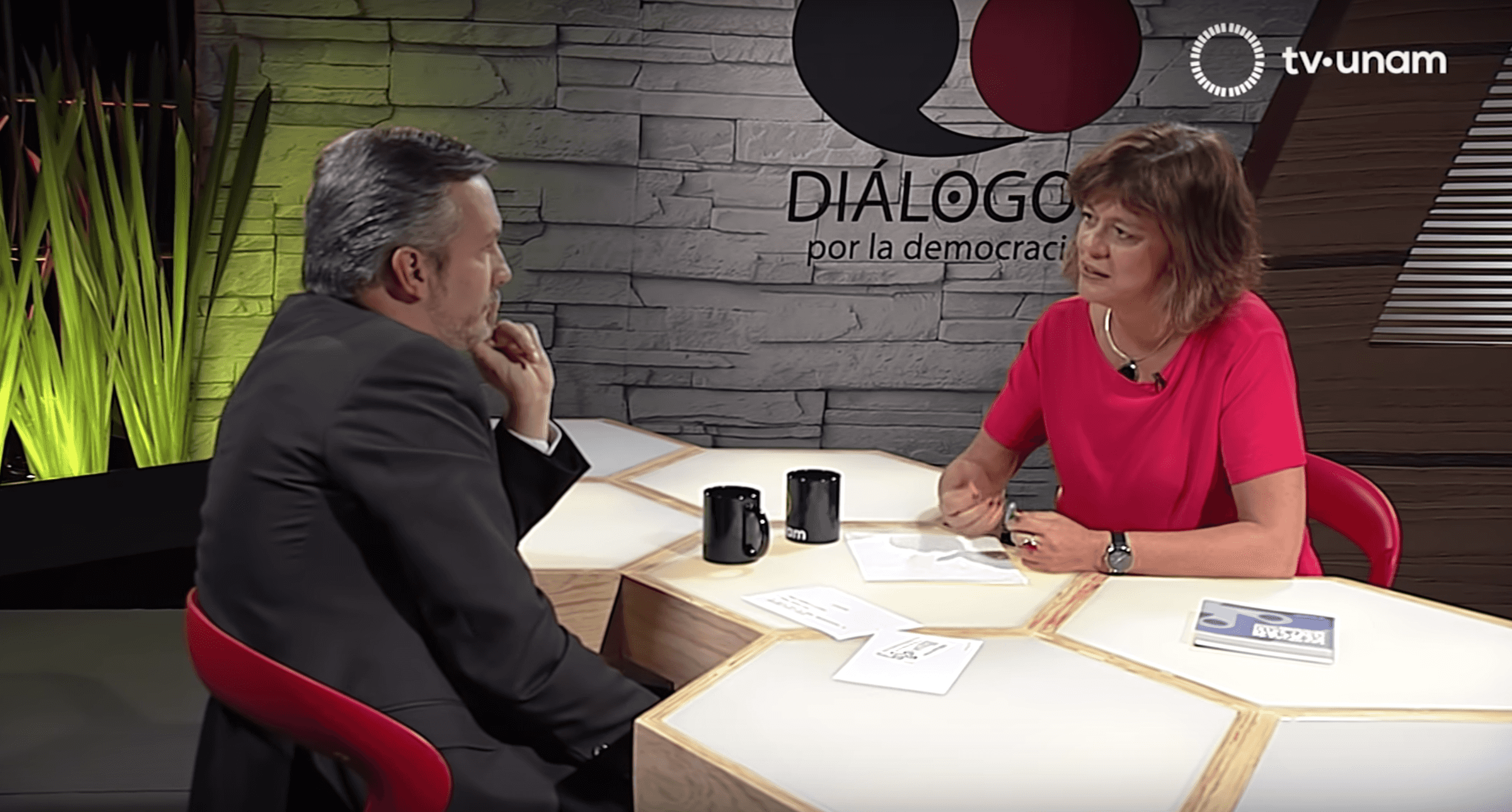
In his prestigious program “Dialogues for Democracy” which is broadcast on Sundays by “UNAM TV” in Mexico, on April 21, Professor John M. Ackerman held an in-depth dialogue with the Executive Secretary of CLACSO, Karina Batthyány, focusing on “Neoliberalism, critical thinking and political change in Latin America”.
On the National University of Mexico's channel, Karina Batthyány highlighted the role of the social sciences and CLACSO based on the premise that "we are part of reality, we study that reality from a political commitment," clarifying that this "does not mean that our work is less rigorous, less academic or less scientific than schools more associated with empiricist and positivist currents."
The Executive Secretary of CLACSO then diagnosed that “we unfortunately have a significant history of neoliberalism in Latin America, both the recent wave and the wave of the 90s that swept through all the countries,” and went on to analyze examples in our region that aim to overcome this context. “What we find at the moment is a somewhat ambivalent situation,” with the rise of right-wing governments, but highlighting the new hope born in Mexico with the current process and “the sustained and progressive experience of Uruguay over the last 15 years.” In both countries, the fight is against neoliberal policies “which, in concrete terms, place the individual at the center and disregard the collective and social concept; that would be the great difference with progressive policies, at least as we have known them in the experiences of the Southern Cone.”
He also highlighted Mexico's historical role in the social sciences, "it has always been a reference, and let us also remember Mexico's role as a place of refuge for Latin American intellectuals during the dictatorships, mainly in the Southern Cone," and the current process "represents a beacon, a hope."

Regarding Uruguay under the Broad Front, Karina Batthyány focused on what she defined as “a process of articulating popular forces, social movements, and a political party,” highlighting the “very interesting articulation between the political sphere, the social sphere—I'm referring to social movements—and the academic sphere, the role of the University of the Republic within the Broad Front government,” with “the production of knowledge, the production of necessary inputs for political decision-making, and for the design and management of public policies.” “There is truly an articulated effort among these three elements, without losing competence or autonomy,” she concluded.

