
Collective memories and political struggles
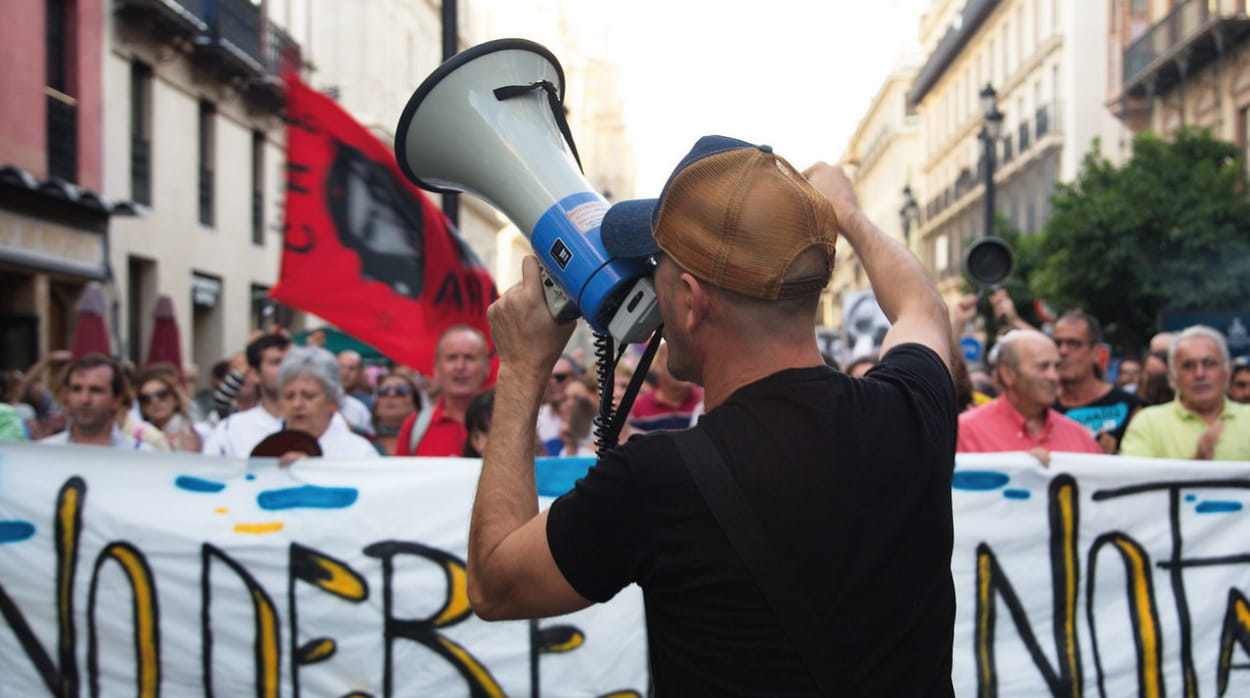
Seminar 1958
Chair: CLACSO
Coordination: Isabel Piper Shafir (University of Chile) and Pilar Calveiro Garrido (Autonomous University of Mexico City)
Home: 26 / 09 / 2019 | Registration: 04/02/2019 al 23/09/2019
Workload: 12 weeks – 90 hours.
Payment methods
If you have a link with a CLACSO Associated Center:
- Paying in one payment: USD 95 (includes issuance and shipping costs of the digital certificate).
If you have a link with a Network or Institution Associated with CLACSO:
- Paying in one payment: USD 140 (includes issuance and shipping costs of the digital certificate).
If you do NOT have a link with a CLACSO Associated Center:
- Paying in one payment BEFORE 13/09/2019: USD 150 (includes issuance and shipping costs of the digital certificate).
- Paying in one payment: USD 190 (includes issuance and shipping costs of the digital certificate).
Course presentation:
This seminar seeks to critically reflect on the possible connections between collective memory processes and resistance practices in Latin America. In Latin America, the concept of collective memory has been linked to reflection on the political violence of the wars, armed conflicts, and military dictatorships of recent decades. Confronting these violent pasts has led to the development of memory policies, understood both as state policies and as political actions undertaken by social organizations or collectives involved in remembering the political conflicts experienced in their local contexts. We will examine some emblematic cases in our region, such as Nicaragua, Colombia, Argentina, and Chile.
We will see how, in the current contexts in different regions and countries of Latin America, the diverse practices of resistance to current scenarios of exploitation, dispossession, concentration of wealth and
Public and private forms of violence draw upon a collective memory that recovers the diverse knowledge of political struggle, transforming it into an active memory. In the global context, resistance is often local.
We will review and analyze experiences of resistance in Mexico and in the Andean countryside of Peru, Argentina, and Chile.
Contents:
- Collective memory: conceptual reflections
- The field of memory in Colombia
- Memory policies: a comparative analysis of Argentina and Chile
- Memory policies in Nicaragua
- Memory policies in Colombia
- The silences and the unspoken
- Testimony as a practice of memory and resistance
- Practices of resistance: conceptual reflections
- Indigenous resistance in Mexico
- Indigenous resistance in the Andean countryside: Argentina, Peru and Chile
FAQ
The basic requirements for taking a seminar are:
- Availability of at least 4 hours per week to dedicate to the seminar course.
- Internet access.
- Reasonable handling of communication and computer tools.
- Language proficiency in the language in which the course will be taught. The official languages are Spanish and Portuguese.
|
|
Discount for one payment until 16/03 |
In one payment after 16/03 |
|
CM Plenos |
$75 |
$150 |
|
CM Associates |
$95 |
$190 |
|
No link |
$95 |
$190 |

