Beyond the International Decade for People of African Descent
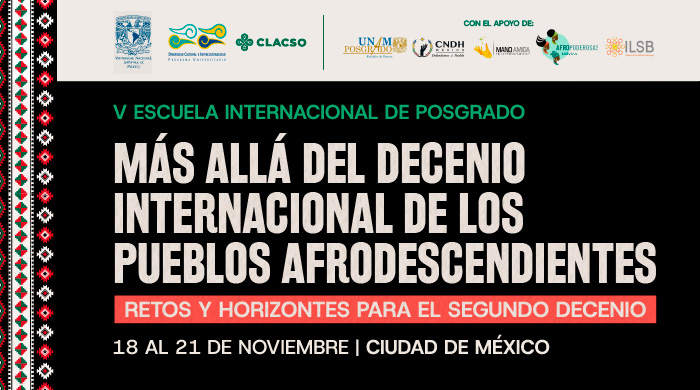
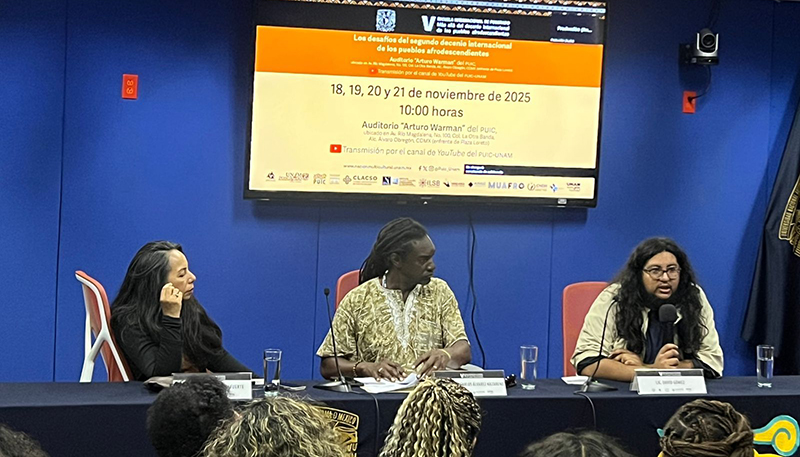
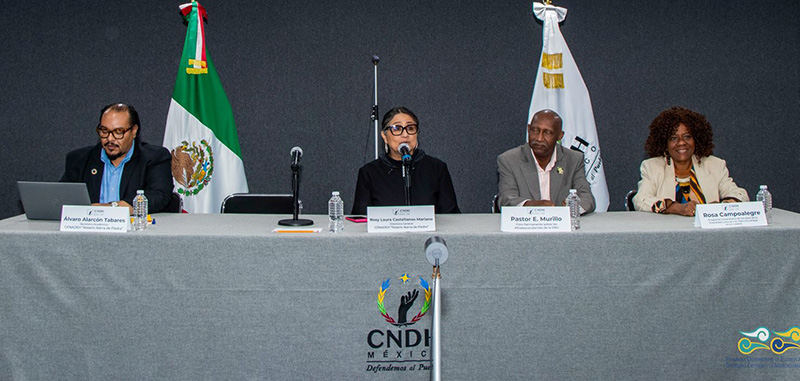
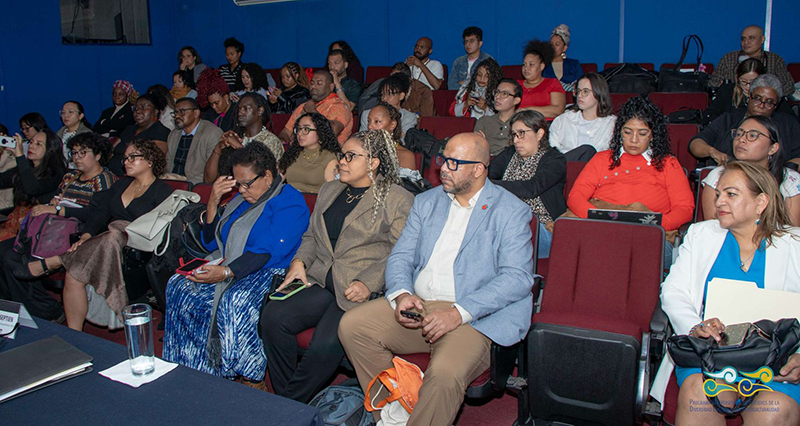
In Mexico City, from November 18 to 21, the V International Postgraduate School “Beyond the International Decade for People of African Descent: Challenges and Horizons for the Second Decade” was held , organized by the Latin American Council of Social Sciences, the CLACSO Working Group “Afro-descendants and Counter-Hegemonic Proposals” and the University Program of Studies of Cultural Diversity and Interculturality of the National Autonomous University of Mexico.
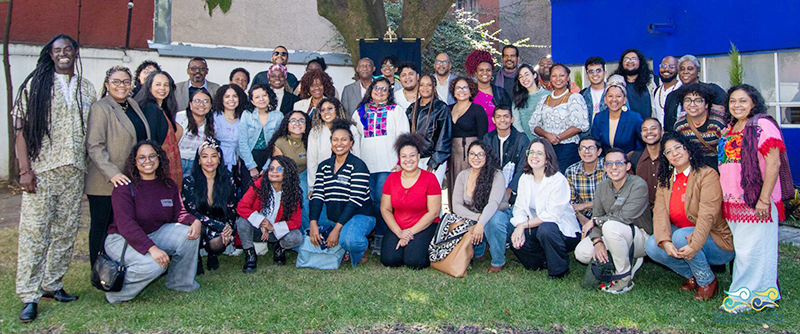
Aimed at master's and doctoral students, public policy officials, leaders and activists from organizations of the Afro-descendant movement in Latin America and the Caribbean, it was a space intended to reaffirm the urgency of continuing to build critical perspectives, plural dialogues and transformative actions around Afro-descendants.
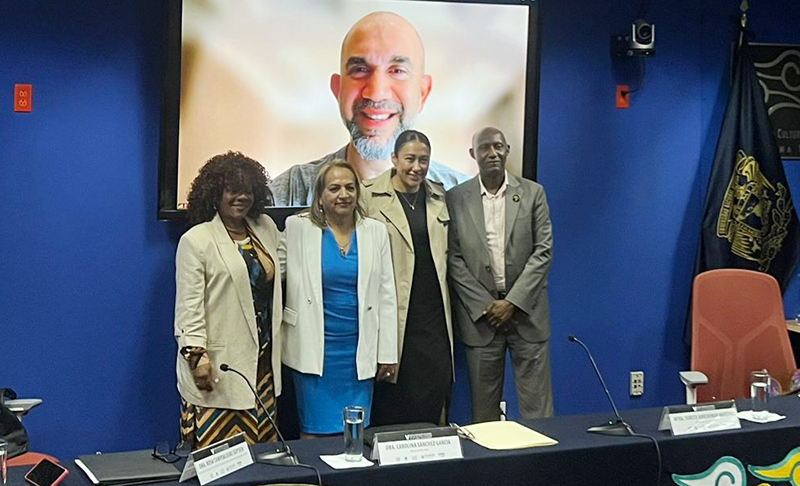
Pablo Vommaro , Executive Director of CLACSO, participated in the opening of the School along with Carolina Sánchez García, Director of the University Program of Studies of Cultural Diversity and Interculturality, of the National Autonomous University of Mexico (PUIC-UNAM); Yuritsi Arredondo Martínez , Technical Secretary of the Center for Interdisciplinary Research in Sciences and Humanities of UNAM; Rosa Campoalegre Septien of PUIC UNAM, CLACSO Working Group “Afro-descendants and counter-hegemonic proposals” and Nelson Mandela Chair of Cuba; and Pastor Elías Murillo of the Permanent Forum of Afro-descendants, United Nations, Colombia.
“I bring greetings from the CLACSO network,” began Pablo Vommaro , before emphasizing the need to “create more egalitarian spaces, spaces that are not only non-racist but also anti-racist, and spaces for collaboration between postgraduate students, master's students, doctoral students, public policy officials, and various leaders and activists of the Afro-descendant, Afro-diasporic, and Black movement in Latin America and the Caribbean.”
VIEW PRESENTATIONS AND DIALOGUES
Collaborating institutions:
Center for Interdisciplinary Research in Sciences and Humanities (CEIICH-UNAM).
Rosario Ibarra de Piedra National Human Rights Center, Mexico.
Nelson Mandela Chair of Studies on Afro-descendants, Cuba.
Association of Afro-Latin American and Caribbean Researchers (AINALC).
CLACSO Working Group on Epistemologies of the South, Argentina.
CLACSO Working Group on International Health and Health Sovereignty, Argentina.
Research Group on Social Theory, Decolonial Studies and Critical Thinking (G-TEP). University of Mar del Plata, Argentina.
Department of Social Work, Catholic University of Temuco, Chile. PhD in Communication. University of La Frontera-Austral University of Chile.
International Association for Afro-Feminist Development (AIDAF), Colombia.
International Network of Afrofeminist Voices.
Postgraduate Program in Gender Studies, UNAM Mexico
National Human Rights Commission, Mexico (CNDH)
Helping Hand of the Costa Chica AC
AFROPODEROSAS, Mexico
Simone de Beauvoir Leadership Institute (ILSB)
Academic Committee:
Rosa Campoalegre Septien (Cuba) – PUIC UNAM; GT Afrodescendencias y propuestas contrahegemónicas (CLACSO); Cátedra Nelson Mandela (Cuba).
Pablo Vommaro – Latin American Council of Social Sciences (CLACSO).
Carolina Sánchez García. University Program of Studies of Cultural Diversity and Interculturality, of the National Autonomous University of Mexico (PUIC-UNAM).
Anny Ocoró-Loango – Association of Afro-Latin American and Caribbean Researchers (AINALC); GT Afrodescendants and counter-hegemonic proposals (CLACSO); National University of Tres de Febrero (UNTREF) and CONICET (Argentina).
Karina Bidaseca – GT. Epistemologies of the South and GT Afrodescendants and counter-hegemonic proposals (CLACSO). National University of San Martín (UNSAM, Argentina).
Pastor Elias Murillo. Permanent Forum of Afro-descendants. United Nations, Colombia.
Nilma Lino Gómes – Federal University of Minas Gerais (UFMG, Brazil) and GT Afrodescendencias y propuestas contrahegemónicas (CLACSO), Brazil.
Santiago Arboleda Quiñones – Universidad Andina Simón Bolívar (UASB, Ecuador) and GT Afrodescendencias y propuestas contrahegemónicas (CLACSO), Ecuador.
Felicitas López Sotolongo – GT Afrodescendencias y propuestas contrahegemónicas (CLACSO) and Centro de Investigaciones Psicológicas y Sociológicas (CIPS, Cuba).
Lina Rosa Berrio Palomo – Center for Research and Higher Studies in Social Anthropology (CIESAS Pacifico Sur, Mexico) and Working Group on Afro-descendants and Counter-hegemonic Proposals (CLACSO), Mexico
Carlos Álvarez – Working Group on Afro-descendants and counter-hegemonic proposals (CLACSO). Argentina.
Odeth Santos – National Autonomous University of Mexico (UNAM) and GT International Health and Health Sovereignty (CLACSO) and GT Afro-descendants and counter-hegemonic proposals (CLACSO). Mexico.
Elena Lorac. Recognized movement. Dominican Republic.
Elia Avendaño Villafuerte. University Program of Studies on Cultural Diversity and Interculturality, National Autonomous University of Mexico (PUIC-UNAM) and Working Group on Afro-descendants and Counter-Hegemonic Proposals (CLACSO). Mexico
Roberto Carlos da Silva Borges (Brazil) – Working Group on Afro-descendants and Counter-Hegemonic Proposals; Association of Afro-Latin American and Caribbean Researchers (AINALC). Brazil
Claudia Miranda – GT Afrodescendencias y propuestas contrahegemónicas and Universidad Federal do Estado do Rio de Janeiro (UNIRIO, Brazil).
Jesús María Serna. Afro-Indo-America. Mexico
Celeste Sánchez emerged. Afro-descendants. Mexico
Arbey Bustamante – San Buenaventura University. Association of Afro-Latin American and Caribbean Researchers (AINALC) Colombia.
Lourdes Martínez Betervides. Working Group on Afro-descendants and counter-hegemonic proposals, Uruguay
Jorge García Rincón. Association of Afro-Latin American and Caribbean Researchers (AINALC), Colombia.
Helena Cosma da Graça Fonseca Veloso – Centro Interdisciplinar de Estudos e Investigação da Universidade Católica de Angola.
Cintia Santos Diallo, State University of Mato Grosso do Sul – UEMS.
Nathalie Cook Reyes. AfroLeaders Research Institute on Technology, Artificial Intelligence and Racial Equity.