
Manifesto "Reconsideration of English as a lingua franca"
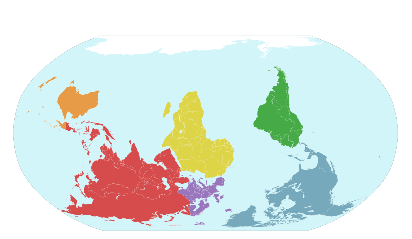
English as a "lingua franca" in scientific and academic contexts?
A group of researchers from the field of linguistics, from diverse geo-academic spaces, collectively developed the Manifesto "Reconsideration of English as a lingua franca".
It is available in Spanish, Chinese, English, Russian and Swedish and will soon be available in Chilean Sign Language, Mapuzungun, Portuguese, French, among others.
This paper seeks to discuss certain assumptions about the use of English as a “lingua franca” in scientific and academic contexts, identify the impact of these assumptions on the trajectories of knowledge production and reception, and legitimize the use of multiple languages for transnational academic exchange. Ten principles are proposed.
- The use of English as a scientific-academic “lingua franca” does not always promote inclusion.
- A supposed scientific-academic “lingua franca” can act as a language of domination.
- Policies that position English as a "lingua franca" can discourage translations and limit participation.
- Policies that position English as the contemporary scientific-academic "lingua franca" may suggest that knowledge produced in English is the only knowledge that exists.
- The imposition of English as the supposed scientific-academic “lingua franca” is an expression of the unequal distribution of the production and reception of knowledge.
- Languages and varieties act as powerful resources for the production of knowledge.
- The choice of a language for publication or presentation is a political act
- The choice of the language of publication or presentation is a political act.
- Congress organizers should have the right to promote the language(s) of their choice.
- Conference organizers and participants should be creative and attentive to include the most diverse audiences possible.
The Manifesto can be read freely and without charge. here.

