
Andean agroecological systems
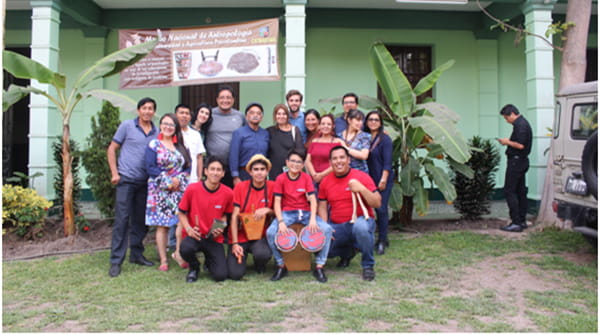
From December 2nd to 6th in the city of Lima, Peru, the Second International Seminar “Research and training program in Andean agroecological systems” was held, organized by CLACSO together with the McKnight Collaborative Crop Research Program.
McKnight, a foundation based in Minneapolis, USA, funds collaborative research between small producers, researchers and development promoters to generate knowledge that contributes to achieving sustainable agroecological systems.
On December 2, 2019, at the opening of the Seminar at the Center for Arid Zone Research (CIZA) of the National Agrarian University La Molina (Peru), the coordinator of the Program for CLACSO, Karina Bidaseca, congratulated the scholarship recipients and spoke about the importance of the meeting and CLACSO's commitment to agroecology in the region.

Professor Roberto Ugas introduced the McKnight team. Then, Pablo Vommaro, Director of Research at CLACSO, did the same.

CLACSO TV discussed this with Roberto Ugas and Karina Bidaseca.
Interviewed by Gustavo Lema
In the following days, the scholarship recipients presented their projects, and there were conferences, a panel discussion, and presentations by leading scientists and academics from Latin America and the Caribbean. In addition, there was a field trip and meetings between scholarship recipients, their mentors, and the director(s).
A look at agroecology
On December 3, moderated by Karina Bidaseca, the panel “A look at agroecology from the review of methodological experiences and research practices in Andean Latin America” addressed the joint construction of knowledge about agroecology from different methodological approaches to research, based on the work that a group of researchers, constituted as a community of practice, are developing in various territories of Andean Latin America.

From the analysis of different rural territories, participatory research was undertaken to understand the current context of Andean rural development with emphasis on different specific issues, hoping to contribute to the understanding of the situation that these populations are experiencing, from an agroecological perspective of the populations that live in high areas of the Andean mountain range.
A brief introduction was given to the specific cases and methodological proposals developed from each participant's experience, leading into a discussion that focused on key points from the results and reflections gathered from these studies, viewed from an agroecological perspective. In this sense, the panel's objective was to create a space for sharing with the scholarship recipients of the second cohort and with the audience.
a) The points of encounter, convergence, divergence and parallelisms (frictions and partial connections) around the concepts that constitute the field of agroecology from the concrete experiences developed in these investigations;
b) A discussion on pedagogies and methodologies of the community of practice according to the learning we have had in our emerging meetings.
It included the participation of Walter Pengue (UNGS, Argentina) and Ana Dorrego (CIZA, UNALM; Peru), and the scholarship recipients of the 1st Cohort of the Program: Nancy Pierina Benites Alfaro (Ministry of Agriculture and Irrigation, National University of Engineering, Peru), Larissa Da Silva Araujo (Graduate Institute Geneva), Patricia Natividad Álvarez (Polytechnic University of Madrid), Dani Vargas Huanca (National University of San Marcos, Peru).
Presentation and feedback on what agroecology is
The next part of the seminar was dedicated to the presentation of the selected projects, followed by a second presentation of the conceptual and methodological framework. The speakers from the McKnight Team were: Roberto Ugas (Universidad Agraria La Molina, Peru), Ernesto Méndez (Vermont University), and Carlos Barahona.
It featured presentations by director(s) and tutor(s): Juan Torres (CIZA), Walter Pengue (UNGS), Miriam Paredes (FLACSO Ecuador) and Ana Dorrego Carlón (CIZA).

Field trip
Carmen Felipe-Morales is an agronomist and holds a doctorate in soil science. With her husband, Ulises Moreno, also an agronomist, she runs Bioagricultura Casa Blanca, a farm dedicated to agroecological production, training, and research, as well as agro-ecotourism, located in the district of Pachacamac, province of Lima, Peru.
They built this experiment in the 1980s, and in 1994 a 10 m³ Chinese model biodigester3 capacity for the production of biogas and biofertilizers, using as the main input the manure of the guinea pigs we raise.

Much of the world's food is grown by producers who own two hectares or less. Globally, half a billion small-scale farmers and producers provide food for 2,2 billion people.
Small-scale producers face the challenge of maintaining or improving their productivity in the face of rising costs, limited market access, climate variability, competing natural resources, and extractive economic development models. The living conditions of small-scale producers are heterogeneous, varying according to their biophysical environment and cultural and socioeconomic contexts.

Research and extension perspectives often replicate the hegemonic models of biophysical or agronomic sciences, omitting the ways in which knowledge is produced and shared.
Transdisciplinary research from the social sciences allows for the promotion of intercultural learning and knowledge production that co-participates in the transformation of complex and heterogeneous realities.

If you would like to receive more information about CLACSO's training programs:
[widget id=”custom_html-57″]
to our email lists.

