
The Rights of Afro-descendants in MERCOSUR
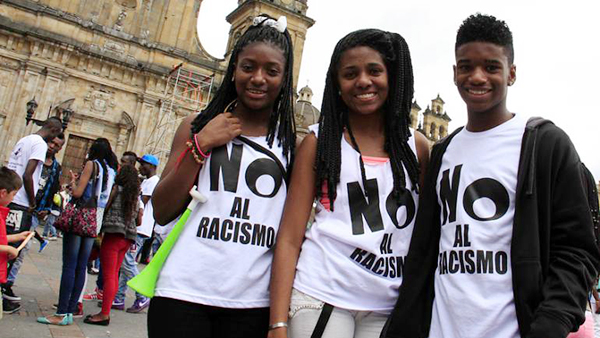
During two days, on May 11 and 12, 2021, the XI Meeting of Ministers and High Authorities on the Rights of Afro-descendants of MERCOSUR (RAFRO) took place, organized within the framework of the Argentine Pro Tempore Presidency of the bloc and chaired by the Secretariat of Human Rights of the Ministry of Justice and Human Rights of the Argentine Republic.
On the first day, the conclusions of the 86th Public Consultation of the Social Participation Forum of the MERCOSUR Institute of Public Policies on Human Rights (IPPDH), entitled “Public Policies for Afro-descendants: Mid-term Evaluation and Projections for the Coming Years of the International Decade for People of African Descent,” were presented. The consultation, held on April 28 and 29, was organized by the IPPDH in conjunction with the MERCOSUR Pro Tempore Presidency and the Working Group on Afro-descendants and Counter-Hegemonic Proposals of the Latin American Council of Social Sciences (CLACSO). During the consultation, civil society organizations grouped themselves around three main themes: public policies and affirmative action for Afro-descendants; institutional violence and combating racism; and intersectionality. Eighty-six proposals were compiled and presented.
Within the framework of the 11th RAFRO, these proposals were defined as a roadmap for the promotion and implementation of public policies and affirmative action for Afro-descendant communities. Furthermore, the meeting emphasized the importance of fostering a culture of cooperation between the university and institutions committed to these communities.
The first day continued with the main contributions for the progressive implementation of equality, equity and the fight against racism in the region 20 years after the World Conference against Racism, Racial Discrimination, Xenophobia and Related Forms of Intolerance in Durban, South Africa, 2001.
In this regard, the participants agreed that the COVID-19 pandemic highlighted problems that demonstrate structural discrimination, as well as the importance of consolidating the human rights approach in public policies.
The opening of the second day of the 11th RAFRO included a greeting from a representative of the State of the African Diaspora. This was followed by a panel discussion on regional coordination and cooperation for the implementation of affirmative action measures for Afro-descendant communities in the context of the impacts of the COVID-19 pandemic. Participants in the panel included representatives from the MERCOSUR Institute of Public Policies on Human Rights (IPPDH), the United Nations (UN), the United Nations Population Fund (UNFPA), the United Nations Educational, Scientific and Cultural Organization (UNESCO), UN Women, the International Organization for Migration (IOM), and the UN Refugee Agency (UNHCR). The international organizations emphasized the importance of the Public Consultation and their commitment to addressing the proposals and demands made by civil society.
Likewise, the second day included a space for participation by civil society organizations.
It was two intense days aimed at strengthening, including and repairing the rights of Afro-descendant peoples, and contributing to promoting and guaranteeing the rights of Afro-descendant people.
RAFRO was created in 2015 as a body under the Common Market Council (CMC) to advise on and propose measures, policies, and actions to promote racial equality and combat racism. Its function is to coordinate policies and initiatives that benefit Afro-descendant populations in MERCOSUR member states, as well as to promote and protect their rights and ensure their inclusion in economic, political, social, and cultural transformation processes as key actors in the region's development.
May 12th 2021
If you would like to receive more information about CLACSO's training programs:
[widget id=”custom_html-57″]
to our email lists.

