
Care as a critical issue for gender equality

Opinion piece for the Télam news agency
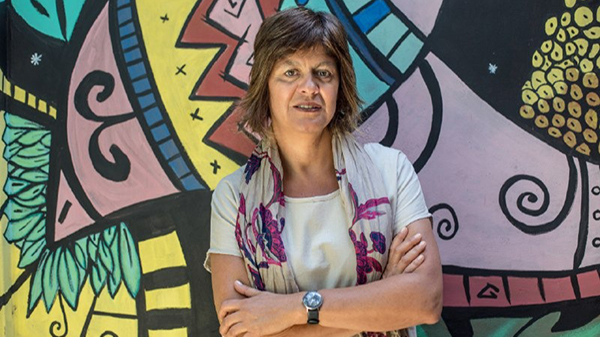
Every year on March 8th, International Women's Day is commemorated, a date that has become a significant event worldwide. Dr. Karina Batthyány, Executive Secretary of the Latin American Council of Social Sciences (CLACSO), provided Télam with an analysis of "care work" that highlights the gendered division of labor both within and outside the home.
In our region, the situation of women has changed over the past few years as a result of a combination of economic, political, social, and cultural factors. The interaction between modernization processes and existing customs has led to a new configuration of gender systems and relations.
A key development is the consolidation of women's integration into public life over the last sixty years. This consolidation is primarily due to their continuous and increasing presence in the workforce, as well as sociodemographic changes such as declining fertility rates, increased life expectancy, and later marriage, along with greater access to education in general. However, these processes have not resulted in significant changes to the inequality gap that affects the majority of women.
Domestic tasks are crucial and essential for the functioning of the economic system and for the well-being of society. However, "care work" has only become a specific area of concern and study in the last twenty years, undoubtedly due to tensions arising from the new roles women have assumed in the labor market since the late 20th century and the increased outsourcing of care work outside the family.
The analysis of "care" highlights the sexual division of labor within and outside households, makes visible the contribution of women to reproduction and the sustenance of life, and allows for a critical analysis of contemporary welfare states.
The issue of care work has emerged as a central aspect of the welfare system with the widespread incorporation of women into the labor market and the recognition of their citizenship rights. In the Western world, women's paid work has undoubtedly become a new social norm. The increased participation of women in the workforce has led to a considerable extension of their working hours, as they maintain their family responsibilities while men dedicate themselves almost exclusively to paid employment.
The concern for the care of people and public responsibilities has become urgent due to demographic changes and the resulting social demands and needs for care. There are increasingly more dependent people requiring special care, and public and private services remain scarce. Therefore, women continue to bear the primary responsibility for the care of the growing number of dependent elderly people and the large child population.
In Latin America, what predominates is the weakness or complete absence of public policies and private initiatives in this area. The current legal framework for caregiving is still deeply sexist: it is predominantly women who bear the responsibility for caring for and attending to their families. Despite the difficulties, changes, and insufficient resources, one way or another, almost without anyone knowing how, people in need of care are attended to. The answer lies with women, who have assumed and continue to assume this responsibility, and perhaps this certainty delays the collective acceptance of caregiving as everyone's problem.
Care is a social function, a public good, and a basic right without which the existence and reproduction of society are inconceivable. The greatest challenge is how to move toward a world in which individuals and society as a whole recognize and value the importance of different forms of care, without reinforcing the idea that care work is something only women and girls can and should do. The role of public policy is essential in this. Untangling this knot will allow us to move toward gender equality.
By Karina Batthyány, PhD in Sociology and Executive Secretary of the Latin American Council of Social Sciences (CLACSO).
If you would like to receive more information about CLACSO's training programs:
[widget id=”custom_html-57″]
to our email lists.

