
"Lacalle Pou achieved almost 7% economic growth and leaves behind a more unequal country with more poor people."
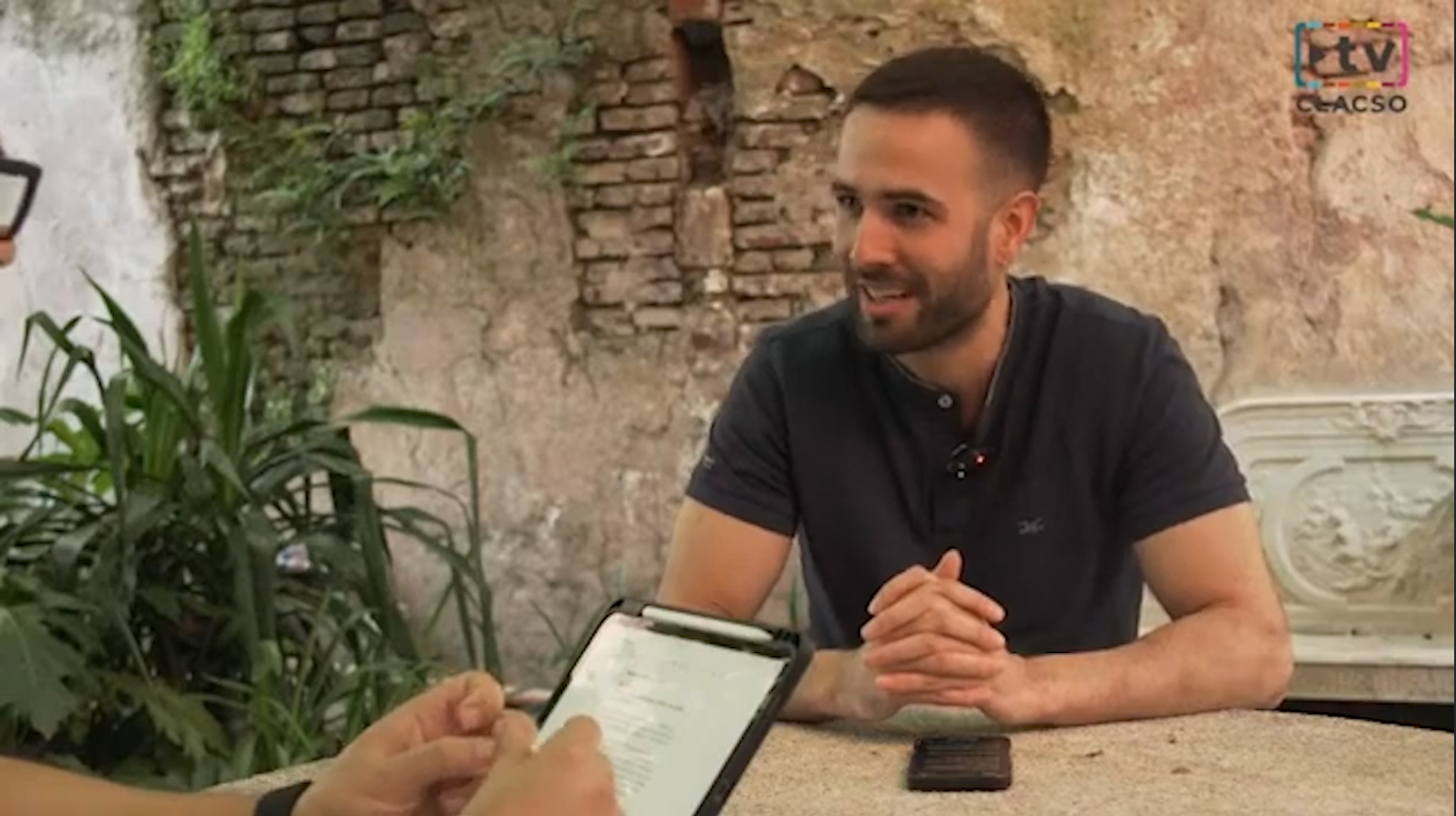
Prior to the victory of the Broad Front in the second round of elections in Uruguay, Marcos Casas, political analyst from that country and Director of the digital media outlet Dopamina, spoke with CLACSO.tv.
Reflecting on a possible government led by President-elect Yamandú Orsi, Casas commented: “The last government of Tabaré Vázquez faced primarily economic difficulties. While it did implement transformations in the entire care system—a large part of Uruguay's GDP comes from women performing unpaid work, and the care system was intended as a radical solution—I believe Tabaré Vázquez's government wasn't politically misguided. It lacked funding and perhaps a younger generation of leaders. His last government had a cabinet where perhaps the youngest member was 70 years old. (…) What happens now if Yamandú wins? Well, he has sent mixed signals. I see worrying signs, for example, in the appointment of Economy Minister Gabriel Odone, who has explicitly supported Lacalle Pou's pension reform. Odone was announced by Yamandú Orsi on a day when there was a minor run on the currency in Uruguay (…). And then, to reassure the markets, he went out to "Announce it. All that logic where you're looking much more at risk consultancies and not so much at what's happening underneath, for me, is a yellow light."
“Secondly, we need to see if (…) Yamandú Orsi’s government, if it comes to power, will be more about fighting for recognition or fighting for the transformation of people’s lives. Because Uruguay has just come through five years in which 95% of the population is poorer. (…) What Lacalle Pou has to explain is how he achieved almost 7% economic growth while leaving behind a more unequal country, with more children living in poverty, more poverty in general, and more violence. Because Lacalle Pou also leaves behind the five-year period with the highest number of homicides in Uruguay’s history,” he added.
Furthermore, he analyzed the situation of young people in his country: “Young people in Uruguay face two central issues that the political system is failing to address. First, Uruguay has the highest suicide rate on the continent, particularly among young people. (...) Second, Uruguay has 3 million inhabitants, 1.5 million of whom are employed, and a third of those employed—half a million people—earn the minimum wage. Who earns the minimum wage? Young people. So, for now, young people are aligned with the Broad Front, which is also largely due to their formative experiences in union and student activism. My question is (...) how long will these new generations continue to support the left, or will the left revitalize itself by offering young people a political and social alternative that allows them to continue along this path, supporting the Broad Front?”
Interviewed by Gustavo Lema.
If you would like to receive more information about CLACSO's training programs:
[widget id=”custom_html-57″]
to our email lists.

