
The European Union: between blows and challenges
Tomás Bontempo*
The last few years have been marked by significant events for the future of the European Union (EU). This integration project, born from the Franco-German initiative of the European Coal and Steel Community, has suffered severe setbacks since the new EU authorities took office in 2019, and these will very likely shape the times ahead.
One of the blows the bloc received was the global COVID-19 pandemic and its severe economic, social, and health impacts across the entire European Union, as well as on the national situations of its members, especially Spain and Italy. Further fracturing the foundations of a union already beset by Euroscepticism, the first wave of COVID-19 revealed the European Union to be even more divided than during the 2015 migration crisis, which was followed by a clear rise in far-right extremism and demonstrated at subsequent summits that no structural differences between European countries can be easily resolved.
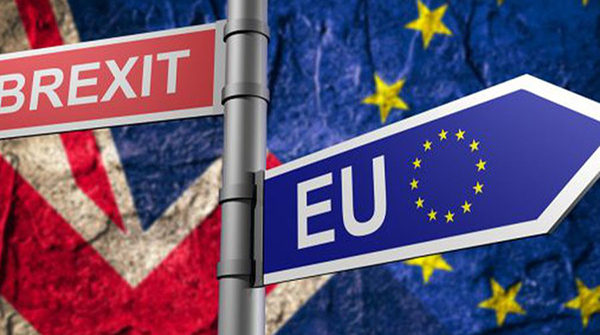
Even earlier, in January, Brexit, the United Kingdom's withdrawal from the European Union, had been definitively approved. This process began with the referendum called by the government of former Prime Minister David Cameron, which initiated a circuitous route of back-and-forth negotiations and parliamentary rejections. Finally, after Boris Johnson took office, Parliament approved Brexit, and negotiations resumed to finalize the terms of the withdrawal—the first in history (not counting Greenland's withdrawal in 1982). Negotiations will continue for the remainder of the year and are focused on economic and trade issues.
We will now briefly address how the current situation and the blows received by what has been one of the most promising integration projects in the world have stimulated and accelerated phenomena relevant to its present and future in a geopolitical plane where it is positioned as a second-rate power, further away from the United States and with strong distrust of its links with China.
COVID-19 and uncoordinated multilateralism
At the end of March, Italy was going through the famous peak of infections, registering record numbers of more than 900 deaths per day since the first cases of coronavirus had been diagnosed in February, with the epicenter in the wealthy Lombardy region.
The media worldwide covered the harsh effects that Covid-19 was having on a country where lockdown measures had been late, slow to be implemented, and combined with other factors that worsened the situation: severe cuts to the health sector to try to balance public finances, generational coexistence, and an aging population. (1).
When Italy requested the activation of the European Union's Civil Protection Mechanism to ensure the delivery of medical equipment, the response from other members was deafening silence. Member states themselves were even involved in the near-piracy that occurred at various airports during the transport of medical supplies: France seized masks from Sweden destined for Italy and Spain, while the Czech Republic did something similar with masks and ventilators that Italy had purchased from China. Germany and France even temporarily banned the export of medical supplies and closed their Schengen Area borders. (2).
At that same moment, almost at the peak of the pandemic, Italy registered the arrival of medical personnel and health supplies from countries such as Cuba, China and Russia (3)It was Prime Minister Giuseppe Conte himself who stated in an interview with an Italian newspaper that the management of the health situation had to be addressed or the EU could lose its "raison d'être". (4).
Of course, European aid arrived, albeit late and with less publicity. It was the President of the European Commission herself, Ursula von der Leyen, who acknowledged this on April 16 in a speech to the regional Parliament with the following words:It's also true that many didn't arrive in time when Italy needed help at the beginning of all this. And it's only right that Europe as a whole offer a heartfelt apology." (5).
This situation was also reflected in a survey by the European Council on Foreign Relations. (6)The survey asked who had been the best ally in managing the pandemic. The answer chosen in countries like Poland, Denmark, Sweden, Italy, Germany, France, and Spain was very clear: no one. For Italians, beyond the initial response, the main ally was China. And in all the aforementioned countries except Poland, the World Health Organization was mentioned before the European Union itself.
A joint response from an unequal Europe
The global pandemic is putting downward pressure on the world's major economies. According to the World Bank, the drop in global GDP will be the largest since World War II. Europe is not immune. In July, Eurostat reported a decline of more than 12% in the European economy during the second quarter. The hardest hit were Spain (-18,5%), France (-13.8%), and Italy (-12.4%), among others. Furthermore, estimates from the European Commission and the European Central Bank predict that the bloc's economy will contract by 8.7% in 2020. (7).
In this context, it is possible to recall a 1953 Spanish film called “Welcome Mr. Marshall” which portrayed the preparations of a Spanish town awaiting the arrival of then Secretary of State George Marshall, who was responsible for designating the plan for the historic US assistance in the 1948 European Recovery Program. This same plan was invoked by the Spanish president, Pedro Sánchez, who mentioned the need for a Marshall Plan at one of the European Council meetings in March.
Just as happened in the aforementioned film, but in the current context of the worst health crisis in decades and with Southern Europe already struggling since the 2008 debt crisis, Marshall once again passed the buck, much to the chagrin of Spain and Italy. Faced with opposition from countries like the Netherlands, there was no consensus on coronabonds, although there was agreement for Von der Leyen to announce the temporary suspension of the Stability and Growth Pact.(8) approved by the European Council in 1997 in consideration of the latest stage of monetary union established in the Maastricht Treaty signed in 1992.
The meeting between French President Emmanuel Macron and German Chancellor Angela Merkel in May outlined the plan that would be presented as a response to the pandemic crisis. That same month, Von der Leyen presented “Next Generation USA €750 billion plan to stimulate economic recovery. This is what would be discussed and ultimately approved – with some differences – at the European Council summit in July: a mega recovery plan of €750 billion, with €390 billion in subsidies and €360 billion in loans.(9).
One of the unique aspects is that the European Commission will borrow on behalf of member states for the first time, accessing financial markets through bond issuances between 2021 and 2024. This will allow it to spend like a state, granting it greater autonomy. Furthermore, in addition to this plan, new lines of credit for the European Stability Mechanism (ESM) were approved. (10) as well as funds from the European Investment Bank that had been established in April by the Eurogroup.
However, the Commission's borrowing was not achieved without resistance. Although it was eventually accepted, the self-styled frugal countries—the Netherlands, Austria, Sweden, Denmark, and Finland—initially opposed it. They only relented after receiving discounts on their contributions to the European budget, and only after some of them, such as Dutch Prime Minister Mark Rutte, expressed the need for compromise and structural reforms from the southern countries. (11)Despite the summit's results and the European Commission's need to present it as a joint response to a common challenge, no fundamental disagreements were resolved among the bloc's members.
The major difference again lies in the structural disparities between northern and southern European countries, with unequal benefits in their access to the European single market. This situation mirrors... mutatis mutandis, the context of the debt crises that followed in the old continent after the international financial crisis of 2008, which had a greater impact on what were at that time derisively called the Pigs (Portugal, Italy, Ireland, Greece and Spain).
Even then, there had been a tangible decoupling between France and Germany when the latter imposed austerity measures, and also at the beginning of Macron's term when he encountered Merkel's reluctance to support his project to reform the EU. But the atmosphere seems to have changed, and the spirit of the 1963 Élysée Treaty is being revived. (12) This seems to reinvigorate the strategic Franco-German axis that has inspired European integration since the days of the Communities in the 50s. For this reason, France and Germany took the initiative to generate a joint response within the framework of the old continent's bloc, even serving as a bulwark against the austerity position presented by the frugal countries.
Likewise, in the current context, a different role is emerging for Germany, which assumed the pro tempore presidency of the European Council on July 1st. But what inspires this change in German leadership in the European sphere? Although elections will be held in 2021, in April Germany announced through its Finance Minister, Olaf Scholz, that it was abandoning the fiscal surplus it had maintained unchanged for almost a decade: low inflation, a fiscal surplus, and a strong currency were the highly valued pillars on which the German economy had historically rested. But despite the upcoming elections and how they might impact the electorate, it was Merkel herself who stated thatThe European Union faces its greatest test since its founding» (13) and the need to find a stronger and better-functioning Europe.
Germany seems unwilling to repeat the events of 2008 and the years that followed, when the Germans blamed the southern European countries and German leadership was criticized amidst the Greek crisis and its social consequences, as well as the debates surrounding leaving the Eurozone. Does Merkel want to renew German leadership by restoring Germany's image among its southern partners? Or is the position of the frugal countries one of a Germany in the shadows? What is certain is that Merkel's strategic vision aims to prevent this new crisis from further weakening a Europe that risks falling behind in the international arena.
The European Union in the post-COVID-19 world: Brexit and global geopolitics
Relations between the British and the founding members of the European project were never calm. When the European Economic Community emerged in 1958, the United Kingdom proposed the formation of the European Free Trade Association in 1960 as a way to avoid embarking on more ambitious projects that involved the formation of a customs union with a common external tariff against third countries, and a long-term common market.
Subsequently, given the Community's economic success, France opted to begin accession negotiations in 1963, which would only come to fruition a decade later, after De Gaulle's resignation and the end of the French veto of previous years. However, in 1975, the first referendum on remaining in the Community was held, proposed by the Labour Party, since the country had joined during a Conservative Party government. On that occasion, however, the popular vote favored remaining.
However, the turbulence would continue for various reasons. At a conference in Dublin in 1980, former Prime Minister Margaret Thatcher uttered a phrase that would become famous: "I want my money back!"The United Kingdom was one of the countries that contributed most to the integration process, having one of the most efficient tax systems, and received the least from the bloc's expenditures, which at that time were primarily linked to the exorbitant costs of a highly protectionist Common Agricultural Policy. This famous "British rebate" would be renegotiated again during Anthony Blair's governments at the beginning of the century.
Thus, we arrive at the government of Conservative David Cameron, who, as a way to resolve internal disputes within his own party, called a referendum with unexpected consequences: the popular vote approved the country's exit from the EU, although not without dissent. Scotland and Northern Ireland voted to remain in the bloc, while Wales and England opted to leave. LeavenworthYounger generations will opt for the RemainWhile older women and adults voted overwhelmingly to leave the union. The vote reflected a clear territorial, age-related, and even urban differentiation, considering the majority vote for the Remain in London, a nerve center of international finance.
From that moment on, nothing was automatic. Article 50 of the Lisbon Treaty set the course for the country's withdrawal from the European bloc after the referendum's approval. The United Kingdom notified the European Council of its decision, and negotiations began. Former Prime Minister Theresa May attempted to navigate both internal party divisions and negotiations with the bloc, but was unsuccessful in securing parliamentary approval of the negotiated terms and subsequently rejected various proposals from both sides. soft and hard BrexitHis replacement in the post by the former Foreign Secretary and former Mayor of London, Boris Johnson (a fervent supporter of Leavenworth) resulted in a new reshuffling of cards that finally managed to pass the Brexit.
The UK's political departure was finalized in January of this year, marked by the poignant image of an official removing the British flag from the pantheon of European flags, symbolizing its subsequent absence from the integration project. But January 1, 2021, could bring another blow to the EU. That date marks the deadline for successfully concluding the withdrawal negotiations—with no possibility of extension beyond December 31—given that the UK remains part of the customs union and the European single market. In other words, economically, nothing has changed.
UK imports to the EU accounted for 53% and 45% of total UK exports to the EU in 2018. The bloc is the UK's main trading partner and has the greatest need for a trade agreement. This is according to a report by the Group for the Study of International Trade Negotiations (GENCI). (14) A report from the National University of Rosario in May of this year highlights the existence of different strategies among the parties involved. The EU wants a framework agreement and to maintain certain social and environmental standards, thereby preserving the jurisdiction of the European Court of Justice. On the other hand, the United Kingdom aims to achieve multiple agreements on various topics, as well as a free trade agreement for goods and services. It is precisely in this latter sector that the UK has a strategic and competitive interest and where it enjoys a trade surplus with the European bloc—unlike in goods—and a sector that the EU seeks to protect. A similar situation exists with fishing, which the bloc intends to include in the agreement, while the United Kingdom refuses.
Of course, in addition to trade, there are other issues on the negotiating agenda between the two sides: financial commitments, citizenship and migration, the border between Ireland and Northern Ireland, among others. All of this is taking place amidst high-level verbal sparring, in which even the British chief negotiator, David Frost, stated that the United Kingdom will not be a “Vassal State"of the old continent (15) and that his country is not afraid to leave the EU without a deal.
Adding to this, and further stirring tensions in the English Channel, a Single Market Bill was introduced in the British Parliament that could unilaterally impose controls on the border between the two Irelands as part of its trade policy. This would violate the 2019 Withdrawal Agreement, in which the EU and the UK committed to maintaining the borderless status quo established by the 1998 peace agreement. Even Brandon Lewis, the British Secretary of State for Northern Ireland, acknowledged that what was presented in Parliament...violates international law» (16).
Finally, Johnson set October 15 as the deadline for reaching an agreement. hard Brexit This could tangibly affect the European bloc's economic recovery, especially in sectors representing the main flows of trade between the two, where tariffs and customs barriers would reappear. The bloc has already suffered the political blow of the United Kingdom's withdrawal, and the negotiations represent more than just a new economic and trade cost. The European Union must send a strong signal as a result: leaving is very expensive. Will it be able to do so, or will the former rebel member achieve its objective?
On the other hand, within the geopolitical context in which this Eurovision-worthy drama or Netflix series is unfolding, the EU is seeking a strategic vision for how to position itself in the face of the inter-hegemonic disputes between the United States and China. With the former, once a historic ally of the continent, the EU has experienced a constant misalignment since the beginning of the Trump administration. Although some heads of state, such as Emmanuel Macron, sought to reach out to the US president, the reality is that disagreements arose in multiple multilateral areas, such as defense within the framework of NATO, among others.
However, with regard to China, the 22nd Summit between the European Union and the Asian giant took place in June of this year. (17)In her address, Van der Leyen described the EU's ties as a strategic partnership, addressing issues such as trade, climate change, technology, and the defense of multilateralism. She also emphasized that these ties must be based on rules and stressed the need to move forward with an investment agreement—negotiated seven years ago and particularly concerning state-owned enterprises—as well as an agreement on geographical indicators and market access for the European agri-food sector, among other matters. In pursuit of its technological sovereignty plans and the discussions at this summit on digital transparency, the EU is not only seeking greater access to the Chinese market but also urging China to reduce subsidies to state-owned enterprises, which she believes put European companies at a disadvantage.
It is precisely in the economic sphere and the strength of its single market that the bloc is best positioned as a global player, to establish norms and rules in a world embroiled in trade wars due to inter-hegemonic disputes as well as the current pandemic. But the relationship with China is not limited to this aspect. The EU knows, and even states, that they do not share the same values or systems of government, but a more symmetrical relationship with this giant is necessary to address the diverse and complex global problems. The relationship with China, as the European Council's own statements indicate, is both a necessity and an opportunity, and is also marked by mistrust.
In the international analysis publication “Foreign Policy”, Josep Borrell, EU High Representative for Foreign Affairs and Security Policy since December 2019, mentioned that “lUnity is fundamental in all areas of our relationship with Beijing, because no European state is capable of defending its interests and values alone against the size and power of China.".
Borrell generalizes this stance regarding China into something more general: the bloc's strategic autonomy, or what is referred to as the Sinatra doctrine—the EU's way of acting "its own way," as the famous American singer's lyrics proclaimed. This independent approach avoids alignment with either China or the United States and preserves its sovereignty by strengthening strategic sectors, especially economic and technological ones. This does not preclude cooperation with strategic partners who may also be competitors and systemic rivals, as is the case with China.
This raises several questions: Has the pandemic and trade war strengthened the EU? Can the bloc position itself as a stronger global actor? Can it assume a leadership role in this context, based on its economic power? As we mentioned when referring to Borrell, the EU's strategic vision for foreign policy revolves around a stance that favors this. It is also based on promoting European values and interests internationally.
However, this perception of the bloc itself should also be complemented by the external image that the other actors have of it. Sonia Lucarelli (18)Researchers from the University of Turin highlight this issue by emphasizing the differences between Europe's self-perception and the perception others have of it. This allows us to investigate identity constructed from external images—that is, self-identification built through others, for example, through the specific policies implemented by the EU and the recognition others grant to its role in the world. But are the values it attributes to itself the same as those it actually acts upon? Does the world perceive the EU as a significant global player?
While the current global and regional scenarios have their own unique characteristics, this is not the first time the European integration project has faced challenges of historic magnitude, although the present one may perhaps be among the most difficult to address. Europe is currently in an economic crisis with regionalism battered by... Brexit And it reacts late, and maintaining its cohesion seems increasingly difficult. Doesn't this affect its international standing? Will Europe be able to experience the geopolitical resurgence it envisions in foreign affairs, or will it conclude its transformation into a second-rate power in light of its distrust of China and its growing disaffiliation with the United States? Some of these challenges also face an internal challenge: the growth of Eurosceptic movements.
An internal danger: the threat of the anti-European far right
Eurosceptic parties (or pretentiously termed “populist” by European Political Science) are not a homogeneous group; they are marked by programmatic and geopolitical differences, but they have made great strides in France (National Rally), Italy (Lega), the United Kingdom (Brexit Party), Belgium (Vlaams Belang), and Poland (Law and Justice), in addition to other cases such as Golden Dawn in Greece, the Sweden Democrats, Fidesz and Jobbik in Hungary, the Alliance of Discontented Citizens in the Czech Republic, the Slovenian Democratic Party, and AfD in Germany.
Following the last European Parliament elections in May 2019, the European People's Party and the Socialists and Democrats Group remain the two largest political parties in the Parliament. However, they no longer hold the 376 seats required, thus altering the two-party system, popularly known as the Grand Coalition, which had been in place since 1979 when MEPs were first directly elected. In other words, these recent regional elections brought about a reconfiguration of European governance, given the loss of ground—read: seats—in Brussels by the traditional parties, alongside the rise of the far right, as well as the liberals and the greens, and the crystallization of a pro-Europeanism-Euroscepticism divide that will shape the parliamentary life of the European bloc.
In the case of Eurosceptic forces in their various groups and variants, they represent approximately 23% of the European Parliament (19)The Lega's result in these elections transformed Italy into the country with the most far-right MEPs in the European Parliament, followed by Hungary, Poland, and the United Kingdom. But this advance, although ultimately moderate compared to what the polls predicted, also allows them to consolidate a larger gain made in recent years at the national and regional levels.
For example, the electoral map of the 2016 UK referendum on withdrawal from the EU corresponds to the vote for the new Brexit Party Nigel Farage's party in the May 2019 European Parliament elections, in which this recycled party of the old UKIP (20) (The United Kingdom Independence Party) received the most votes with 33%. Let us also remember that at the time of the results, which foreshadowed the victory of LeavenworthVarious far-right movements across the continent have raised the idea of carrying out the same process in their own countries. Even Marine Le Pen, the French politician, stated during a 2017 meeting of the European far right in Koblenz, Germany, thatWe are living through the end of one world and the birth of another. It is the return of the nation-state!0. This discourse continues to gain traction and has even gained new adherents such as the Gilet Arancioni Led by Generale Pappalardo, they deny Covid-19, oppose the EU and the Euro, propose the return of the lira, and sympathize with fascist groups like Casapound. (22).
This idea of the return of the nation was explored by the Polish-born sociologist Zygmunt Bauman (23)The nation re-emerges as a guarantee against the ills of a globalization with adverse effects. This discourse is not exclusive to Le Pen, but rather is built around the idea of the Nation, with slogans such as “au nom du peuple" or "prima gli italianiThe central idea of the Eurosceptic far right: that the nation should reclaim the place from which it had been displaced by the Eurocracy in Brussels.
Recalling the global geopolitical context mentioned earlier, it is worth mentioning an excerpt from the interview with Anthony Blair published in the newspaper The IndependentIn it, the former British prime minister outlined his vision of the major powers—China, the United States, and India—that will be at the forefront of global power by mid-century, noting that the option for middle-sized countries like those in Europe is to join together in stronger unions—like the EU—that will allow them to face challenges and have some influence within that power structure. Brexit, which sealed the UK's separation from the EU was, for him, an act of self-harm:what on earth would induce you to think that you are going to gain by giving up that relationship? “I mean it is an unbelievable act of self-denial”Ultimately, as Blair himself then added:Power is power".
* [1] PhD candidate in Social Sciences (UBA). He holds a Master's degree in Latin American Integration (UNTREF) and studied at the University of Turin (Italy). He is a professor in the International Relations and Political Science programs at the University of Salvador (USAL). Member of the Global South Group. Member of the Research Directorate Team at CLACSO.
Highlighted
(1) See Federico Larsen. The virus that twisted the history of Italy. Available from La Tinta: https://latinta.com.ar/2020/04/el-virus-que-torcio-la-historia-de-italia/
(2) El País. Brussels urges countries to end the blockade of medical supplies. Available at: https://elpais.com/sociedad/2020-03-19/bruselas-urge-a-los-paises-a-poner-fin-al-bloqueo-de-material-sanitario-esencial.html
(3) El Confidencial. Russian doctors and Chinese face masks: Italy becomes a showcase of global solidarity. Available at: https://www.elconfidencial.com/mundo/europa/2020-04-16/ayudas-solidaridad-italia-coronavirus_2552227/
(4) RT. Italy's Prime Minister says the EU could "lose its raison d'être" if it fails to manage the coronavirus crisis. Available at: https://actualidad.rt.com/actualidad/347953-primer-ministro-italia-afirmar-ue-perder-razon-ser
(5) El Diario.es, Von der Leyen: The EU owes Italy an apology for its slow reaction. Available at: https://www.eldiario.es/politica/von-leyen-ue-italia-reaccionar_1_2720207.html
(6) La Vanguardia. Europeans want a strong EU on the international stage. Available at: https://www.lavanguardia.com/internacional/20200629/482008561727/encuesta-europea-diarios-encueesta-fuerte-estados-unidos-china.html
(7) La Nacion. Coronavirus: one by one, how the economy collapsed in the eurozone countries. Available at: https://www.lanacion.com.ar/el-mundo/coronavirus-economia-eurozona-se-contrajo-devastador-121-nid2409262
(8) In 1997, the Amsterdam European Council approved the Stability and Growth Pact linked to compliance with certain standards on budgetary discipline such as public budget deficit, borrowing expenditure, exchange rate and inflation rate.
(9) See conclusions of the special meeting of the European Council from 17 to 21 July 2020: https://www.consilium.europa.eu/media/45109/210720-euco-final-conclusions-en.pdf
(10) The European Stability Mechanism is an intergovernmental body created by the European Council in 2011, following the debt crisis that had left some euro area countries without access to financial markets. Cyprus, Italy, Spain, and Portugal were among the countries that received financial assistance through this mechanism.
(11) Europapress. Rutte asks Spain and Italy for a "clear commitment" to implement reforms in exchange for European aid. Available at: https://www.europapress.es/economia/macroeconomia-00338/noticia-rutte-pide-espana-italia-claro-compromiso-hacer-reformas-cambio-ayudas-europeas-20200717121042.html
(12) Charles De Gaulle and Konrad Adenauer signed in the Murat Hall of the Élysée Palace the treaty that bears his name and that establishes the conditions of the friendly relationship between the former rivals.
(13) DW. Merkel: The EU faces the "greatest challenge" in its history due to coronavirus. https://www.dw.com/es/merkel-la-ue-enfrenta-el-mayor-desaf%C3%ADo-de-su-historia-por-coronavirus/a-53040532
(14) See The State of International Trade Negotiations. Report 1-2020. “International trade negotiations in times of COVID-19”.
(15) DW. “The United Kingdom will not be a “Vassal State” of the European Union, says British negotiator. https://www.dw.com/es/reino-unido-no-ser%C3%A1-estado-vasallo-de-la-ue-dice-negociador-brit%C3%A1nico/a-54828969
(16) France 24. Brexit: London admits it could violate agreements made with the European Union. https://www.france24.com/es/20200909-brexit-londres-podria-violar-acuerdos-union-europea
(17) Council of the European Union. EU-China Summit by videoconference, 22 June 2020. https://www.consilium.europa.eu/es/meetings/international-summit/2020/06/22/
(18) Lucarelli, S. (2012). Perceptions of the EU in Multilateral Settings (and beyond). In KE Jørgensen, & KV Laatikainen, Europe and International Institutions: Performance, Policy, Power. Rotledge. (Translation by the author).
(19) Groups such as the Identity and Democracy movement (formerly Europe of Nations and Freedoms), Europe of Freedom and Direct Democracy and the European Conservatives and Reformists Group, have 178 seats and largely comprise the Eurosceptic political forces.
(20) The 2016 referendum that led to Brexit was fueled by UKIP (United Kingdom Independence Party), a political party with no representation in the British Parliament, but which had won the European parliamentary elections in 2014. In the 2019 European Parliament elections, former UKIP ideologue Nigel Farage would again win, but with a new party, the Brexit Party.
(21) Europapress. The European far right calls for the rebirth of nation-states at a summit in Koblenz. https://www.europapress.es/internacional/noticia-extrema-derecha-europea-reivindica-renacimiento-naciones-estado-cumbre-coblenza-20170121125752.html
(22) Il Manifesto. «Il Covid is a trick». Gilet arancioni in piazza. https://ilmanifesto.it/il-covid-e-un-trucco-gilet-arancioni-in-piazza/
(23) See Bauman, Zygmund (2016). Strangers at the Door. Buenos Aires. Paidós.
If you would like to receive more information about CLACSO's training programs:
[widget id=”custom_html-57″]
to our email lists.

