
The pandemic highlights and exacerbates the care crisis.
Karina Batthyány [1]
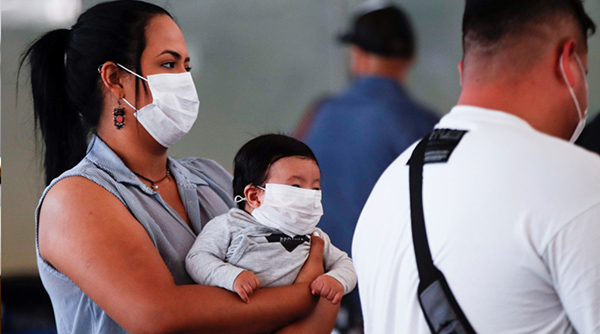
COVID-19, like any pandemic, has disrupted the lifestyles we were accustomed to. This health crisis has highlighted what some feminist movements consider central to rethinking a project that puts life at its center: we are all interdependent. The rapid spread of COVID-19 and the institutional measures to produce social isolation being implemented in most countries expose one of the weakest links in our society: care work.
Humans need goods, services, and care to survive. Care is relational and interdependent; we have all needed or will need care at some point in our lives, and we have all cared for or will care for someone at different stages of our life cycle. We all require food, clothing, shelter, assistance, support, and companionship, just as we all get injured, become ill, go through early childhood, and will likely reach old age.
However, despite the above, one of the lessons this health emergency has taught us concerns the invisibility of care work, and we wonder how the changes proposed by the measures countries are taking will impact the daily lives of men and women. This situation presents an opportunity to ask ourselves a question that, incidentally, few media outlets and policymakers have considered: what happens to care work within the context of this health emergency?
Obviously, for a structural problem of this magnitude, the solution is not simple. A historical approach to the issue has been to ignore the centrality of care work, assuming that women's entry into the workforce would redistribute this burden on its own, when evidence shows that this has resulted in a double workday for women. Something we know from gender and care studies is that the economy considered productive is sustained by care work (unrecognized and unpaid), even though it is often invisible. As we know, in the region women perform approximately 80% of unpaid care work and are the vast majority of those engaged in paid care work. Therefore, women carry out a large proportion of all care work.
Some of the proposed measures involve isolation within domestic settings and require families to find their own care solutions, solutions that are therefore mediated by the diverse resources available to each individual. It's a return to staying "behind closed doors," where everyone must find their own solution.
The need to close educational and care facilities highlights the incompatibility of working hours with caring for children, adolescents, and dependent individuals. The mandatory social isolation of people over 60 or 65—depending on the country—serves as a stark reminder that thousands of them lack support networks, caregivers, and resources in our countries.
To solve the care crisis, we need a new approach to public management that understands that interdependence is a fundamental aspect of life. The solution lies not only in distributing care more equitably between men and women individually, but also in recognizing its importance and value, and ensuring that it is partially provided by society, with the State assuming its responsibility.
The COVID-19 emergency has once again brought the issue of the social organization of care to the forefront. It is essential that, while supporting all measures and actions that prioritize humanity over the market in mitigating the pandemic, we also establish the need to place care at the center, moving beyond the market as the organizing principle of our shared life. This crisis highlights the urgent need to begin considering new forms of social organization in general, where care plays a central role.
Faced with governments taking different measures, people who cannot be cared for by the at-risk population (let's think of grandmothers who are largely caregivers for children), impoverished salaried women without labor protection measures to ensure their employment, and with medical services overwhelmed, thinking about new ways of managing care is urgent.
The care crisis will have another significant consequence: the difficulty women face in entering or remaining in the workforce on equal terms with men. Given that the most vulnerable workers—those in the informal sector and those paid daily wages—will bear the brunt of the economic repercussions of this health emergency, we can confidently say that the pandemic will likely make women poorer and more vulnerable. We have already witnessed this situation in cases of natural disasters. How will the State address the consequences of job loss due to the increased burden of caregiving? What measures to promote shared responsibility for domestic and caregiving tasks can be implemented by the State, businesses, and workers during a lockdown?

The only comprehensive and effective response to crises in the reproduction of life lies in universal, public, and free institutions—in spaces of the commons, of the collective. In this state of emergency, states have generally called upon individual responsibility to address a structural crisis that exposes the weaknesses of public systems for the care of dependent individuals. The inability of states and governments to recognize the structural dimension of care is worrying.
Women continue to be disproportionately affected by unpaid care work, especially during times of crisis. Due to overwhelmed healthcare systems and school closures, caregiving responsibilities fall primarily on women. Measures are needed to break with traditional norms so that this burden does not fall disproportionately on women. We must rethink how to distribute this crisis so that women are not always the ones who bear the brunt of critical moments in the functioning of society. This implies, among other things, constructing an alternative vision of our model of coexistence, founded on the fundamental and undeniable real—not merely formal—equality of men and women. Reclaiming the political dimension of everyday life seems to be a path we must take.
The care crisis is exposed once again, although it is not the central concern of those taking measures to curb the pandemic.
March 20, 2020.
[1] Executive Secretary of CLACSO
If you would like to receive more information about CLACSO's training programs:
[widget id=”custom_html-57″]
to our email lists.

