
"School is not just four walls; it is the epicenter of community development."
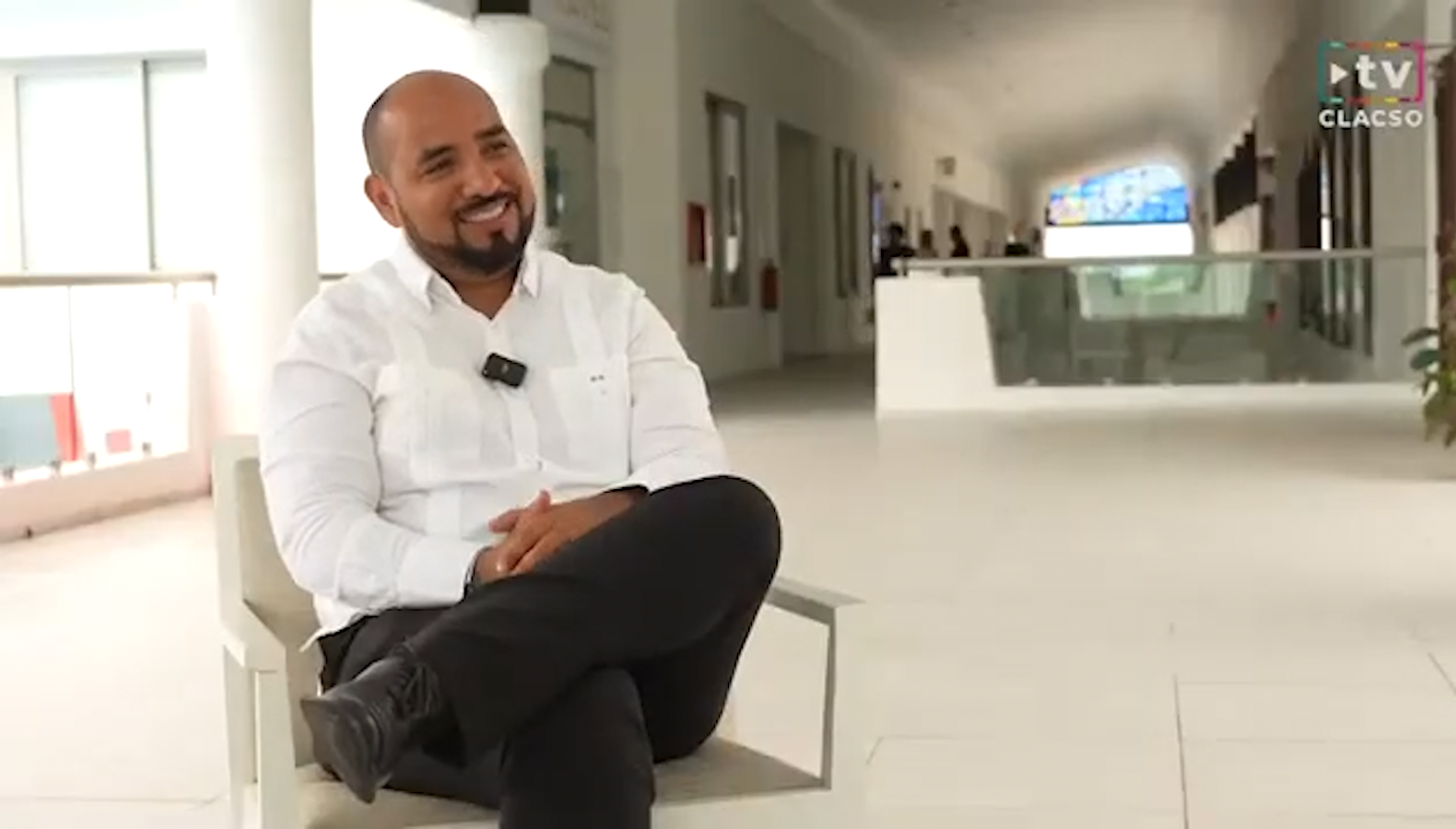
Within the framework of the V International Congress of Researchers on Youth, organized by the Center for Youth Studies and the Union of Young Communists of Cuba from September 23 to 27 in Varadero, Cuba, Daniel Enrique Sponda VelásquezThe Honduran Minister of Education spoke with CLACSO.tv.
Referring to the state of education in his country, the Minister stated: “We have reached a record number of school repairs. Of the 17.700 school buildings we inherited with considerable damage, (…) between municipal corporations, the Ministry of Education, and the Honduran Social Investment Fund, we have rebuilt at an average rate of almost 3.5 schools per day. This is a record number, but given the magnitude of the problem we face, it is still not enough.”
“On the other hand, within the framework of the restructuring plan, whose third element is the development of school infrastructure, we understand that the school is not just the four walls, but the epicenter of community development. So, we've had some wonderful experiences, such as with indigenous communities. Recently, the President and I inaugurated a school in a Garifuna community in the municipality of Tela. The community has no drinking water, no electricity, and is outside the coverage area of the private telecommunications company. The only place with drinking water, electricity through solar panels, and internet access is the school. So, the school has become the community's oasis,” he emphasized.
He added: “If we are not going to leave anyone behind, as the Sustainable Development Goals state, and if education is lifelong, what happens to the school after the normal school day and what do we do with the school infrastructure?”
In response to this question, he explained: “We just launched our online high school program for adults over 18. We have around 600 students enrolled, and some not so young anymore; our most interesting student is 69 years old (…) and is starting her online high school program. We have students in Honduras, the United States, and Spain, where there is a large Honduran migration, and we also have a small group in England. This program allows our students over 18 who didn't finish high school to complete it if they are in Honduras, but also if they are not, and we will issue the same diplomas as we do in schools. Our first graduating class will be at the end of 2025.”
Interviewed by Gustavo Lema.
If you would like to receive more information about CLACSO's training programs:
[widget id=”custom_html-57″]
to our email lists.

