
The dispute over the healthcare model in Mexico
Between the shortage of medicines and the new COVID-19 epidemic
Zaida Vázquez Peralta[1]
The arrival of Andrés Manuel López Obrador to the presidency was accompanied by the immediate implementation of several measures aimed at fulfilling one of the key promises of his campaign: the fight against corruption. During his morning press conference on January 15, 2019, he called for combating corruption. fuel theft in the purchase of medicines and reiterated his refusal to do business under the protection of public power. A first action that was carried out was to consolidate (centralize) purchases through the Ministry of Finance and Public Credit (SHCP), which implied a change in the procurement model as a mechanism to combat corruption and influence peddling in large purchases of medicines and supplies.
Within this context, the problem of the shortage of medicines develops, which has shown the political resistance that the State faces in carrying out transformations in a social sector that was deeply commodified, adding to this The global COVID-19 emergency is putting pressure on the already precarious health sector, on state finances, and on a public fabric that was deeply weakened during the neoliberal era..
Development of the drug shortage
Starting in May 2019, complaints and protests were filed regarding the lack of medications. According to the First Report on the Shortage of Medications, prepared by the platform No to the theft of medicinesThere were a total of 916 detailed and corroborated complaints of shortages, concentrated in Mexico City, the State of Mexico, and Veracruz. The ISSSTE (Institute for Social Security and Services for State Workers) accounted for 48.68% of the cases, and the IMSS (Mexican Social Security Institute) for 25.11%. The four most affected conditions were diabetes, hypertension, cancer, and HIV. It is noted that some causes of the shortages included changes in purchasing and negotiation models to prevent abuses of power, corruption, and conflicts of interest among pharmaceutical companies, which resulted in lower prices and improved quality and therapeutic efficacy.
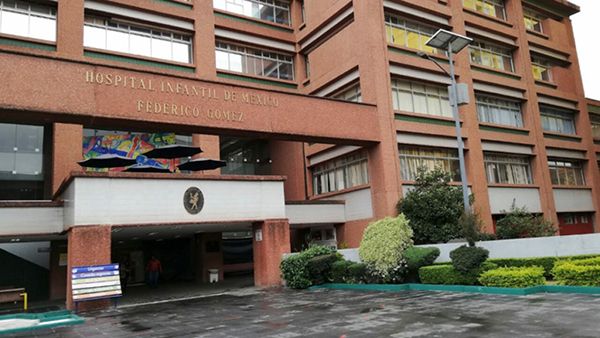
In September, Proceso magazine, in its 2239th edition, documented that the shortage of medications at the 20 de Noviembre Hospital and the Children's Hospital of Mexico for children with cancer had been triggered by the closures of plants belonging to Laboratorios Pisa and its subsidiary SAFE, which manufacture the drug methotrexate and supply almost half of the public sector's demand. This corporation had increased its sales, in the private market alone, by more than 100% in the last five years. Authorities found violations of health regulations, operational irregularities, monopolistic practices, manipulation and extortion, failed bidding processes, price gouging, and collusion. The government responded with an emergency international purchase of methotrexate from the French firm Mylan and arranged supplies with Teva from Brazil and Argentina. The purchase price increased by only 3% compared to the national price. The plant closures coincided with a global drug supply problem that continues to this day.
The media portrayed the actions against Pisa as a smear campaign against companies in the sector; however, this process was triggered by a natural chain of events. First, in April 2019, an outbreak of infection linked to parenteral nutrition was discovered in Jalisco. Following an investigation, the Federal Commission for Protection against Sanitary Risks (COFEPRIS) closed seven of Pisa's 17 plants due to contamination. Then, the death of a child in Puebla who was receiving methotrexate revealed poor manufacturing practices and an expired operating certificate, which resulted in the closure of another plant, accelerating the methotrexate crisis. Pisa's response, which was more of a counterattack, was swift: it breached a contract with the Children's Hospital, withholding 36.000 vials of methotrexate that were already available (claiming they had been confiscated) [https://cutt.ly/nr49MrD].
The outcome brings to the forefront a fundamental issue: the advisability of allowing private companies with monopolistic control over the supply of medicines that are vital for cancer treatment, and which should be part of a national and social security strategy.
By November, the Ministry of Finance and Public Credit (SHCP) declared that methotrexate was indeed available, that there had never been a shortage, and asserted that the cause was a lack of “appropriate communication between administrators and physicians.” It directly blamed the institutes for violating the right to health and began an evaluation of the directors of administration at institutes and hospitals. During this period, three resignations occurred, including that of the administrator of the Children's Hospital (allegedly colluding with Pisa), and the dismissal of the director of the National Institute of Neurology months later. This revealed likely scenarios of shortages induced by suppliers. From the outset, the shortage was attributed by opponents to the result of an alleged cut in health spending – which was, more clearly, a stagnation due to restructurings of total spending and budget commitments, 2,5% of GDP in 2018 and 2019 [https://n9.cl/pfda] – errors in the conception of the new strategy to combat corruption and, in general, attributed to the poor design of public policy.
Despite the international supply of medicines, conflicts have not ceased.. The problems have led to legal challenges against the Institute of Health for Well-being due to shortages. (INSABI) grants were awarded to families of children with cancer, some supported by the PRD's legal team in Mexico City. Purchases of medications abroad have been discredited by media outlets such as "El Universal," which reported that these are "prequalified" or "counterfeit" medications. Furthermore, the National Interdisciplinary Union of Pharmacies, Clinics, and Medical Offices (UNIFACC) warned of a possible 25% increase in medication prices this year due to increased inventories at national companies. The government's strategy has been to purchase medications directly from manufacturers, eliminating intermediaries and commercial conditions, thus disrupting an unnecessary supply chain and pricing structure. The recent shortage has been caused by contracts with intermediaries acting between the public and private sectors. [https://n9.cl/mh6q].
COVID-19 Emergency
In these circumstances, the coronavirus pandemic arrived in Mexico, where the risk of death from infection increases with age and in people with chronic degenerative diseases. This has effects both in high-income countries, due to their epidemiological and age profile, and in middle-income countries, where the prevalence of chronic conditions, as in Mexico, has been exacerbated by the spread of obesity (72.5%) and diabetes (13.1%), according to figures from [source missing]. Health at a Glance In 2019, the OECD raised its prediction of severe cases to 7%. By March 24, the figures had risen to 405 infections and 5 deaths, and Phase 2 of mitigation began with 5 cases of community transmission, although measures typical of this phase had already been anticipated. "Social distancing" and "stay at home" measures were intensified. Globally, the number of infections reached 414,000 and 18,500 deaths in 185 countries. Italy had the highest number of deaths.
The measures taken by the Mexican government have not escaped the climate of political confrontation. One of the criticisms leveled has been the perceived tepidness or lack of seriousness in the containment phase, with the absence of drastic lockdown measures to prevent the epidemic and the distrust that the health sector can guarantee the necessary human, material, and organizational resources. This idea resurfaced with the protest by nurses and the denunciation by resident physicians in some hospitals on March 24, who reported a lack of even the most basic supplies and training to face the emergency. This has once again brought the problem of supply to the forefront, a problem that unfolds amidst the undeniable dismantling of the health sector, the intensive exploitation of personnel, corruption, and political maneuvering.
The strategies followed by the government—learned from previous experiences and the support received from China—have been recognized by the WHO for acting earlier than other countries in terms of the relative number of infections and deaths, and for its epidemiological surveillance system [https://cutt.ly/Stnoqg4]. They have focused on minimizing the impacts and maintaining a balance between containment, with early warning, and preserving general activities, albeit with a gradual withdrawal, aware of the social fragility caused by precarious employment, poverty, and the inevitable dependence on productive activities, commerce, and essential services to guarantee the reproduction of life. Failure to guarantee these activities could lead to a crisis greater than that caused by the epidemic.
The “controlled growth” of the contagion, intended to make it manageable within the capacity of the health sector, has been criticized as part of neoliberal “efficiency.” On the one hand, as if it were technically possible to completely avoid infections and their consequences; on the other, as if it were possible to ignore the real conditions in which the current government inherited the economy, public finances, the health sector, and the labor market.
The current situation has become a pretext for demanding that the government radicalize certain measures and urgently dismantle a precarious system that is the antithesis of public healthcare. This situation has exacerbated ultra-humanist demands, while the right wing, ever vigilant, lies in wait for the first sign of a health crisis. Another demand has been for mass testing, used in South Korea on less than 1% of its population, which has proven useless without guaranteeing total isolation. This isolation is only possible through state control of mobility and social discipline, and through an economy that facilitates it. Furthermore, this situation has been exploited to deploy authoritarianism in some countries.
The risks increase with the potential shift of the pandemic's epicenter to the United States and the restrictions that could arise from trade relations with the US and at shared borders; likewise, due to the uncertainty caused by the drop in oil prices and the devaluation of the peso. Even with precautionary measures in place, the results are not guaranteed; moreover, there are contradictions between official directives and their actual implementation. The health and pharmaceutical sectors will be arenas of confrontation and legitimization throughout this six-year term. This trend is confirmed by the elimination of Seguro Popular and the creation of INSABI at the end of last year. The changes that threaten vested interests in the health sector will be met with organized resistance and sabotage from within the very corporate and institutional power structures occupied by these companies and the political groups linked to them, potentially triggering further media confusion and social pressure.
The magnitude of the resistance is, of course, commensurate with the magnitude of the expectations and gains at stake. Reversing course or halting a healthcare model that was hurtling toward privatization and profit will be interpreted as a power struggle; and indeed, it is. However, some changes in the sector will likely be postponed due to the urgency of mitigating the pandemic and ensuring stability. Efforts will be concentrated on this and its consequences. The process of change will not be easy; it will be subject to international conditions and the unfolding contradictions between the new healthcare policy and the strategies of those who seek to block the project and resist ceasing to use the healthcare sector as a vehicle for capital accumulation.
[1] Mexico, economist, doctoral student in Latin American Studies, UNAM.
Article published in No. 42 of the Bulletin "Our America XXI - Challenges and Alternatives", an initiative of the CLACSO Working Group on Crisis and the World Economy.
If you would like to receive more information about CLACSO's training programs:
[widget id=”custom_html-57″]
to our email lists.

