
“Our debt to the social sciences is to give them the place they deserve in the production of scientific knowledge.”
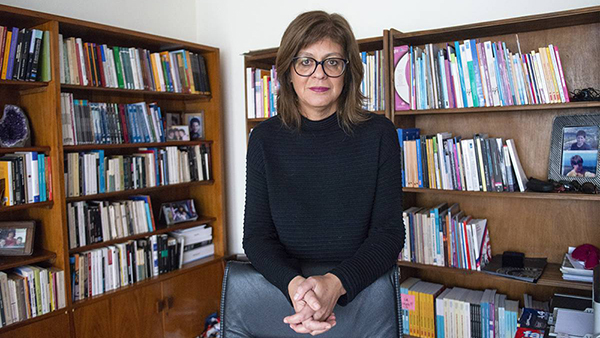

Interview with Karina Batthyány – La Diaria de Uruguay
July 16, 2022 – Write Facundo Franco
After her initial election in 2018, Uruguayan academic Karina Batthyány was re-elected as head of the Latin American Council of Social Sciences (CLACSO). While her first position was executive secretary, during her first term as PhD in Sociology, the title was changed to director general due to the gendered connotations of the original position, which can cause confusion when held by a woman.
Indeed, gender studies are the central focus of Batthyány's academic career, and this was also one of the topics addressed at the CLACSO general assembly that re-elected her until 2025. This was one of the challenges identified for the coming years in the region, along with other inequalities and the consolidation of democracies. In an interview with la diaria, Batthyány, who also teaches at the Faculty of Social Sciences of the University of the Republic (Udelar), spoke about the challenges facing the social sciences in the post-pandemic era.
The pandemic has had many consequences beyond health. What is your assessment of the contribution of the social sciences?
From the outset, the aim was to demonstrate that this was not merely a health crisis, but one that challenged the very organization and social and economic models, with consequences not only for health, but also at the social, economic, and political levels. From the very beginning, in April 2020, CLACSO already had an observatory whose primary purpose was to highlight the social dimensions and the contributions of the social sciences. Beyond analyzing these social and economic consequences, the observatory also aimed to formulate proposals. In Uruguay, measures related to employment and care work—one of the critical issues of the pandemic—were proposed.
The two years of the pandemic profoundly marked the world in general, but Latin America and the Caribbean in particular, deepening historical and structural issues in our region such as inequality, which is one of our defining characteristics. The pandemic impacted Latin America differently. Nearly a third of the deaths occurred in our region, which represents 8% of the world's population. The levels of inequality in access to vaccines were also dramatic in Latin America. The social sciences began to bring certain issues to the forefront, such as the need to consider new models of social organization, a topic that ECLAC (Economic Commission for Latin America and the Caribbean) and the United Nations system in general are strongly committed to. They also highlighted the particularities of how we organize ourselves, from the most micro levels in our daily lives to the most aggregated levels in large organizations at the national and regional levels.
How open were governments to accepting these contributions? The receptiveness to contributions from medicine was much clearer.
Initially, the sole focus was on health sciences, leaving little room for proposals from other disciplines. As the pandemic progressed and its unfortunate social and economic consequences became apparent, there was a slight increase in participation, analysis, research, and the translation of all this into concrete public policy measures. Due to the heterogeneity of Latin America and the Caribbean as a region, some countries gave more consideration to these proposals than others. One positive externality of the pandemic is the renewed appreciation for scientific knowledge. The debt owed to the social sciences is to give them their rightful place in the production of scientific knowledge, rather than focusing solely on the health and exact sciences.
In the social sciences, we always have to fight for recognition; it's a constant struggle, both during and outside of pandemics. In Uruguay, at the beginning of the health crisis, the focus was solely on medical concerns, and then it expanded to other areas. Perhaps the recognition of the social sciences came a little late, because by the time they were allowed to participate in the GACH [Honorary Scientific Advisory Group], it was already in a state of disintegration.
With the health situation more under control, many social problems are becoming apparent. What is the future agenda that needs to be addressed on the continent?
The main issue in Latin America is inequality. The pandemic exacerbated it, but it was something that pre-existed, and now the situation has become more dramatic due to increased poverty levels, changes in the labor market, gender issues, and much more. A second important issue is the environment and climate change; we also have to address violence: gender-based violence is one of the most serious, but it is not the only one, and all forms of violence were aggravated by the pandemic. Another issue is the different dimensions of gender inequality. In addition to violence, there are the burdens of care and autonomy for women in all their aspects: physical, related to sexual and reproductive rights, and also economic. The crisis in labor markets affected everyone, but women much more. A fifth issue has to do with democracies and processes of political instability, processes that existed before the pandemic: they were put on hold in the early stages of the pandemic and then resurfaced.
Another phenomenon that requires special attention due to its impact during the pandemic is education at all levels. We are particularly concerned about tertiary or higher education because of certain processes we are observing in the region, such as cuts to public budgets. An example of this is what is happening with the University of the Republic (Udelar) in this Accountability Report, but at the Latin American level, there is an alarming trend of decreased public spending on higher education and a process of commodification that go hand in hand. These were the issues chosen as priority areas by the CLACSO assembly that met in June; these issues intersect with other dimensions: in addition to gender, age, race, ethnic groups, and territorial issues.
How has the pandemic impacted working and studying conditions and the offerings of universities in social sciences?
With the changes brought about by the pandemic, there's a challenge in rethinking the education system as a whole, trying to incorporate the positive aspects of virtual learning—because it has them—while also recovering older practices more closely associated with in-person instruction. The face-to-face interaction between teachers and students in the classroom is central: we can't assume that the entire higher education experience can be handled through screens. There are also challenges stemming from the proliferation of certain training opportunities that don't necessarily offer rigorous, high-quality programs. While the University of the Republic (Udelar) and the Latin American Confederation of Social Sciences (CLACSO) offer high-quality online training, we must be vigilant, because these other spaces have flourished.
Then there are the consequences more closely associated with those of us who work in the social sciences, and particularly in teaching. We mustn't fall into the trap of overexploitation and assume that because it's virtual, it's the same whether there are 50 or 100 students. Everything seems the same, but it's not. Whether there are ten or 100 students, the effort required is quite different. We need to have this discussion, in which those dedicated to the educational sciences have a crucial role, but it's also a union issue that education workers' groups need to discuss, and they are doing so.
I attended the UNESCO World Conference on Higher Education in Barcelona in May, and this was one of the topics discussed: how education workers' unions are addressing their working conditions in this hybrid work model that has emerged. Today there are more questions than answers; we need to see how this process evolves.
You mentioned a budget cut to higher education across the continent, is it related to the shift to virtual work?
This predates the pandemic. For several years now, we've observed the closure of educational spaces, specifically in the social sciences, at both the secondary and higher education levels. Budgets, spaces, and training opportunities, for example, at the postgraduate level, are being cut. Universities are directly closing programs based on the ideological orientations of governments. Brazil is the clearest example: with the arrival of [Jair] Bolsonaro, the number of higher education spaces, especially postgraduate programs in the social sciences, that have closed is alarming. Furthermore, there have been instances of persecution of social scientists, not only in Brazil, which is the most alarming, but throughout Latin America.
This coexists with another trend: the commodification of some educational spaces. The availability of postgraduate programs in the social sciences has grown significantly in the private sector, while the trend in the public sector is toward decreased funding and fewer programs. This calls into question something fundamental: education as a public good, a principle that must be defended at all levels. Here, we understand it better because of what the University of the Republic (Udelar) represents and its defense of the principle of public education, but this is not the tradition in all Latin American countries. Colombia, for example, which has recently shifted its political stance, is one of the countries with a very marked tendency toward the privatization and commodification of higher education. The cost of pursuing postgraduate studies in Colombia today is truly scandalous.
It seems the continent is experiencing a new leftward shift. What prospects are opening up in countries with significant privatization of education, such as Colombia and Chile?
It's one of the top issues on their agendas. In both countries, even within the public systems, tuition fees are very high. Besides the fare, the social unrest in Chile was also fueled by Chileans' debt to the higher education system. In Colombia, this was also a factor in the street protests—not the cause, but a significant one. It's one of the issues on the agenda for both the new Chilean and Colombian governments. We need to see what real possibilities for change exist.
In Latin America, we're at a kind of crossroads. We're currently experiencing this shift to the left, but we still see right-wing expressions in the governments of Brazil and Uruguay, and in countries where they're not in power [but maintain a presence], with very strong and stark expressions of certain discourses we thought we'd overcome; discourses very typical of the right that we thought we'd never hear again, and yet they're reappearing. Consider antifeminism, what happened in the United States with abortion; there are many examples. Nor should we forget that in the previous progressive wave—if we can call it that—some things remained unresolved, for example, changes to tax systems, more in-depth questioning of economic models. We also haven't yet addressed the fissures in the cultural and social order, fissures that have now deepened. We need to examine this social organization more closely and consider the signs of exhaustion it's showing in many cases.
How do you assess the cases of persecution of social scientists on the continent?
We have followed specific situations in Brazil and Central America involving people who work at centers affiliated with CLACSO and have had to leave their country or university for these reasons. We receive complaints, and in many cases, we have collaborated in finding alternatives for these individuals. In other cases, without explicit persecution, the centers themselves are simply closed; people who had a stable job at a particular center find it closed because it no longer has resources, and they have to find an alternative, not necessarily outside the country, but it also involves internal mobility processes.
Therein lies another ongoing challenge for Latin America: regional integration. The space that seems to be gaining some traction is CELAC (Community of Latin American and Caribbean States), which is also the only one that doesn't exclude any country in Latin America and the Caribbean. This is a challenge that must be supported, both from an academic and a political perspective, because in this global landscape it's difficult to imagine that Latin American states will be able to overcome this situation on their own.
Do you foresee a greater risk of authoritarianism in recent years?
I was saying that one of the challenges is the consolidation of democracies, because there have clearly been threats to democracy in recent years, and the pandemic has exacerbated this. In the name of public health, securitization policies have been implemented that go far beyond healthcare, and in some cases, we have accepted them uncritically. What happens to these policies now that we are in another phase of the pandemic? I'm thinking of things as simple as immigration controls, and even more complex processes within each country. One challenge is to once again place democracies under the microscope and subject them to the analysis and concern of the social sciences.
Sexual harassment has recently been debated at the University of the Republic (Udelar). In that context, the rector, Rodrigo Arim, said that certain forms of interaction are changing and are no longer acceptable in academia, compared to what was the case 20 or 30 years ago. Do you agree?
Yes. Beyond this specific case, when we look at the evolution of gender relations in Uruguay, there are certainly many pending issues, but we must acknowledge a great deal of progress, at least in the last 30 years. Practices that were once unquestioned are now unacceptable; we have taken a step forward. In universities and in other areas of society.
That doesn't mean everything is resolved; there's still a long way to go. We continue to have mechanisms of gender inequality in society, of course, and in the university as part of society. Why has there never been a female rector at the University of the Republic (Udelar)? Are there no women with the academic credentials to hold those positions? There are many, but they've never reached them. We used to ask ourselves the same questions about female deans; fortunately, today there are several female deans. The same is true at the highest academic ranks (Grade 5); we are still far fewer than men. There are also pending issues regarding how academic careers are supported and promoted at the entry level, which, in the case of women, is associated with the reproductive cycle: we know that many barriers arise from there. There's also much to resolve regarding how research funding is distributed. But at least the issue is on the agenda; it no longer needs to be justified, as it was many years ago, for example, when we founded the Gender Thematic Network at Udelar. Now no one asks us why it's necessary to promote gender equality measures. The university has taken some concrete steps, and there is an institutional commitment to continue making progress on these issues.
That agenda talks a lot about what women should or shouldn't do, but what do men in academia have to question?
Just as women do, men need to examine their everyday practices, those that sometimes seem insignificant or that we don't question. We need to ask ourselves how to modify these practices so that this gender inequality and the sexual division of labor, which is at the root of gender inequality, are not perpetuated or continued. High-level politics are very important, but transforming these relationships within complex institutions like the University of the Republic (Udelar) requires transforming our daily practices. It also requires making visible the fact that there are women and men, that there is diversity, and that we don't have to confine everything to the masculine realm.
Ninth conference
The ninth CLACSO conference was held in Mexico from June 7 to 10, six months later than originally planned, as it had to be postponed due to the pandemic. More than 15.000 people participated in one of the continent's most important social science events, including prominent academics such as Rita Segato, Adriana Puiggrós, Enrique Dussel, Boaventura de Sousa Santos, and Manuela D'Ávila. The activities were streamed online and followed by 100.000 people.
In total, there were 1.300 activities in 157 rooms, in addition to 16 keynote dialogues, 684 thematic roundtables featuring nearly 5.000 papers, and 197 thematic panels with 1.700 panelists. There were also 34 working group meetings, 42 thematic forums, and various special and cultural activities. Furthermore, a book fair was held, showcasing more than 50 publications.
If you would like to receive more information about CLACSO's training programs:
[widget id=”custom_html-57″]
to our email lists.

