
The time crisis
Freddy Javier Álvarez González[1]
The grand story of the universe has had a beginning and will have an end. Meanwhile, life, which emerged randomly and expanded in multiple and diverse ways, could be conceived, nurtured, and transformed by Homo sapiens, with the capacity to imagine myths that both glorify and debase it. This small history, to which we belong and which belongs to us, has taught us to live with a distant past that no longer exists, with a distant future that also is not yet, but could be, and now with a present without distance that operates like a revolving door between a receding past and a future that is denied. What does it mean to live in the present moment?
- The audience's time
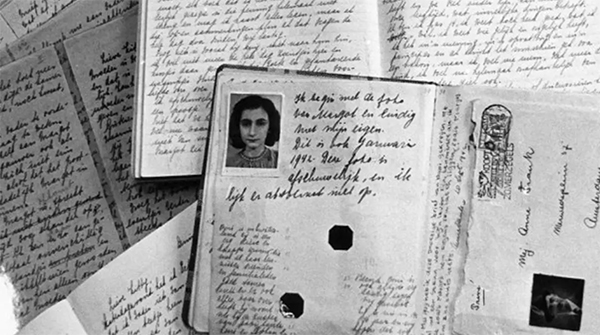
Anne Frank's diary reveals the experience of time as anguish: “Dear Kitty: Yesterday I was terribly frightened. At eight o'clock the doorbell rang persistently. Only one thing occurred to me: that it was them. But everyone insisted that it was just beggars or the postman, and I calmed down.” Anxiety goes hand in hand with paranoia; only the worst can be expected. The time of the pandemic is singular, unprecedented, and unheard of. We are experiencing the strange form of being in time, far removed from Heidegger, with a past that It was, and it is no more.connected to a future It will be, but it isn't either, because it hasn't been yet., as Aristotle would say; without a past that repeats itself, without a future that becomes evident, in a present in which we cannot be, because it seems that we are in an eternity without others, in a continuity without a future, like frightened animals and weakened humans.
But it's not just the previous image; there are other things happening in between, trapped, without yet the power to change destiny:Dear Kitty, wonderful news: we're going to have one more person in our hideout! Singing on balconies, buying groceries from the elderly, applauding those fighting to save lives—it's moving, but it's nothing more than a mosaic preceding death, powerless to defy it. In the hiding place and the long night of the looming war, where our only enemies remain ourselves, under the senseless aegis of victors and vanquished, the scene of Lauri (Claire Duburcq) caring for an abandoned, nameless baby who needs milk to survive is repeated, along with Corporal Schofield (George Mackay) trying to deliver a message that will convince the warlords not to go to the battlefield and prevent the failure of a war lost from the start, in Sam Mendes's 2020 film.1917.
You can also experience terror. The diary recounts: “Night and day, incessant transports of these poor people, provided only with a bag they carry on their shoulder and a little money”The time of terror is exceptional; it is a time of utter powerlessness. We can only hope it will pass, but its passing does not erase time's insurmountable power to fix us like a stake to the present, and to lead us toward the inevitable end belonging to a future fallen into disgrace and with a past that cannot be forgotten.
Finally, the intervals of time account for absences, the before and after like a photograph located outside of us, yet with us, as the only evidence of what we have become, witnesses to the unspeakable. Anne Frank writes: “The children, returning from school, no longer find their parents. The women, returning from the market, find their doors sealed; they discover that their families have disappeared.” The present remains the gateway between the past and the future, showing us that everything is in motion, even towards apparent nothingness. Time will always be different in its passage. irreversible, Jankelevich will say, because time is not the same in its occurrence and time-spaces change, even if we return to the same place.
There are events that break with the course of time, that seem to stop it; thus, although time continues without consciousness, in motion and within an apparent rest, the event questions everything to the point of experiencing the emptiness of the previous future, because what was ahead was an abyss, failure itself.
When time can no longer be predicted, and we don't know what will happen tomorrow, and tomorrow is what comes next, the day after, the following week, the next year, and all that remains is the repetition of a meaningless routine: get up, have breakfast, work, have lunch, work, have dinner, and sleep, just waiting for time to pass, and pushing everything into the future, without knowing if there will be a future; because in reality, our previous routine of getting up, going to work, returning, sleeping, even waiting for vacations, has stopped. Everything before has changed; we witness it encapsulated in a routine we already hated, so the experience of time becomes unforgettable and unbearable at the same time. Then, we realize that the acceleration of time made us forget that we were running toward nowhere. Today more than ever, we feel affected by time, which is changing everything, and in the relativity of space, as Einstein demonstrated, that's why the workplace, education, memory, and identity are constantly transforming without us having a choice, despite being a hors lieu –out of place–. The effects linked to these causes inherent in being in time demonstrate their capacity for destruction more than any nuclear explosion, because it is changing everything that exists and the impossible can become possible, while we have our eyes wide open like a frightened child who stays awake waiting to welcome the new.
We are in a time of what we cannot understand because we don't know; in reality, no one knows. Science doesn't know; the figures and curves are ridiculous demonstrations of this ignorance. Moreover, the government doesn't want to know; it only wants power. And we just want to get out of this to forget the experience of living through this timeless transition without knowing. We can no longer endure the confinement where the rhythms of mediocre relationships intersect and explode, with exploited motherhood, disciplining distance learning, and teleworking justifying the crushing technocracy. However, we will not get out until Cronus has completed his work of creation and destruction, until he finishes castrating his father and devouring his offspring to become infinite once more.
Anxiety overwhelms us when time stands still and seeks other paths; we struggle to sleep because rest is deeply connected to life. Fear has become the hands of the world clock, which is why weapons are bought and sold as in American society, why states close their borders, why we are terrified of whoever knocks on the door, why we don't know who walks the streets, who is exploited by Uber and Amazon bringing us food, medicine, the little things we depend on now more than ever. We distrust everyone, those who give us the statistics and create protocols, and the nation-state that was indispensable for neoliberalism to colonize our lives. Turning in on ourselves turns us into snipers of friendship, terrorists of love, potential racists, and dangerous xenophobes. When trust breaks down, we wrap ourselves in the blanket of loneliness, and most throw themselves into the arms of the soulless, surreal, ignorant, and criminal authoritarian leaders offered by the populist menu of our contemporary times. Undoubtedly, we are in an isolated, unique, and elusive present, inappropriately eternal in a way we never would have wanted.
The broken time opened a hole in the essence of humanity where saving lives is the same as letting them die, being in solidarity means locking ourselves away, fighting is doing nothing, working is pointless but we have to do it; studying is part of the technocrat's commandment without purpose, within a misnamed time continuityBound to the formula of the market's virtuality, we exhaust ourselves to the point of collapse, and hope is nothing more than waiting for what we don't understand to happen, and even if we do understand something, it's better not to. Broken time has been reversed; what remains is the present, the faint memory of the past, and an unwritten future; nevertheless, we want it to resemble nothing we once knew.
The sovereignty of time has been shackled, imprisoned, with us inside. Suddenly, home became a prison, mobility was chained, the body was diagnosed, health confiscated, and openness exiled. We all began to act like condemned prisoners; libertarians took up arms and went out to demand the freedom of the murderer, for his freedom has long since become divorced from responsibility. No one seems to have a guarantee of salvation; confinement is a postponement to buy time. The outside world is suicide, not just irresponsibility. The prohibition of the outside world doesn't place us inside, but rather in the outside world that requires a state of exception in politics and economics.
Even if we collapse every day, wanting to fulfill the morals of the family, the duty of the homeland, the custom of sex, the repetition of education, we cannot stop being in immobility because time has stopped, the stock markets can no longer speculate, we no longer expect the inevitable, we are drowning in the unpredictable.
The unpredictable has entered our lives like a thief, gotten into our beds, kidnapped hope; two is no longer the metaphysics that replaces one, it is contagion to confirm the apocalyptic tales of the prophets of the end times disaster, mocking Harari's post-human prophecy, of biotechnology that was supposedly already on its way to ending wars, hunger and disease.
Uncertainty is the only certainty we have in this broken time. Death is there, even if we don't want to die. Every body that is caused is a cause, because bodies interact with each other, as the Stoics believed. Now we feel more naked and fragile than the colonized person decolonizing themselves, the Marxist witnessing the collapse of capitalism, the woman forced to protect herself in the realm of patriarchy: the home. In short, the reign of the reason of progress, populist violence, and white superiority have been made a laughingstock. The numbers no longer add up in the time of the pandemic.
We are living through a tragedy in slow motion. It wasn't an earthquake, a nuclear bomb, or a tsunami. The virus advances slowly, killing rapidly, as it camouflages itself to replicate itself in multitudes, first thanks to the acceleration of globalization, and then with the precariousness of healthcare, the ineptitude of states, and neoliberal criminality. The virus, timeless, spreads across the border between the living and the inorganic, between the life drive and the death drive, opening the doors of an immune system already weakened by the fantasy of symbiotic consumption, fueled by the enjoyment, exploitation, and contamination of capitalized and sick bodies in the pandemic of cancer, cholesterol, diabetes, and, in general, the suffocation of life. Broken time kills bodies without relinquishing the stoic category of the incorporeal, akin to emptiness.
We live in a timeless time as Bifo Berardi says, Repeating is no longer differentiating As Deleuze supposed, it's about getting drunk without alcohol, going out without moving, living without living, dying without ceasing to die. If it weren't for the rhythms of work, we would confuse night with day, break the rules of eating, and talk to ourselves as if we were... Selfhood of Self He was the sole survivor of the shipwreck. Kant's spatio-temporal determinations would be a pure, unfolded form of a subject no longer empirical but transcendental.
The experience of time without temporality is only compatible with a virtuality devoid of consciousness, one that infiltrates homes where desire has been shut down, because living has been reduced to mere survival, and the technocrat's compliance is a mandate that can be flouted. If the body is the danger, digitalization dons the guise of a funeral insurance salesman, promising a peaceful and guilt-free death. The only escape from digital capitalism is a relationship without relationship, without context and without body, in the dizzying intersection of exteriority to seize the false interiority of a screen that opens without depth, with mere windows, similar to Leibniz's monads.
We're told that wild boars, monkeys, and wolves roam outside; we hear roosters crowing every morning; birds chirping not only at dawn but also at dusk; we see dolphins and whales on social media; the beaches are clean; the sky is blue again; and rats have taken over the streets and politics. The state of nature has returned and is asking us to turn things around. Leviathan From Hobbes, so that the state of nature does not become the justification for violence again. Time became curved, like Deleuze's fold, in a present that, without being anything, variegatedly brings together the past and the future.
Repetitive acts within the confines of the domestic sphere are inscribed in the experience of a pathogenic present. We have time to remember who we were, where we come from, to organize the closet, because we've run out of time for projection, for imagination. We can't see beyond our homes; we only see what comes to us through screens, while we make, unmake, and remake puzzles, waiting for the storm to pass, and it hasn't yet, even though they want to lift the lockdown so the economy doesn't kill us if COVID-19 didn't already. We watch videos to learn new exercises, we amuse ourselves with memes, until we get fed up because no god or goddess has come to save us. Most of our contemporary leaders seem like clowns, incapable of saving themselves. For this reason, today we know that we have to save ourselves, because Time is out of its hinges, Like in Shakespeare's Hamlet, it no longer depends on the solar orbit; it has acquired its own excess, it is not dependent on the clock or the minute. We have broken with the rules of Chronos.
Avoiding profound questions is the only thing that can stop suicide. The trip, the vacation, the business, the home renovation—change has all been canceled. When everything was changing rapidly, now nothing can change; change is a deception in the prolonged present. The only thing that should change is the act of changing itself. For this reason, capitalism is bankrupt, even if it won't admit it. It is the great victim, a corpse without press coverage that no one wants to bury, nor knows where to bury, least of all in our cemeteries, because our dead deserve respect and wish to rest in peace.
Why reschedule this year's trip? The Champions League, the Olympics, the sports leagues—what's the point of knowing who will win if, in reality, we are all losers and lost, lost in the inevitable system? There are no records, no winners; we don't care who might be first or second. If we survive, we'll be heroes simply for surviving. Life was reduced to its bare essentials when the postmodernists told us... that it was not necessary to essentializeThe system's offer to endure boredom and exploitation, the meaninglessness of the superfluous, no longer exists. The gaze shaped by aesthetics and the pleasure derived from exchange value has now fallen into blindness. Who can see you with your tattoos, your fashion, your jewelry? Can one seek attractiveness without the ornaments bought and sold at the mall? We have been thrown into the abyss of nature, of its pure beauty, of that which can only be as it is, without the mask, exposed to the elements, in the most superficial and profound nakedness at once. The phenomenon no longer appears; the appearance has been scorched. Everything we bought for freedom, security, happiness, now belongs to the garbage dumps that cannot be recycled despite the intentions of the indispensable environmentalists.
From our homes we watch the system collapse in a scene similar to the film Fight Club (1999) by David Fincher, where actors Brad Pitt and Edward Norton witness the destruction of the city, in this case, the destruction of the capitalist system with miserable and inept governments, since they only have the nineteenth-century capacity to deceive and/or repress us; while Antigone She has returned to bury her brothers, her husband, her lovers, her parents, her neighbors, her friends, her heart broken from constant weeping, while Creon seeks only order and strength to save the economy of those who sustain his apparent and wretched power, not the economy of taco vendors, sex workers, street poets, those who offer lucky charms for a few coins, those who sell candy, cell phone minutes, and ice cream, those who exchange numbers on city buses dictated in some dream so the poor can win the lottery, the economy of all the informal workers in the world, of those who invented the commerce that globalization and its market crushed. The law, therefore, dissolves in the contradiction between the lives of the majority and capital, and the pain of Antigone No It is more than a heart-wrenching cry for the unmourned dead, buried anywhere, for the cruelty and falsehood of the necropolitics of neoliberal states. Time without infinity forced her to do something terrible: not to cry for those close to her, and even less for those far away, because she was next on the list. There were no goodbyes, for we lost hope of ever meeting again. Confinement made us insensitive to the pain of absence. Epicurus's promise was not fulfilled. to be in the final conflagration without having known the ultimate meaning of things.
In short, we live in a time without transcendence, not because the doors of churches, synagogues, and mosques will close, as Harari says, but because every gathering has become a lethal weapon, others have become a public health problem, thus, otherness is forever eliminated with Levinas's infinity, and totality is resurrected from capitalist nothingness. The Enlightenment's intelligence had reduced them to an unrelated concept, right-wing and far-right governments had turned them into a scapegoat to camouflage their failures and hide their hatred, and now, with the virus, their annihilation has been decreed; that is why distance and the loss of trust bury otherness forever. This time without transcendence is the arrival of Aion in a present without moments, trapped by the event of the pandemic, beyond the causes because the effects have already entered through the rooftops, visible on the surfaces and without the depth of the state of things.
- Time is no longer gold
Time is no longer gold; we can't run because we're locked down. We've lost the senselessness of running aimlessly, which is an incredible advantage. The machine has stopped; it's jammed in its frenzy. That machine needed a lot of digitization and also a lot of cocaine to keep up its pace. Along the way, more than 50% of the world's population had been left out; they became unnecessary and disposable. For this reason, migrants, the victims of wars created by the West, the peoples of Africa and the Arab world, the peoples of Latin America, the Caribbean, and Asia, people with disabilities, the inhabitants of slums, settlements, favelas, and the shantytowns of the world—all of them surviving and walking the tightrope of life and death even before the pandemic. Those who were already inside—the Global North, governments, the upper and middle classes, corporations, intellectuals, artists, university presidents, and technocrats—were obligated to be in the... multitasking Now we have to sustain the unsustainable, fight against those below us, to have the food that those above give us, like in the film The hole (2019) by Galder, Gaztelu-Urrutia, and becoming entrepreneurs to try to obtain membership in the club of the civilized, silencing truth and justice, selling what is useless, consuming what is unnecessary, making the frivolous essential, and worshipping exchange value, which eliminated use value. Indeed, Cronos was no longer in the regulated movement of vast and profound presents.
The fantasy of capital has shattered, that fantasy that pulled us out of real time and made us believe that the only reality was fiction, which we accessed through the market—something drug trafficking and its mafias understood very well. Who do we want to be like? Suddenly, we had to pack away that fantasy in a box with the old shoes. We no longer have to dress elegantly or wear makeup to please someone, or cut our hair, or try to appear attractive or handsome. Authenticity is readily available because fantasy sleeps with the old shoes. We no longer want to be like Europeans or North Americans; besides, they never wanted to be like us. It would be a bad joke if any government were to propose a life plan copied from the North after this catastrophe. Can we continue to measure ourselves against anything or anyone? What is the absolute standard? Is PISA the measure of education in the South? Do we want an American way of life? Do we still dream of the humanity of old Europe? We need to look at our America, which is never quite finished being and never truly believing in itself. We can no longer believe in absolute time and space after Einstein, because nothing is linear: neither is progress nor development, neither is civilization nor the distinction of capital. Space and time are curved, relative, and elliptical. While everything has an extent and occurs in a place, everything has a beginning and an end, then: what is the extent of what we can be? Even though everything has a before and an after, a here, a there, and a now, at what moment does existence begin anew?
Now money is no longer enough to buy superfluous things; confinement forces us to live with only the essentials, and the essentials are sorely lacking in our deeply unequal societies. That's why Piketty's proposal is so important. We've had to learn to live like the peoples blockaded by North America, or like the peoples who have lived since the invention of the terrorist subject, because they refused to submit to exploitation or the failed Western model. What is the value of money? Having more is ironic; having almost nothing, or having nothing at all, is a crime, now and always. When people have more and more, the dispossessed will grow; when they have less and less, life for everyone will become impossible. While the rich "safeguard" their wealth in tax havens, almost the entire planet is preparing for a situation worse than the pandemic: the deepening of the contradictions of capitalism and the effects of its potential demise. Such an event follows its own ontology in a time that seems to float, which ceased to be monotonous due to anguish, and has no duration because it continues to belong to the natural geometry of the universe.
Things that used to save us time are no longer useful; cars are parked, planes can only take off for humanitarian missions, the subway is almost empty, small businesses are going bankrupt, and big businesses are waiting for capitalist governments to save them; the fish tanksThe buses that serve the neighborhoods in Mexico are called "colectivos" (community buses), carrying the unseen workers, also fearful of death, but with no other option. Yet, it is they who allow us to survive, because they have long lived within the care economy. There is no time to work out at the gym; what remains is that virtuality that was already present: teleworking, distance learning, shopping, medicine—a virtuality now sold as the promise of success. Google has arrived to "save" us—what an irony. Indeed, the floating time of the pandemic is now a time pulsed by new and old forces.
The era in which capitalism has lived has been an era of death. The virus has not only revealed that we lack good governments and good health and education systems, not only has it demonstrated that those who govern and support the government are criminals against life, health, and education, the virus has exposed that capitalism is thanaticApocalyptic, turning its back on Buen Vivir (Good Living), not only because of its contradictions, but also because capitalism itself is pandemic. The present, therefore, wants to be continuity, She doesn't want to cut ties with the past, much less break with the previous future. She wants to merge with both, without guilt or remorse. She wants to cover herself and melt away, as if nothing had happened. The intersection is the signifier of this covering. Her apparent repose is fluid, adapting to the metaphor of continuity, even though the two sides of non-being, past and future, never come into contact.
This time of pandemic makes us understand what we couldn't understand before: that capitalism is vulnerable despite Logan's observations. X-MenThat it wasn't necessary to align the consciousness of the working class with the conditions of possibility in order to wait for the time of change, as Lenin intended; that potential is not only part of being, as Spinoza would affirm, but also part of non-being, because something very small, invisible, unpredictable has been able to decompose the world-system, already ailing beforehand and witnessed in the global protests of 2019 from Beirut to Santiago. Capitalism was not invincible despite its weapons, its repression, the impossibility of seeing ourselves outside of representative democracy, the blindness of the economy, and its acolytes and sycophants in the middle class. The world-system created the conditions for disaster when it lived under the aegis of time is moneyAnd it brought about the destruction of nature with its insane logic of accumulation and of turning everything that exists into a commodity. Time, transformed into gold, accelerated not time itself, but the machine, and robbed us of the possibility of thinking about time, of feeling with time, and of experiencing a timeless caress.
The aftermath, the after It teaches us lessons like Hegel's Minerva's bird flying at twilight. The time of competition, of calculation and figures, is not the time of the best, nor is it something that can be found between the least and the most, the BEST It does not come from mathematics; its source is not in the balance of extremes. traditional The market's unlimited reproduction wasn't a magic solution; it was a blind solution that produced epidemics: Ebola, avian flu, SARS, coronavirus, and the resurgence of measles and tuberculosis. Capitalism turned its back on the time of life, on happiness and love. Though ephemeral, these contain eternity and are like the water we receive in our hands when we are thirsty and have nothing else to rely on. We cannot try to grasp love or happiness; they are not objects of accumulation, they cannot be possessed. We only feel their refreshing effect without ever quenching our thirst, forcing us to always place our hands in the purest gesture of humility, so that the other person will turn and look at us with tenderness.
The expansion of capitalism had stalled in the last 10 years; it was already in crisis and refused to accept its stagnation, hence the usual recourse to austerity. Acceleration attempted to pull the machine out of the mire, but ended up generating implosions. Meanwhile, algorithms supplanted existence, and bodies dematerialized until the virus reminded us of our inherent fragility. The space that expanded globalized and contracted until it was lost in place. The power of the market left nation-states ungovernable. In reality, international cooperation without questioning the market became an agency caught between selfishness and charity. The contradiction between the global market economy and the politics of nation-states is a consequence of the accelerated pace of globalization. the non-place of the market. The inside and the outside had different records of time that came and went like the waves of the sea on our shores. The inside could be planned, but the outside was the great apocalyptic Leviathan. Finally, the private became the nest of the public, while the public abandoned its substance at the very moment that the common declared its retreat.
David Harvey reminds us that Marx said that The recession is caused not because products cannot be sold, but because they are not sold in time.This problem makes neoliberalism criminal because it's inefficient to have 400 beds in a public hospital, as the president of Ecuador stated. Then, what's the point of large universities if they can offer courses? on line For hundreds and thousands of students? What's the point of teachers if distance learning exists? What's the point of research if we're underdeveloped? The era of efficiency has replaced results with the future, evidence with meaning, flexibility with principles, obsolescence with durability, and immediacy with foresight. So, what's the point of preserving if the market is globalized? What's the point of writing with… and for the future if what counts is the number of writings? What's the point of principles and loyalties if everything changes? What's the point of changing the world if the world is what changes us? What's the point of the future if everything must be… ready-to-wear, ready-to-wear?
There is no time for thought in capitalism; therefore, it is not surprising that the act of thinking has been stripped of its horizon, and consequently, the lives of retirees have become mere statistics. In fact, capitalism has hidden the elderly away in modern boxes called nursing homes, because the world belongs to the young and to market formulas that infantilize us, as Badiou so aptly pointed out in his book. The True Life. Furthermore, our societies steeped in impulsive capitalism, which develops the logic of whim, will increasingly require authoritarianism, as Meirieu points out in The Duty to Resist.
Given the breakdown it has caused the time is gold Regarding capitalism, we must seek the answer to two fundamental questions:Is a world outside of capitalism possible?? Is another time possible, in which time is not gold, but love, life, justice, truth, fraternity, good living? Without such answers, the present will have the thickness of a mirror and the future will continue to repeat the old formulas of disaster.
- What do we want to happen over time?
It's not about wanting to know what will happen, because what we lack now is knowledge, since Kant's three questions about knowing, doing, and hoping are suspended. All that remains is to think and imagine what we want to happen. We know that pain, when it doesn't kill or destroy us, can lead us to a moment of lucidity, and when we have lucidity, it's to speak out. that we no longer want to live as beforeBut knowing what we don't want isn't enough. The negativity of original sin in our Christian anthropology and the negation of the Hegelian negation don't place us directly in the time of invention. It's not that the self is in time, but rather that time is in the self, and it exists as a "we" that we now only see from our windows or on social media.
During lockdown, we learned an unforgettable lesson: the distinction between what is important and what is insignificant. Will we still be able to make this distinction after the lockdown? We will have to decide, or else the market and advertising will continue to decide for us, for each of us, in every home, in every community, in every neighborhood, in every town. And for that, we need time not only to think, but to think well, to do well, and to feel well. Perhaps we will have to turn to the folds of Leibniz and the Baroque, because what is folded is what is connected, even if the points of connection are not shown. And we will understand that the folded tortilla is a connection to the past, which can guarantee a better future.
The nation-state cannot continue to make decisions for everyone. Representative democracy is not democratic. We cannot allow life to continue being decided between Democrats and Republicans, between Labour and Conservatives, between mobsters and reformers, between liberals and conservatives, between the right and the left, out of fear of the never-buried fascism of the far right that gallops across our devastated fields, wanting to kill the majority so that the chosen few may live. Let us begin the process of reinventing the state and reclaiming politics. History cannot continue to be written by the victors, politics cannot be in the hands of murderers, the economy cannot be run by those who have lost their souls, and education does not deserve mercenaries who claim to teach something only for money. In the end, we are nothing more than fragile human beings who want to grasp a sliver of happiness, who require so little for a good life, who are so weak and vulnerable that a simple hug would be enough to make us smile and carry on, or who simply want to be heard while looking into our eyes, because we know that to live is to coexist, that to learn is to learn with others, that life without love is not worth living, that the end is already written, and that this adventure of living that we all share deserves to be lived as an unforgettable experience by each of us, for our children, friends, loved ones, for all those we know and don't know, those yet to be born, those who are afraid, those whom no one sees, those who don't interest anyone, but whom we know deep down have always fought for the same thing. The new era is the coexistence of the past, the present, and the future. We want mangoes to taste like mangoes, for the soups that connect us to the past to survive the present and be on the tables of the immediate future. On this journey, we want to bring everything essential for life. We cannot live excluding the before and after—that before of migrants and the exploited, which we need to liberate, this present of profound inequalities and the denial of the future long before the pandemic. We must unfold the contracted past to prevent the future from doing tabula rasa or convert the memory into an electronic control device.
Where do we want to go when the house has collapsed? Can we pretend nothing happened? It's difficult. Global death and economic destruction are real, and every day that passes makes it worse. We can't sweep the corpses under the rug and try to restart the machines. Those who resort to austerity to cut education and healthcare are simply miserable, neoliberal gravediggers of life. We all have to build the house together; we need a new house, one where everyone can fit in, and we can use some of the things that are still useful from the old house. Are we willing to roll up our sleeves? Do we want to make up for lost time? However, we are unaware of lost time because we have never experienced it, and this is Marcel Proust's paradox. We have to do what we were never allowed to do, but some did. Conscience will not be the rudder; imagination and generosity will be at the beginning, in, and after. That is why lost time cannot be explained, even if it is justified.
Do we have the capacity to move beyond aesthetic enjoyment? We have spent months living in simplicity, without the consumption that shapes our perception, our sense of self, and our new identities. Everything has fallen into place. Are we going to allow consumption to embrace us again until it suffocates us? We have had to separate the pleasure of consumption out of a desire to stay alive. We hope that men, women, gays, transvestites, bisexuals, transgender people, sexual minorities, communities, workers, and all peoples will continue to learn. to be outside the aesthetic enjoyment of capitalismBy doing what no revolution has managed: creating authentic people, capable of choosing commitment over compliance, the lives of the most vulnerable over their own petty interests. If that doesn't happen, we will probably continue waiting for the end times. We will have to return to repetition as the inescapable condition of difference that Deleuze showed us. It's not just about being beyond imposed generalities; it's also about being beyond the particularities of memory.
Today, more than ever, we need to be realistic in order to reinvent ourselves. Any reinvention will have to be concrete, inclusive, inclusive, and realistic. Every life is irreplaceable, every community is essential, every measure will involve sacrifice, and every plan will demand boldness. The world deserves to be considered from three perspectives: health, education, and the economy. All of these must be woven together by a politics of care, emancipation, and the commons. Undoubtedly, we must usher in a new era.
We Latin Americans have experienced 500 years of colonization, women have lived through 2.000 years of patriarchy, workers, the unemployed, and nature have suffered 200 years of capitalism, and the peoples of the world have endured 50 years of North American domination. The question is: Can we break free now? What must we do today to finally be ourselves with others? So that others can be themselves? So that we no longer have to choose between nature and life? Between the rights of all or the privilege of a few? Between dying of hunger or dying from contagion?
We are at a crossroads, where we can choose between the worst and the best. We can forget about debt, credit, and accumulation, and live more in solidarity and cooperation. Has our way of thinking changed? As Byung-Chul Han says, The virus doesn't make the revolution, we make the revolution.Indeed, we are certain that things will change; we don't know in which direction, but we cannot allow those who brought us to the brink to now tell us where to go. The "I" will have to become a "we," and the "we" must include nature.
We had to learn to live in a changed world; we need to build not a perfect world, but one that is better than the one we had before the pandemic. That world was only sustained by repression, ideology, and propaganda. It is time for something irreducibly new.
We are no longer the same, and we may emerge with a great deal of hatred because fear, for some reason, provokes it. There is a temptation toward authoritarian regression, which can be very dangerous through virtual and totalitarian surveillance. It will be crucial to demonstrate that those who fared better did so because they had better public health systems, education, science, and because they had leaders the population could trust, not sinister actors of calculation and death.
It is important that the path we want to take includes democracy, rights, a future, education, health, and a minimum wage. We cannot forget that when our future runs out, the only solution is to shut ourselves away. Time is movement; it happens in relation to space, it has a beginning and an end, and it is not always the same. The spaces we inhabit, where we move, where we work, where we have fun, will require new movements to be compatible with the time we wish to usher in.
I don't know if we'll all learn, but two hard lessons have emerged from this pandemic: the first is the fragility of humanity, which needs the common good to establish the individual. Fragility constitutes us from beginning to end. Heroes with superpowers are useless; we need to trust those who ask questions, those who cry, those who tell us they are lost, those who don't refuse a hug because it's the only thing they can always offer, and in reality, it's the only thing we need when we lack everything, even though we have nothing in abundance. Let's build, in this time, an anthropology of fragility, not to justify our actions, but to become better, and let's rely solely on it to build a life of well-being. To do this, we need to position ourselves in a time where what comes next is not a repetition of what came before.
Secondly, the world can only be socialist; it cannot belong to a few who exploit everyone else. Life cannot be lived in inequality, poverty, patriarchy, or colonization. To truly live, we need to live in harmony with nature, in cooperation, without borders. We can be happy with little money. Indeed, now more than ever, we need Buen Vivir (Living Well).
In short, what we will really need is time for education, because nothing we aspire to be human is foreign to education. Therefore, we will need not a piece of time from the technocrat, because there is no quantifiable measure of time in education, nor will it be the time of the acceleration of capitalism, which doesn't actually exist in terms of physics, but rather the duration of educational time, which contrasts with the brevity of the act and the fragility of life.
Stephen Hawking in A Brief History of Time, Speaking of general relativity, he wrote the following: “In it, space and time are dynamic quantities: when a body moves, or a force acts, it affects the curvature of space and time, and, in turn, the structure of spacetime affects the way bodies move and forces act. Space and time not only affect, but are also affected by everything that happens in the universe.” Then, this dynamic, unprecedented time allows us to anticipate something else, something we don't know what it will be, something we're uncertain whether it will be better or worse, but it will not emerge from the interval between the beginning and the end of the universe. Even so, biological time will allow us to modify and mutate it, philosophical time aims to make the impossible possible, the time of poetry helps us contemplate another, desirable world, and only the time of education can build that which has always been part of hope.
Mexico, May 15, 2020
[1] Philosopher. Former rector of UNAE, Ecuador. Current researcher at UNAM, Mexico.
If you would like to receive more information about CLACSO's training programs:
[widget id=”custom_html-57″]
to our email lists.

