Critical agroecology and Andean knowledge: assessments and lessons learned from the IFSA Andes program

References and researchers of Research and Information Program on Andean Agroecological Systems (IFSA Andes) shared in the InfoCLACSO of June 24, 2026 the achievements, findings and territorial impacts of this initiative promoted in partnership between the Latin American Council of Social Sciences (CLACSO)) And McKnight Foundation.
Launched in 2018, the program has consolidated an active cooperation and research network in the three Andean countries —Bolivia, Peru and Ecuador—, focusing its actions on territories located more than 2.500 meters above sea level to strengthen the local agroecological transition, food sovereignty and socio-environmental justice.
Next, we review the main reflections and contributions presented by the program coordination and by research teams from Bolivia and Peru.
1. General framework and prospective vision of the IFSA Andes Program
Interview with Karina Bidaseca (Coordinator of the IFSA Andes Program)
Over almost eight years, IFSA Andes articulated academic research with the demands of peasant and indigenous communities through two major stages:
- Academic training and incidence: In its first phase, it funded master's and doctoral theses of young researchers, resulting in open access books such as Good Living and Local Knowledge (2021) and Agroecology in Andean Systems.
- Collective and territorial construction: The second stage moved towards collective projects between teachers, students and communities, promoting training with a gender, intersectionality and biocultural perspective.
Among the program's key contributions are its advocacy for democratized access to land and water, the revaluation of native seeds, and the incorporation of Indigenous worldviews as an ethical and political safeguard against the global climate crisis. As a landmark for future development, the program gave rise to the Open Chair "Sowing Futures: Youth, Territories and Agroecology in the Andes", a space aimed at empowering the leadership of rural youth.
2. The “nurturing of the landscape”: peasant knowledge and resilience in southern Bolivia
Interview with Carlos Vacaflores Rivero (Jaina Studies Community, Bolivia)
From southern Bolivia, the team coordinated by Carlos Vacaflores Rivero presented the results of the study on the "nurturing the landscape" carried out in the community of Calderilla (Sama mountain range, Tarija).
The work places the peasant communities of the southern valleys in a "periphery within the Andean centrality" which, after going through processes of colonial deconstruction and agrarian reorganization, are now actively reconstituting their biocultural legacy.
- Landscape as a planning category: In the face of rigid administrative boundaries, the geographical notion of landscape It allows us to understand the reciprocity between the community and nature: human beings "raise" the environment and are raised by it.
- Ancient technology and climate change: The research identified terracing practices for soil conservation and aquifer recharge, demonstrating that the response to climate change requires articulating local knowledge with an understanding of major continental hydrological cycles.
3. Community economy and reciprocity from the Peruvian Andean south
Interview with Dani Vargas Huanca (Institute for Research on Indigenous Cultures, Peru)
For his part, Dani Vargas Huanca presented the conclusions of the research developed together with Elvis Álvarez and Angela Velásquez on the indigenous economic practices that sustain agrobiodiversity in southern Peru.
The study contrasts the anthropocentric agro-industrial model—based on monoculture and homogenization—with Andean community agriculture, which is geared towards preserving multiple species adapted to the territory and protecting against price speculation in times of crisis.
- The validity of Ayni, Chalay and Barter: Ancestral institutions such as reciprocal labor (Ayni) and the direct exchange of products (Chalay) are maintained as living mechanisms of self-organization.
- Local sustainable development: These dynamics express a real and legitimate value that generates food sovereignty without depending on the logic of the conventional market.
The IFSA Andes journey demonstrates that critical agroecology and the traditional knowledge of Andean peoples are not vestiges of the past, but dynamic and indispensable models for building alternatives to contemporary socio-environmental collapse.
Below you can see the InfoCLACSO with more interviews on this topic Research and training program in Andean agroecological systems 2024-2025
They report:
Karina BidasecaProgram Coordinator
Walter PengueAgricultural Engineer specializing in Plant Science. Member of the Founding Group of Development Thinkers
Sustainable (ECLAC), program tutor.
Carlos Vacaflores RiveroJAINA Study Community, Bolivia
Mel Becerra LavadoAlsakuy Agroecological, Peru
Fernando LarreaAndean University Simón Bolívar of Ecuador
Dani Vargas Huanca, Institute for Research on Indigenous Cultures, Peru
Karina Bidaseca and Pablo Vommaro (coords.)
Buenos Aires: CLACSO and McKnight Foundation. 2026
Research Grants Collection
More recommended reading on this topic:
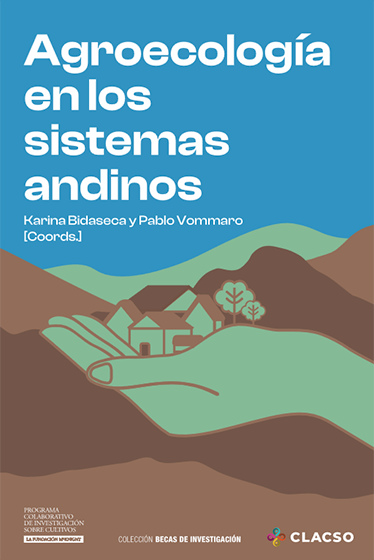
Agroecology in Andean systems
Pablo Vommaro. Karina Andrea Bidaseca. [Coordinators]
Buenos Aires: CLACSO and McKnight Foundation. 2021
free download
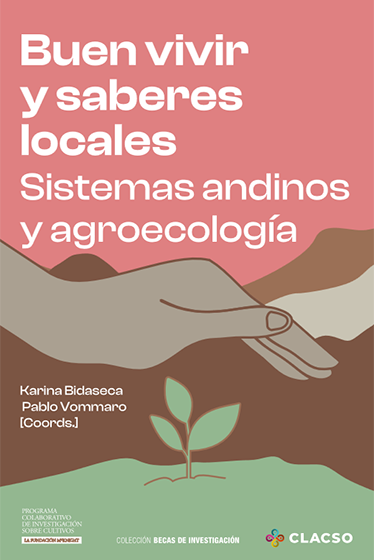
Good living and local knowledge. Andean systems and agroecology
Karina Bidaseca. Pablo Vommaro. [Coordinators]
Buenos Aires: CLACSO and McKnight Foundation. 2023
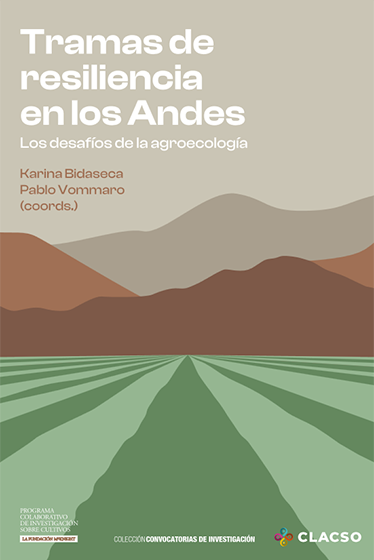
Networks of resilience in the Andes. The challenges of agroecology
Karina Bidaseca. Pablo Vommaro. [Coordinators]
Buenos Aires: CLACSO and McKnight Foundation. 2025
free download