
Ackerman: "In Mexico we are experiencing a very hopeful change, which breaks with three decades of neoliberalism."
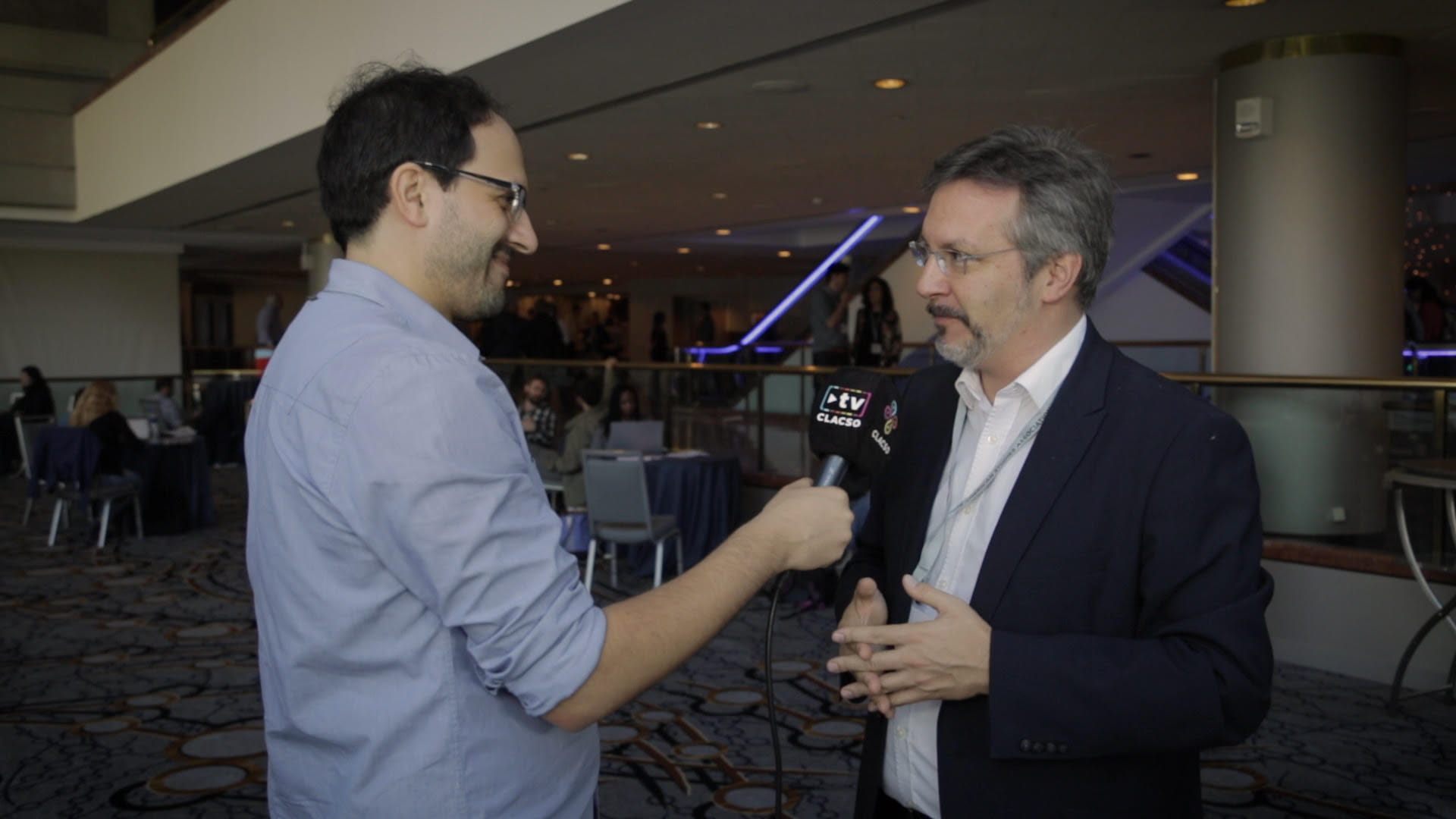
At the 37th LASA Congress in 2019, CLACSO TV spoke with John M. Ackerman, professor and researcher at the Institute of Legal Research of the National Autonomous University of Mexico (UNAM), who referred to the current Mexican government as “a change of great hope” and said that López Obrador's victory is the result of “a very important ideological struggle.” He added, “We cannot delude ourselves into thinking that just because we defeated the right-wing government, we suddenly have power.” He also questioned a sector of Mexican academic journalism, since they supported AMLO at one time and now that he is president, “they position themselves on the right and criticize him.” He also mentioned the phenomenon of “fake news” in electoral campaigns: “One area where we have made significant progress in the media agenda is in electoral matters. We have a system in place to restrict the purchase of airtime on radio and television.”
The reality of Latin America is as volatile as the situation five years ago when we were in one place and now we're in another: from the rise of right-wing parties in various parts of Latin America, such as Argentina, Brazil, and Chile, to the renewed hope surrounding AMLO's presence in Mexico. What are the expectations regarding this change of government, which marks a different landscape not only in Mexico but also regionally?
In Mexico, we are experiencing a very hopeful change, with a new left-wing government proposing different things that break with three decades of neoliberalism: we arrived late, but at the same time, we arrived strong. Many of the strategies the right wing is now using to derail and harm left-wing governments in South America are the same strategies they already used in Mexico: they allowed them to stay in power, such as the attempt against Andrés Manuel in 2005 when they tried to imprison him but failed. All the manipulation on social media and television has been done in Mexico for thirty years, but they were defeated on June 1st of last year. So, Andrés Manuel's victory is the last "pink wave," but it is also the first step in a return to the left across Latin America. In Argentina, Macri's government is unsustainable; it is losing legitimacy terribly, as is the case in Ecuador and Brazil. I believe this right-wing backlash against the left-wing waves doesn't have to last much longer. In Mexico, we must keep the torch of hope burning. The media landscape remains the same as before, except that this television and media hegemony, which previously focused on praising the president, now focuses on attacking him. But we continue this very important ideological struggle.
-Power resides in the government, but powerful elites remain in the media and industries. How do you think a more progressive, left-wing government can be structured, considering that power will continue to be concentrated elsewhere?
We can't delude ourselves into thinking that just because we've defeated the right-wing government, we suddenly have power. That's just another place from which to continue the same old fight, which is for justice, for change; that's where the challenge lies. And that's what those obsessed with this liberal logic that ends up being neoliberal don't understand. There are many academic journalists in Mexico, for example, who supported Andrés Manuel at one time, but now that he's in power, they've basically positioned themselves on the right and criticize him. Of course, the government should be criticized, but it's crucial to understand when a government is allied with the people and when it's allied with the major international interests of the oligarchy. So, this is a great challenge, a difficulty, because these international networks are still in place: economic power in Mexico remains highly concentrated in very few hands, and in general, they themselves are giving Andrés Manuel the benefit of the doubt on some issues. If you look at the economy, it hasn't collapsed, the Mexican peso has strengthened, growth expectations are low at 2%, but this collapse that the right-wing opposition in Mexico so loudly predicted and desired hasn't happened.
-You have a lot of experience understanding media and working in the media and producing a program. What is your opinion regarding the phenomenon of “fake news” and how was the election experienced in Mexico?
-Starting with the most recent point, they implemented the exact same strategies as with Macri and Temer in Mexico. There was a recent leak of information revealing that during the election campaign, major Mexican businesspeople allied with right-wing intellectuals established fake news production labs where money flows like water. The troll commander claimed that each meme cost 50,000 pesos, which is unbelievable. But even so, we defeated him in Mexico. The defeat wasn't a matter of circumstance, but rather the result of a long struggle, of visiting town after town; it wasn't a matter of media strategy. At UNAM, in fact, we're about to hold an intensive community journalism workshop on "Combating Fake News." It's one of the major new fronts of academic and intellectual work that we have to undertake, because it's incredible. They realize that by fabricating realities, they can generate hysteria and rejection of progressive proposals. We, as a society, must be prepared to identify this and, ultimately, maintain that commitment to truth and justice.
-In this sense, there was legislation, for example in Argentina with the Audiovisual Communication Services Law, which was very important in creating space within the radio spectrum for community radio stations and other types of organizations. But it's true that the internet seems to have overtaken some of that, or at least those laws seem outdated. What's happening in Mexico regarding this, considering that the media landscape there is also very powerful?
One area where we've made significant progress on this media agenda is in electoral matters. For many years, we've had a system restricting the purchase of airtime on radio and television for political campaigns; and about ten years ago, a constitutional reform was passed that completely prohibited any purchase of propaganda or advertisements on radio and television. This has helped to bring forth more diverse viewpoints, unlike in the United States where whoever pays calls the shots: here, there is state-allocated airtime for electoral campaigns. However, just as with the reform in Argentina, it's being overwhelmed by the amount of airtime. This "fake news" campaign, for example, in 2018, was exclusively on social media. Social media is taking over, and we're losing some of this state authority, this regulation of public education without censorship, but simply ensuring equity, and that's what's important. I believe we do need to engage in this debate globally, and Mexico and Latin America in particular. Regulating the internet sounds awful; nobody seems interested in regulating it. I am the first to appreciate social media as a space for freedom of expression, but we must take seriously the fact that private interests and powerful vested interests, including those wielded by the companies themselves—Twitter, Google, Facebook—are infiltrating these platforms. These are proprietary companies that can close your account whenever they want. So, how do we guarantee genuine democratic discussion in this new media landscape? That is the great challenge. Because, yes, commercial media, radio and television in Mexico, remain largely the same as before. We have some other options now, especially public media, which are trying to bring more pluralism to the discussion, but this presents a significant challenge for all levels of government.
-Finally, John, regarding this more optimistic view of what's happening in Mexico: can we be optimistic about the rest of Latin America, considering it's a crucial election year in Bolivia, with Evo Morales potentially continuing in power, and in Uruguay and Argentina? How do you see this situation?
"It's what I was saying at the beginning: I think it's somewhat like Mexico's example; it arrived late to the pink wave, but this effect is the first of a new wave. Because I don't see these right-wing governments truly offering a new, utopian, transformative vision to their societies. I see them as temporary reactions to the weakening of these progressive experiments that had been going on for ten, fifteen years, and by then people wanted something different. But now that they're seeing what that different thing is, there will be a return. If we continue working and fighting together, I think that can be achieved; we'll see this year. I think the Argentine election will be key, and the Bolivian one as well, of course. We'll see how the governments of Bolsonaro and Trump himself develop, which are the great experiments of this new neo-fascism, and whether they manage to consolidate their legitimacy. Trump does have legitimacy; people expected him to collapse like Macri, but no, he's still there and could be re-elected. This speaks to very profound things happening in the United States, which also need to be diagnosed very carefully." I believe that in Latin America I have an optimistic outlook on the near future.

