
Youth research
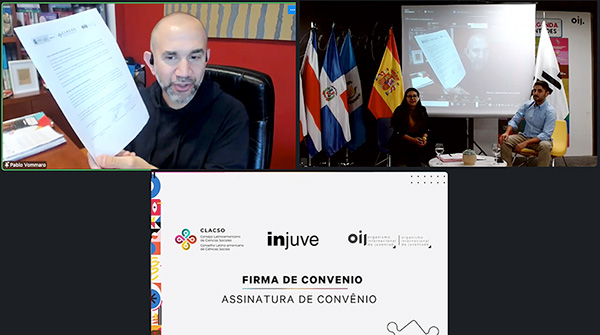
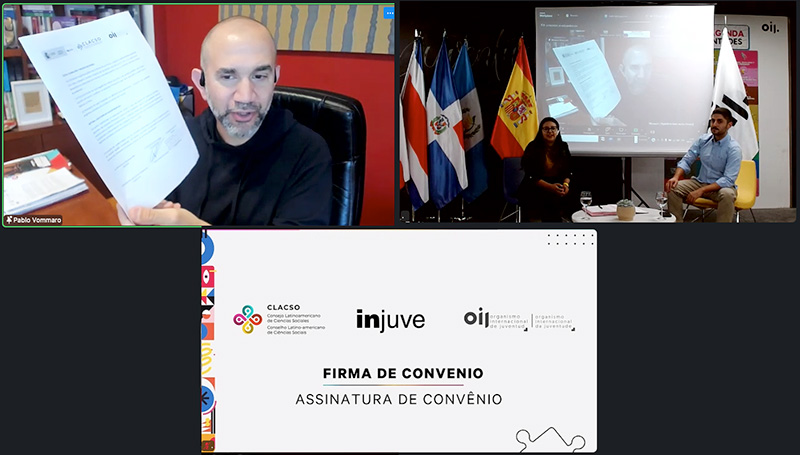
On October 30, Margarita del Cisne Guerrero Calderón, Director General of the Youth Institute (INJUVE), Pablo Vommaro, Executive Director of the Latin American Council of Social Sciences (CLACSO), and Alexandre PupoSecretary General of the International Youth Organization and for Ibero-America (OIJ), signed a General Protocol for Action in Research on Youth, whose objective is to promote concrete actions for the benefit of young people in the area of knowledge building and capacity building.
The parties propose to cooperate in areas such as the joint undertaking of studies and research projects on topics of common interest; the planning, organization and development of specific training programs; the development of courses, workshops, seminars, conferences and presentations of publications; co-editing and shared publications on topics of interest to the parties and within the framework of their institutional lines and the exchange of publications and information of institutional interest between the parties.
Pablo Vommaro He stated that “at CLACSO we are very pleased to sign this agreement, which will strengthen our direct work with young people in Ibero-America, both in Spain and in Latin America and the Caribbean, to consolidate the leading role that young people play in the region's social, cultural, and political processes. We believe this agreement is a key tool for recognizing and promoting youth leadership and the impact of their actions in a complex world, with democracies that are challenged, but also full of transformative potential.” He concluded: “At CLACSO we have been working for years on research, training, and advocacy with young people, and this protocol will allow us to join forces and generate synergies to strengthen this collaborative work.”
At the same time, Margarita Guerrero He affirmed that “for the Youth Institute, this protocol represents a strategic reinforcement of research and the strengthening of youth observatories. We want public policies to be built on scientific evidence and to recognize young people as protagonists of social transformations, actively participating in the design of policies that affect them. This agreement will allow us to share experiences, data, and methodologies that strengthen the real impact of youth policies on the lives of young people.”
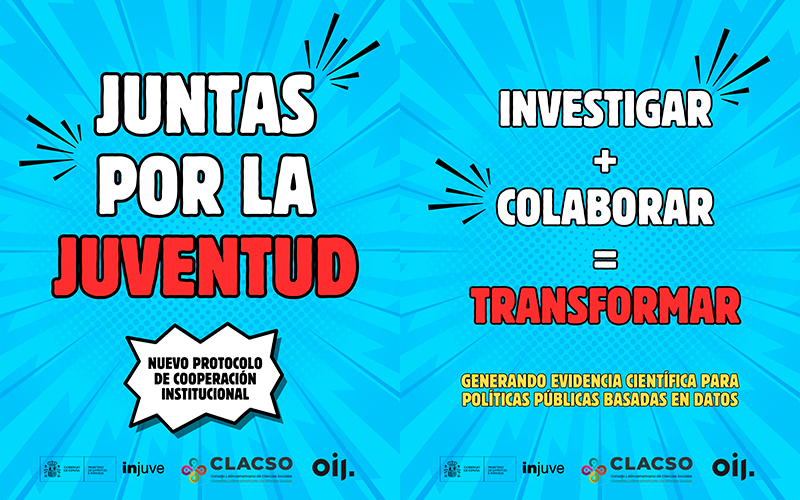
Finally, Alexandre Pupo He added that “this protocol is a powerful and strategic alliance: it brings together the leading social science think tank, an institute with extensive experience in youth research, and a regional organization committed to strengthening public youth policies. A good agreement is one where all parties have something to contribute, and in this case, the three institutions contribute knowledge, data, experience, and political commitment to Ibero-American youth. This three-way meeting strengthens youth institutions in the region and shapes the future of the society we want to build together with our young people.”


