
Multi-level initiatives and regulations for Open Science
The Latin American Council of Social Sciences and the Carolina Foundation present the working document “Multilevel initiatives and regulations for Open Science: Open infrastructures and evaluation systems in Ibero-America”which brings together a set of contributions on open infrastructures for Open Science, in dialogue with trends in responsible research evaluation in Ibero-America.
The following are participating in the research:
-Introduction: Karina Batthyány (Executive Director of CLACSO) and Pablo Vommaro (Director of Research at CLACSO).
-Guidelines for Open Science and incentives from the evaluation of research in Ibero-America: Laura Rovelli (Coordinator of the Latin American Forum on Scientific Evaluation (FOLEC) of CLACSO) and Ana Luna González (Research assistant at FOLEC of CLACSO).
-Overview of open infrastructures in the face of Open Science: Arianna Becerril-García (Full-time research professor at the Autonomous University of the State of Mexico).
-Open infrastructures in scientific communication and publication and their indicators: Saray Córdoba González (Co-coordinator of the CLACSO Working Group on Open Science as a Common Good) and Remedios Melero Melero (Researcher at the Institute of Agrochemistry and Food Technology of the Spanish National Research Council).
-Challenges of institutional repositories as a source of indicators for monitoring Open Science policies and evaluating research: Lautaro Matas (Executive Secretary of the Latin American Network of Open Science Repositories – LA Referencia), Andrea Mora-Campos (President of LA Referencia), Rodolfo Barrere (Coordinator of the Ibero-American Observatory of Science, Technology and Society of the Organization of Ibero-American States) and Federico Cetrangolo (Administration Manager of LA Referencia).
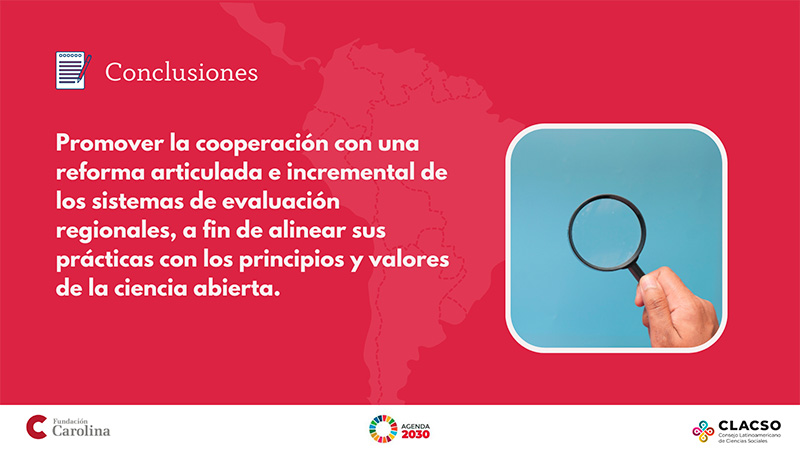
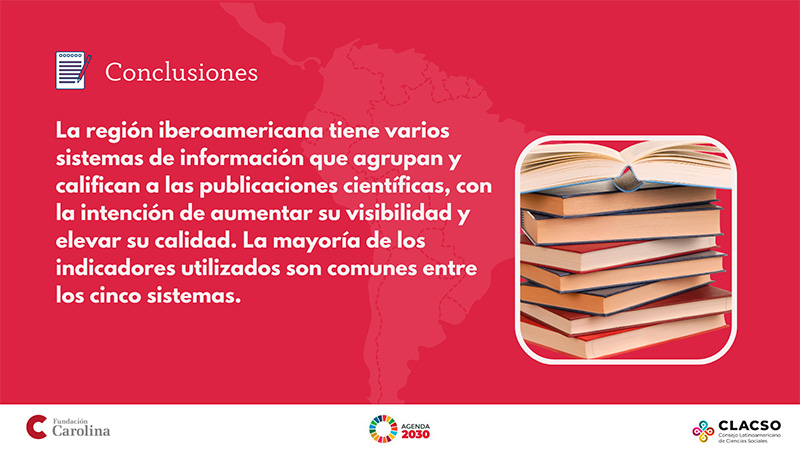
Throughout the report, various recommendations, plans, and regulations on Open Science in Ibero-America are updated, and some initiatives for reforming scientific and academic evaluation systems are described. The notion of open infrastructures and their role in Open Science practices are then conceptualized. Furthermore, the study analyzes five information systems in the Ibero-American and Caribbean region to investigate the indicators these infrastructures use when selecting the journals they include. In parallel, the national journal evaluation systems of some countries in the region are explored. Finally, the document examines the current state of Latin American repositories in relation to the coverage, statistical validity, and quality of their bibliographic information. For this purpose, the collection aggregated by LA Referencia is used as a source.
In closing, the study highlights the remaining challenges in strengthening open infrastructures in interaction with their communities and proposes guidelines for improving evaluation indicators. Finally, it offers a series of recommendations to enhance the bibliographic information in repositories, thereby strengthening their role as sources of indicators for a more transparent, inclusive, and collaborative scientific evaluation, from an Open Science perspective.
If you would like to receive more information about CLACSO's training programs:
[widget id=”custom_html-57″]
to our email lists.

