
III International Congress on Suicide Prevention
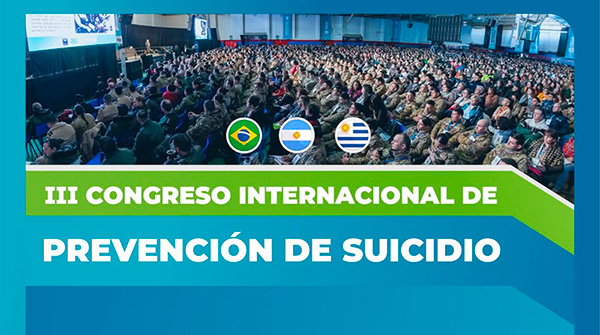
The 3rd International Congress on Suicide Prevention is taking place in the Argentine city of Río Grande, Tierra del Fuego, on September 17 and 18, within the framework of Suicide Prevention Month.
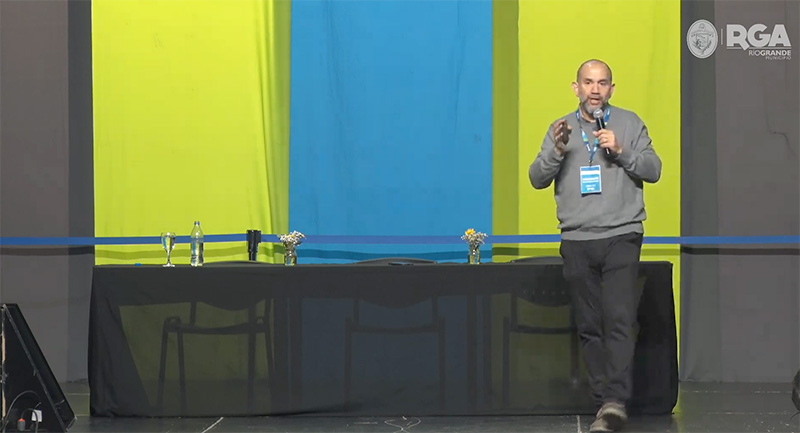
Over two days, national and international experts share their experiences, research and tools for the comprehensive approach to suicide prevention, including the Executive Director of CLACSO, Pablo Vommaro , who spoke on Thursday the 18th about “ Challenges and proposals from the generational perspective ” in the “Education and youth” module.
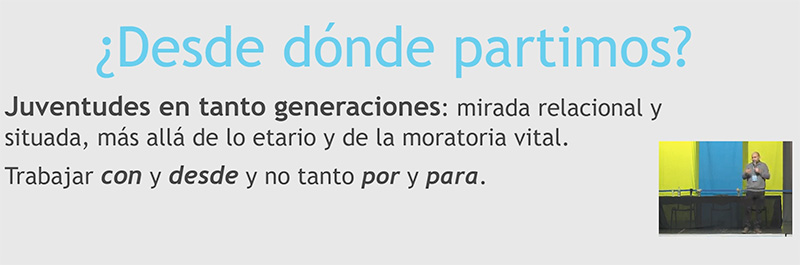
In his presentation, Pablo Vommaro argued that “thinking about youth requires recognizing their generational processes and their way of participating in school, in the community, and in everyday life. Youth are not just an age group: they are situated, diverse, and relational generations, marked by multidimensional inequalities (economic, social, cultural, and subjective).”
He added that, in his view, “youth participation is expressed in their affinities, music, beliefs, genders, sexualities, and ways of inhabiting the common good. Politics is not limited to established institutions: it also occurs in everyday relationships and communities. Therefore, in a more uncertain world, with growing inequalities and a mandate for immediate success, it is urgent to actively listen to young people: not to speak for them, but to work with and from them.”
She then outlined some key points, such as: recognizing young people as protagonists of the present; valuing their abilities and diversity as a strength; involving them in all social decisions, not just in “youth issues”; and developing public policies based on their real-life experiences. “More than idealizing, it’s about empathizing, connecting, and building common ground from our differences,” she added. She concluded that this vision “contributes to building a much more intergenerational CLACSO that engages and incorporates young people.”
The 3rd International Congress on Suicide Prevention aims to build upon the work of previous editions and address new challenges and strategies for developing community-based care and support networks in the face of complex psychosocial situations. It provides a forum to reflect on how different generations confront mental health challenges and what educational initiatives can be developed to better support young people.

