
Honduras: dictatorship and unequal quarantines
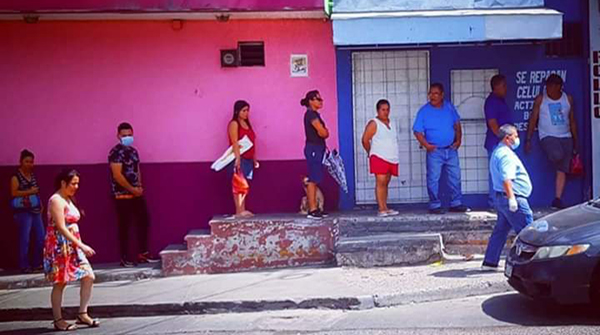
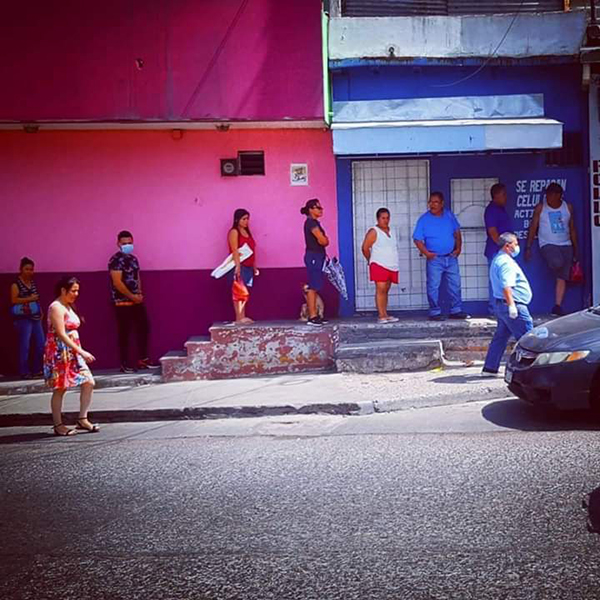
Photo: Jorge Membreño
Galel Briceño[1]
There is a state of global alert in the face of the pandemic with the greatest consequences of the 21st century: Covid-19. The emergence of this pandemic has sparked diverse reflections in public opinion and in the mainstream media. It has been very common to read in headlines and narratives that the virus does not discriminate based on social class. This statement merely points out that, this time, not only have the poor been affected, but also members of the political class and the bourgeoisie around the world. However, the reception of a pandemic differs among countries with different positions of power in the global market. Power relations and dependencies exist; considering the relativity of contexts, some have a greater capacity to cope with a health crisis of this magnitude. In this scenario, Honduras would be at a disadvantage, standing out as one of the most unequal and poorest countries in the world. Therefore, it is undeniable that, in the country, quarantines are also experienced with inequality.
Government measures to address the crisis
Since the 2009 coup, successive governments have accumulated, built, and monopolized financial, institutional, social, and political strategic resources. Consequently, over time, a dictatorial regime has been consolidated. It is through neoliberal transformations that they revalidate their mandate, in a context characterized by the deployment of military power as a means of social control. They have prioritized public spending on strengthening the army, at the expense of public health. So, what chances does a dictatorial regime have in the face of a global pandemic? In principle, where neoliberalism prevails, the rule of law is almost illusory. As a result, government strategies for controlling COVID-19 have reproduced inequality. They have relied on the militarization of society, with measures of confinement and repression. The recipe they have followed is a state of siege and the violation of the human rights of the poorest classes; they have even gone so far as to launch tear gas in markets and neighborhoods where people sell goods to survive day to day! Those with greater class privileges also break the rules, but they have a safety net: more resources. Added to this is the approval of over $2.500 billion that, to date, has not materialized in public healthcare facilities. So, in addition to the inadequate care available for patients, the violent and abrupt consequence has been the highest Covid-19 death rate in Latin America. Without a doubt, the outlook for positive outcomes in the face of the pandemic is becoming increasingly bleak.
Subjectivities and emotions in quarantine
In the subjective and emotional expressions of confinement, a sense of helplessness and hopelessness stands out. The narratives reveal how confinement is futile and insufficient when government management is ineffective. The main concerns lie in the experience of surviving a pandemic, defenseless and hopeless, within the framework of a dictatorial regime that appears to be failing to protect the interests of the majority.
Despite the sense of hopelessness, there are also dynamics of self-care and community care. It is interesting to see how these individuals are developing into agents of new logics of cooperation and solidarity. These practices range from sharing supplies among families to assisting with access to those supplies. In some rural areas, everyday and community-based dialogues stand out in the face of hegemonic biopolitical and biomedical norms and powers. These care practices are experienced as expressions of distrust and prevention in the face of governmental incapacity and a precarious healthcare system. The social networks of electronic media should also be highlighted, playing an essential role in strengthening these socio-affective bonds.
Humanity vs. Productivity
The implementation of working from home has manifested the same neoliberal and technocratic logic. The insidious aspect of the hegemonic discourse of productivity in neoliberalism is that exchange values are worth more than life itself. Many companies have used surveillance and punishment as tools for measuring productivity. Some call centers And other companies have rigid performance evaluations for working from home. Evaluations of individuals who, as mentioned before, are often perceived as helpless and hopeless, frequently falling victim to the... fake news and the shock so often mentioned by Naomi Klein.
Unequal quarantines
In the workplace and in education, the cross-cutting factor is class. In both, significant gaps in access are evident. It's worth emphasizing that this is one of the most unequal countries. Given this, it's crucial to recognize that standardized productivity measures are one of the most blatant expressions of inequality during a pandemic. Not all workers and students have access to computers, the internet, and, of course, access to a cybercafé is unthinkable. However, performance measurement is hegemonic and lacks any human or pedagogical considerations, disregarding the emotional state experienced during a global crisis. The misfortune of unequal quarantines also violently impacts those who have no alternative but to live from daily sales, and even more so those who don't even have a home in which to quarantine.
Patriarchy in quarantine
Patriarchy represents the quintessential system of domination throughout history. It is present in the political, cultural, and economic spheres; it imprints its mark on subjectivities and bodies. But above all, it is present and intensely felt during the health crisis. As if the shock of the pandemic, the wage gap, and the inequalities in equitable access to resources weren't enough, women are also enduring quarantine while living alongside their abusers. Thus, quarantine, with domestic violence and femicides, in the face of patriarchal institutions and within the context of a pandemic, is also a terrifying scenario. I conclude by stating that this entire materialized dystopia is the result of the failed management of the dictatorial regime. It persists in the violent imposition of the neoliberal model and, even in the face of a global pandemic, only serves to deepen the precarity of life. Nevertheless, narratives of discontent and solidarity practices, so necessary in these times of crisis, are emerging.
[1] Sociologist from the National Autonomous University of Honduras. Member of the CLACSO Working Group on Critical Extension: Theories and Practices in Latin America and the Caribbean. Research Technician at Doctors of the World.
If you would like to receive more information about CLACSO's training programs:
[widget id=”custom_html-57″]
to our email lists.

