
Honduras, pre-election atmosphere
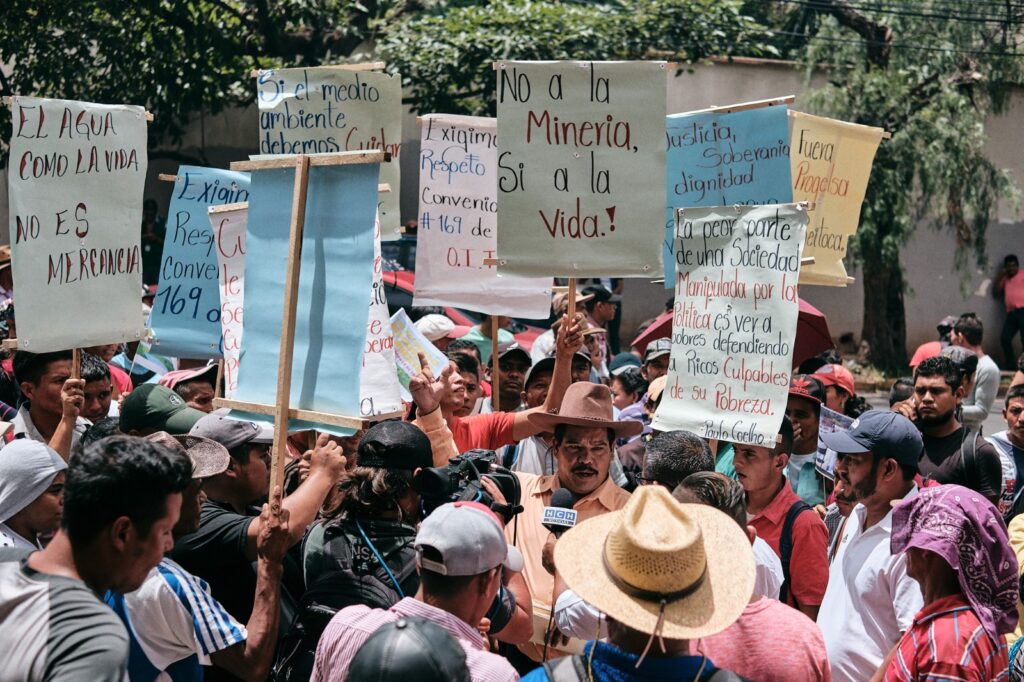
Just days before November 30th, Honduras faces the dilemma between popular emancipation and the restoration of the old order.
It is the child's sincere smile
of the saw that clings
to his land,
and makes you fly.
One Hundred Years Band
Galel Briceño Cerrato
Specialist in economic and social studies at the Secretariat
Strategic Planning of Honduras.
Member of the Honduran Sociological Association.
Introduction: Honduras at its historical crossroads
Honduras is at a historic turning point. The 2025 elections are not merely a political event, but a process that encapsulates the country's structural conflicts and the legacy of a long struggle for sovereignty. They embody the contradictions between a national-popular project and the persistence of the oligarchic order that has dominated the state since its inception. On a symbolic level, this contest expresses the tension between two visions: that of the people aspiring to emancipation and that of the ruling classes seeking to perpetuate dependency under new democratic guises.
As the great Italian thinker warned in one of his most famous phrases, crises are the moments when “the old is dying and the new is not yet born” (Gramsci, 1971), and it is precisely in this gray area that the decisive battles for hegemony are waged. Honduras lives in this interzone, where economic and media power attempts to reestablish its dominance, while popular sectors advance in the construction of a historical consciousness. The State, as a condensed form of the power relations between classes (Poutlanzas, 1979), remains the central stage of this dispute: it is not a neutral institution, but rather the reflection of the material and ideological correlations of power.
The ongoing political struggle is not simply a presidential election; it is about defining whether the country will remain an administered periphery or a sovereign state with an emancipatory vocation. What is at stake is the people's place in history.
Genealogical synthesis of Honduran power
To understand the current crisis, it is necessary to examine the roots of power in Honduras. Since the 20th century, the country's economic structure has been determined by its dependent integration into the global capitalist system. The banana economy, mining enclaves, and the agro-export model shaped a rentier oligarchy that made subordination its survival strategy. Throughout the last century, the Honduran ruling class preferred to act as an intermediary for foreign interests rather than lead a national development process.
This logic was reconfigured during the neoliberal period. The 1990s consolidated an accumulation model based on the privatization of public assets, trade liberalization, and the fragmentation of labor. The state was transformed into a business platform for corporate groups that captured its institutions. The 2009 coup was not only a political event but also the violent restoration of this order of domination. Honduran neoliberalism was, in essence, an oligarchic counterrevolution in democratic garb.
The genealogy of Honduran power is also the story of internal colonization. Economic policies were accompanied by a cultural pedagogy that taught the working classes to distrust themselves and—because of hegemonic domination and alienation—to admire those who oppressed them. Thus, economic dependence also became symbolic dependence: the subordinate mentality of the “small country” in the face of the empire.
Coloniality and contemporary dependency
Today, this structure of domination has not disappeared; it has mutated. The coloniality of power (Quijano, 2000) operates in the economy, politics, and subjectivity. The United States does not need to militarily occupy territory: it controls value chains, finance, communications, and the political imaginary. The very idea of development continues to be mediated by the desire for external recognition.
Imperial tutelage manifests itself in “cooperation” programs, financial evaluation agencies, and media narratives that demonize any attempt at autonomy. Dussel (1998) warned that colonialism does not end with political independence, but with the decolonization of consciousness. Honduras finds itself at that point: a formally free country, but symbolically—and under military control—tutelage.
This structural dependence is compounded by media dependence. Corporate media outlets function as transmission belts for the dominant ideology. Their task is not to inform, but to discipline common sense. The categories of order, progress, and stability are reproduced as unquestionable truths, while popular struggles are presented as chaos; grassroots movements of the Libre party are labeled “troublemakers.” In this system, collective subjectivity becomes occupied territory.
Between empire and conscience: media manipulation and fear
The so-called “Plan Venezuela” is the most recent example of ideological manipulation. It is a discursive device designed to instill fear of change, equating all popular politics with chaos or dictatorship. David Harvey (Harvey, 2010) explains that neoliberalism not only privatizes resources but also imaginaries: it hijacks hope and replaces it with fear. Bonhoeffer (2005) called this strategy “organized stupidity,” the triumph of obedience over thought.
Corporate media outlets act as instruments of hegemony that shape social perception. Manipulated polls, alarmist news, and moralistic discourses—from churches, pastors, and speeches aligned with conservative parties—construct a common sense that normalizes inequality. However, this pedagogy of fear is no longer absolute: a pedagogy of awareness is emerging in its place. As Boaventura de Sousa Santos (2021) argues, emancipation begins with the act of thinking for oneself.
In this symbolic battle, community networks, grassroots media, and social organizations have reclaimed the language of hope. Critical awareness has become practical action in neighborhoods, community organizations, among farmers, and other historically subjugated, marginalized groups.
Planned fraud, institutional dispute and national tragedy: chronology of the electoral dispute (2024–2025)
From mid-2024, warnings began circulating about irregularities in the formation of the National Electoral Council (CNE). Tensions escalated in August when sectors linked to the National Party promoted regulatory reforms that concentrated control of the vote count in a single technical advisory body (CriterioHn, 2025). By October, there was talk of the possibility of systematic fraud aimed at delegitimizing the 2025 process, while corporate media reduced the debate to an administrative problem, obscuring its underlying political and structural issues. In November 2024, the first internal conversations about the use of parallel software to manipulate the tally sheets and the Preliminary Electoral Results Transmission (TREP) system were leaked. That same month, electoral councilor Marlon Ochoa publicly denounced the existence of a plan orchestrated by the National Party to alter the results. The chronology reveals that the strategy was not improvised: it responded to a power design that sought to reoccupy the State after its loss in 2021.
The audios of councilor Cossette López and the dispute in the National Electoral Council
The leak of audio recordings of Cossette López, an official of the National Party, was a turning point. In the recordings—published by El Heraldo and Contracorriente in early 2025—the coordination of maneuvers to manipulate tally sheets and alter the transmission of preliminary results can be heard (El Heraldo, 2025; Contracorriente, 2025). López even mentions "the need to control the system from within," which confirms the hypothesis of an institutional capture of the National Electoral Council. Councilor Marlon Ochoa corroborated these allegations, pointing to the complicity of media and business structures that sought to establish a narrative of electoral chaos to justify external interventions. Following Poulantzas's analysis (1979), the episode demonstrates how dominant factions attempt to restore their hegemony through control of the state apparatus. What appears to be a simple administrative dispute is, in reality, a class struggle condensed within the electoral bureaucracy.
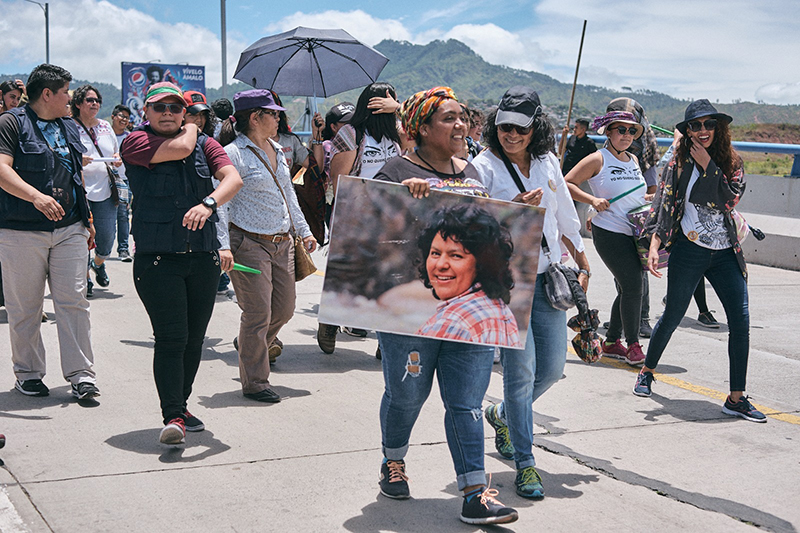
Just days before the elections: three campaign closings: three national projects
Tito Asfura and the neoconservative bloc: the restoration of the old order
The first project, led by Tito Asfura, is the purest expression of oligarchic restoration. His proposal of “efficiency” and “order” masks a rehash of 1990s neoliberalism. Asfura represents the continuity of business groups that view the state as a space for contracts, tax breaks, and private business. What was termed accumulation by dispossession (Marx, 1976)—the appropriation of common goods through legal mechanisms—remains the foundation of his model.
The discourse of “modernization” is, in reality, the promise of the old order with a technological makeover. Its technocratic vision aims to reduce politics to mere administration, depoliticizing the class struggle. But behind this mask of efficient management lies the logic of restoration: returning power to the same actors who lost it in 2021, restoring the hierarchy of local capital, and once again subordinating the country to the dictates of transnational corporations.
Salvador Nasralla and Chano Rivera: the surrenderist alliance of sovereignty
The second project, led by Salvador Nasralla and his ally Chano Rivera, represents the continuation of imperial tutelage. Their campaign has been an ode to dependency. Instead of speaking to the Honduran people, they speak to foreign powers: they implore recognition and promote a country subordinated to the “international order.” As Dussel pointed out, this is a colonized consciousness that confuses servitude with civilization.
Nasralla embodies the ideological volatility of political opportunism; his alliance with business and media sectors seeks to neutralize any possibility of transformation. Rivera, for his part, symbolizes the organic link with the financial corporations that dominate the economy. His project proposes not sovereignty, but stability under tutelage; not emancipation, but management. Both are ventriloquists of imperial power and local oligarchies.
Libre and Rixi Moncada: the pedagogy of hope
The third project, led by Rixi Moncada, represents a commitment to a complete overhaul. Moncada is not an improvised figure, but rather the product of a political process that has accumulated experience, from the resistance against the coup d'état to the current administration. Her leadership embodies the possibility of transforming the state into an instrument of social justice.
Following Fraser (2022), her vision articulates redistribution, recognition, and representation. Her program seeks to strengthen public capacity, recover privatized strategic assets, and promote energy and food sovereignty. But her most significant contribution is symbolic: the revaluation of politics as popular pedagogy. Rixi Moncada's campaign has been a school of conscience; each act, a lesson on the possibility of a democratic-popular state.
The people have responded with a human tide that fills apartments and public spaces. This is no coincidence: polls and trends show that Libre is the fastest-growing party. What Rixi's tours express is a political pedagogy of hope: it is the people recognizing themselves in a leadership that—at last—no longer looks down on them.
Workers, peasants, laborers, students, teachers—to name just a few large sectors of the population—have recognized that this political project doesn't speak to them from above, but from within. Libre doesn't offer charity: it offers representation, memory, and sovereignty. That's why the right wing—knowing itself defeated, charlatan, outdated, and crude—fears and despises this popular force that is no longer satisfied with promises or moralistic speeches.
Every time Rixi speaks, the voice of a Honduras tired of obeying and ready to decide resonates. This popular voice is not swayed by the ventriloquists of colonial power, nor by the businessmen who believe the country is their estate—their fancied ZEDE—or their private island. This voice states clearly: the homeland is not for sale, it is to be defended.
The difference between these two projects is not merely ideological; it is about the emancipation of subordinate classes, finally positioning themselves with dignity. One dreams of pleasing a foreign master, the other of intensifying neoliberalism, and the other seeks to walk alongside the people. The truth is, two symbolize the perpetuation of dependency; the other, the possibility of a sovereign nation. That is the true choice we face—in just a few days—at the polls.
Political violence and class memory: the Kaleb case
The murder of Kaleb, a seven-year-old boy during a campaign event for the Libre party, revealed the brutality of political violence. Two hooded men on a motorcycle shouted “They’re leaving”—referring to the ruling Libre party—and opened fire on the crowd, killing him and wounding a young girl. His death was not an accident, but rather a symptom of a system that normalizes violence against impoverished people. From a more human perspective, it must be pointed out and condemned that capitalism manages fear by exploiting vulnerability. In Honduras, that fear has a name and an age: Kaleb, a symbol of the people who continue to bleed.
As Walter Benjamin aptly warned, every document of culture is also a document of barbarism (Walter, 2012). Kaleb embodies that intersection: the innocent face that compels us to remember that so-called democracy and elections, without justice, are merely simulations. To name him is to inscribe an act of resistance in history; it is to transform mourning into political memory.
The wounded homeland has a child's name. Kaleb embodies the dignity that refuses to kneel, the conscience that survives fear, the testimony that forces us to confront the structural violence that power seeks to conceal.
The Santa Barbara accident: pain and memory
In this climate, the country was shaken by the accident that occurred on November 15, 2025, when a group of activists returning from a political event in Santa Bárbara lost their lives after a bus overturned. The collective grief transcended partisan lines: entire communities held vigils and acts of solidarity. The memory of the victims becomes a form of historical redemption. Remembering them inscribes in the national consciousness the idea that politics cannot continue to claim lives. It should be noted that this tragedy, like the case of Kaleb, was silenced by the same media outlets that have been amplifying fear-mongering rhetoric.
Defending the vote as an emancipatory practice
Defending the vote in Honduras is defending history. As Tilly (2004) argued, social movements are the instruments through which the people demand political inclusion. Rosanvallon (Rosanvallon, 2006) termed the active monitoring of power “counter-democracy,” and that is precisely what the Honduran people have done: safeguard their right to decide.
Libre's territorial structures are not merely electoral bases; they are spaces of politicization. Each polling station becomes a cell of democratic self-defense. Poulantzas taught that the state is a field of struggle, not an object of total conquest. O'Donnell (1999) warned that delegative democracies die when the people abandon their vigilance. Honduras, today, demonstrates the opposite: a citizenry that acts as a historical subject, not as a passive mass.
Final, but not conclusive, reflection: What does it hold, sovereignty or subordination?
On November 30, Honduras will not simply elect a government; it will choose its historical destiny. On one side, the oligarchic restoration that seeks to reestablish subordination; on the other, the construction of a popular democracy founded on sovereignty and justice. Therborn (2021) states that emancipation means liberation from the fatalism of inequality. Along these lines, the Honduran people are beginning to understand that independence is not decreed, it is exercised.
The memory of Kaleb, a child martyr of political violence, reminds us that justice is not an institutional act, but a collective practice. Clearly, there is no justice without remembering the pain. Honduras, today, does not forget. And in that act of remembering, it begins to emancipate itself.
Highlighted
Bonhoeffer. (2005). Resistance and submission: letters and notes from prison. Salamanca: Follow me.
CriterioHn. (2025). Depoliticization and electoral reforms: an outstanding task for future processes. Tegucigalpa, Tegucigalpa.
Dussel, E. (1998). Ethics of liberation in the age of globalization and exclusion. Madrid: Trotta.
Fraser, N. (2022). The hidden workshops of capital: a map for feminist critique. Buenos Aires: 21st Century.
Gramsci, A. (1971). Prison notebooks. Mexico: Era.
Harvey, D. (2010). The enigma of capital. Madrid: Akal.
Marx, K. (1976). Capital. A Critique of Political Economy. (Vol. I). Mexico: 21st Century.
O'Donell, G. (1999). Delegative democracy. Buenos Aires: Paidós.
Poutlanzas, N. (1979). State, power and socialism. Madrid: 21st Century.
Quijano, A. (2000). Coloniality of power, Eurocentrism and Latin America. In The coloniality of knowledge: Eurocentrism and social sciences (pp. 201-245). Buenos Aires: CLACSO.
Rosanvallon. (2006). Counter-democracy: politics in the age of mistrust. Buenos Aires: Manantial.
Sousa Santos, B. (2021). The end of the cognitive empire. Buenos Aires: CLACSO.
Therborn, G. (2021). After globalization: the future of inequality. Madrid: Akal.
Tillys, C. (2004). Social movements, 1768-2004. Boulder: Paradigm Publishers.
Walter, B. (2012). Theses on the philosophy of history. Madrid: Taurus.
Photos by Christophe Egger

