
“There are investigations funded by powerful entities to deny the impacts of the climate crisis.”
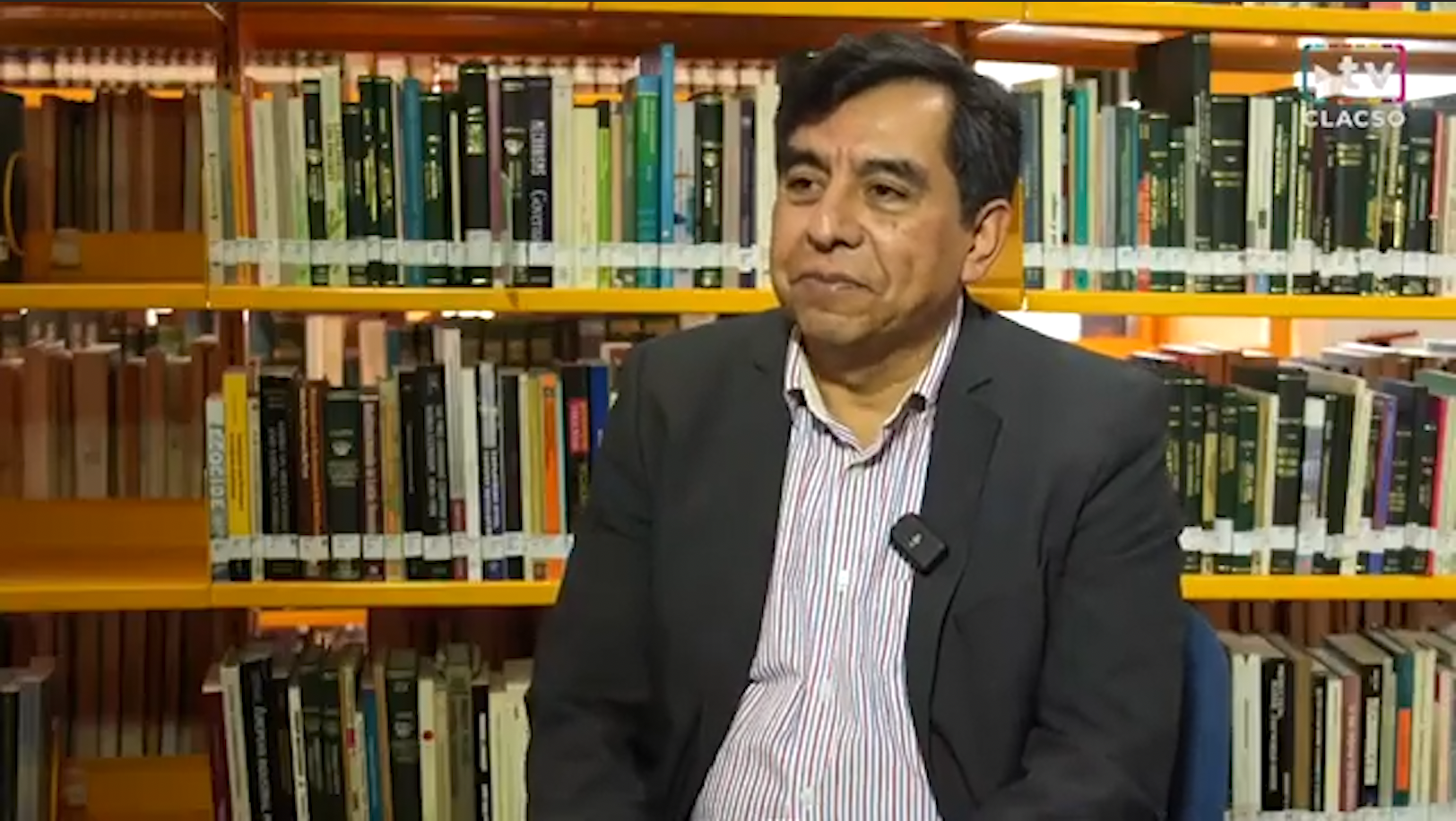
Within the framework of the International Forum “Socio-environmental conflicts and human mobility. Challenges from policies and activism in Mexico City”, José Gandarilla Salgado, a member of the CLACSO Steering Committee for Mexico, spoke with CLACSO.tv.
When asked about the current context in which many actors deny the environmental crisis, Gandarilla Salgado referred to a study titled "Merchants of Nothingness," which essentially shows how research teams funded by powerful entities, particularly the United States and certain groups with the participation of international companies, conduct research to deny the impacts, to deny the trends, to deny the entire body of statistical scientific research that would reveal the dimensions of the climate crisis and also the ways in which this possibility of imagining a systemic transition is unfolding. But also how, in the course of this transition, we could consider the emergence of what are called "negentropic islands" in systems theory as spaces of resistance, and that not everything is a gray area of devastation.
“I believe that this issue refers to the fact that we are living in a time of widespread denialism. This denialism, in its many dimensions, accompanies the other program. Not the alternative program that we envision, but the conservative program of the new right, which has also found its spaces of resonance,” he added.
Interviewed by Gustavo Lema.
How do socio-environmental conflicts affect human mobility? – InfoCLACSO, September 4
If you would like to receive more information about CLACSO's training programs:
[widget id=”custom_html-57″]
to our email lists.

