
Haiti is not alone
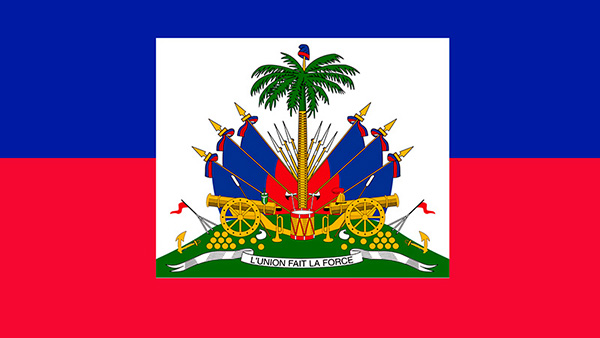

The Latin American Council of Social Sciences (CLACSO) expresses its deep concern regarding the worsening of the complex political, economic, and social crisis currently affecting the Haitian people. In recent days, the increase in widespread insecurity appears to be ushering in a new phase in its evolution. With unprecedented violence, armed gangs, in a close relationship with powerful groups, primarily control the capital, Port-au-Prince, leaving significant repercussions throughout the country. The grim toll of kidnappings, murders, rapes, robberies, arson, and the destruction of public and private infrastructure continues to rise with impunity.
This situation, a reflection of a deep and protracted crisis, has been rapidly aggravated by the attitudes of national and international actors. The increasingly evident collapse of the state, the absence of representatives of power—some physically outside the country—the economic and social deterioration, the unbearable insecurity, the shameless interference of other countries eroding the margins of sovereignty, and the perverse actions of an elite determined to preserve its privileges at all costs have created a new and perilous situation. Declarations are proliferating, aiming to foster a climate of trust conducive to dialogue among all parties, which would allow for a transition to a new political era. However, the intransigence of the government and its international allies, as well as the impotence and passivity of others, have yielded little progress in this direction.
Today, CLACSO, in light of the situation facing Haiti, believes it necessary to remind us of the significance of this first Black republic, which paved the way for independence in Latin America and the Caribbean by defeating the Napoleonic army of powerful France. The first country in the world to triumph in the fight against slavery, colonialism, and racism, its decisive and effective support for the struggle for independence in our continent—with Francisco Miranda, Simón Bolívar, and later with other countries—unforgettably opened the luminous path of solidarity among peoples. At the same time, the slave-owning, colonialist, and racist powers did not forgive Haiti for its audacity and never disarmed it, making it pay for this humiliation. The senseless indemnity imposed at the beginning of the 19th century, the occupations of the 20th century, and the relentless interference of the 21st century, give the people's quest for dignity the dimensions of a tragedy.
At this crucial moment, the CLACSO Steering Committee strongly renews its support for the Haitian people's relentless struggle to resolve the pressing problems of the present and to realize the more than two-hundred-year-old dreams of its population. Despite the Haitian people's capacity, ingenuity, and resources, this arduous quest demands the solidarity of sister nations. This solidarity must recognize Haiti in all its potential and dignity, beyond the stereotypes that render it invisible, a pariah state, the poorest, or an example not to follow. Haiti calls for solidarity and cooperation, which, in their multilateral dimension, constitute an immeasurable contribution to its struggle. However, the realization of a political and social pact among the majority and the definition of the country's future to guarantee political stability, governance, and development can only be the work and initiative of the Haitian people, as well as respect for the will of the Haitian people.
CLACSO reiterates once again that Haiti is not alone. Today, it deserves the solidarity of all the peoples of the world in this great battle, which is also ours: the struggle for freedom, self-determination, and dignity.
CLACSO Steering Committee
13 2024 March
If you would like to receive more information about CLACSO's training programs:
[widget id=”custom_html-57″]
to our email lists.

