
Towards the implementation of the right to academic freedom in Latin America
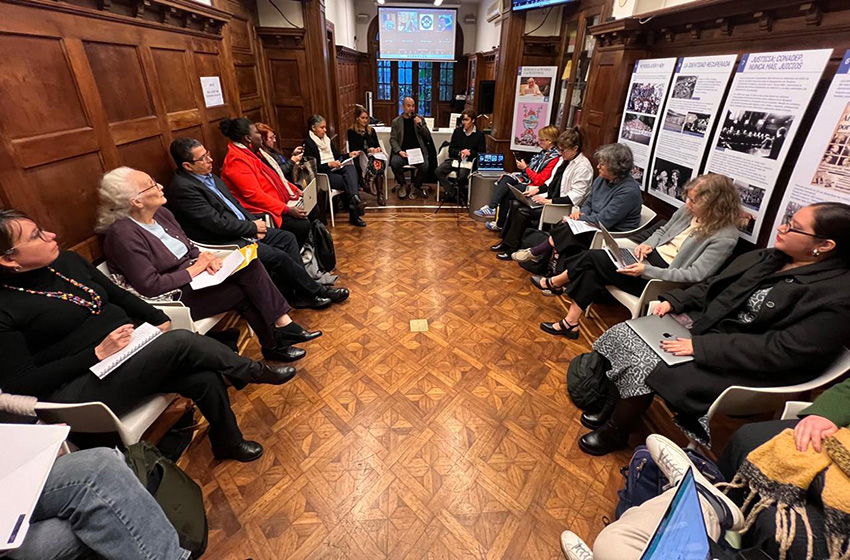
Organized by the Latin American Council of Social Sciences (CLACSO) and the Coalition for Academic Freedom in the Americas (CLAA), in partnership with NORRAG Global Education Centre , the international forum “ Towards the implementation of the right to academic freedom in Latin America – Regional dialogue on international public policies ” was held on July 1 at the CLACSO Executive Secretariat in Buenos Aires .
The meeting of specialists from across the Americas was geared towards building a preliminary framework for regional and national action that contributes to strengthening the institutional, regulatory and political conditions necessary to guarantee the effective exercise of academic freedom as a public good and an indispensable condition for democracy.
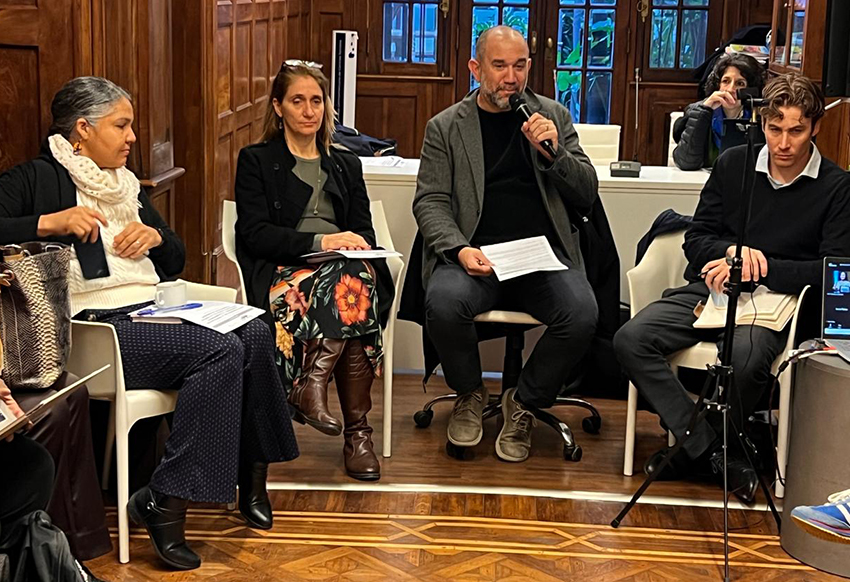
Then, on July 2nd and 3rd, the presentation took place by the cohorts of scholarship recipients who carried out field diagnoses, accompanied by their tutors, of the results of the “ Strengthening comparative research and critical thinking within the framework of academic freedom in the Americas ” promoted by CLACSO and CLAA for the past two years.
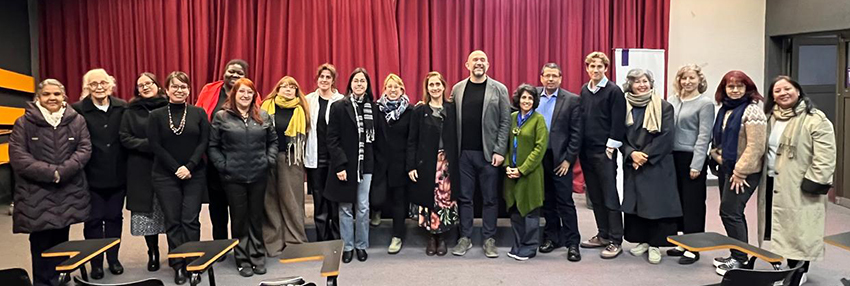
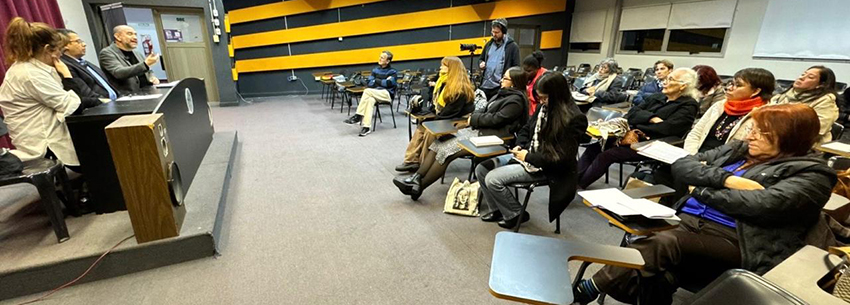
In that context, on Thursday, July 2, at the Faculty of Social Sciences of the University of Buenos Aires, the book “ Academic Freedom in the Americas: Trends, Challenges and Critical Horizons ” was presented, which compiles the works of the first edition of the research call for teams.
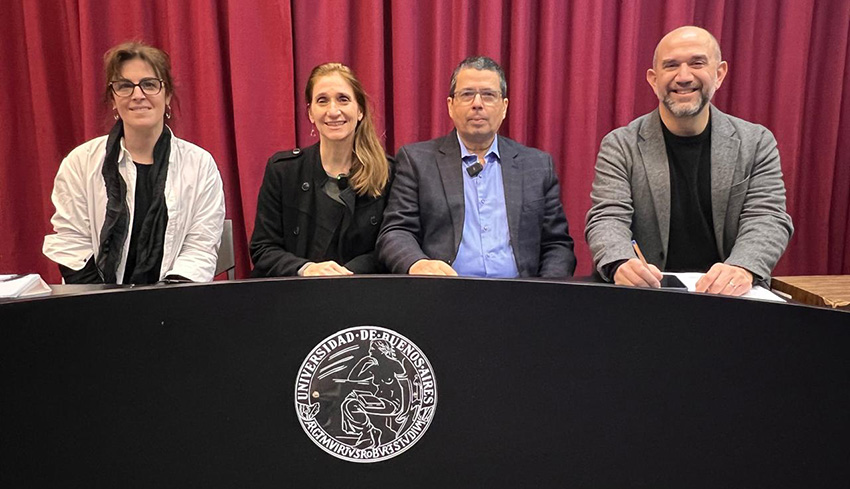
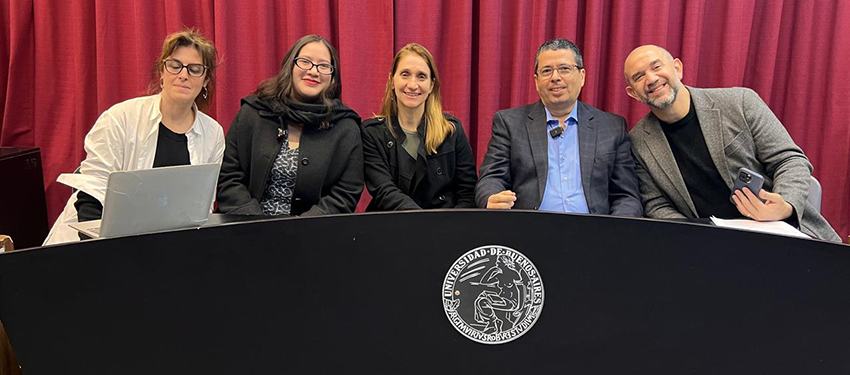
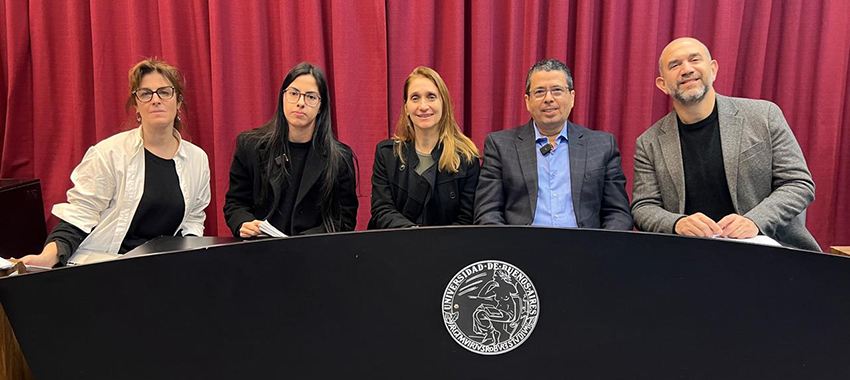
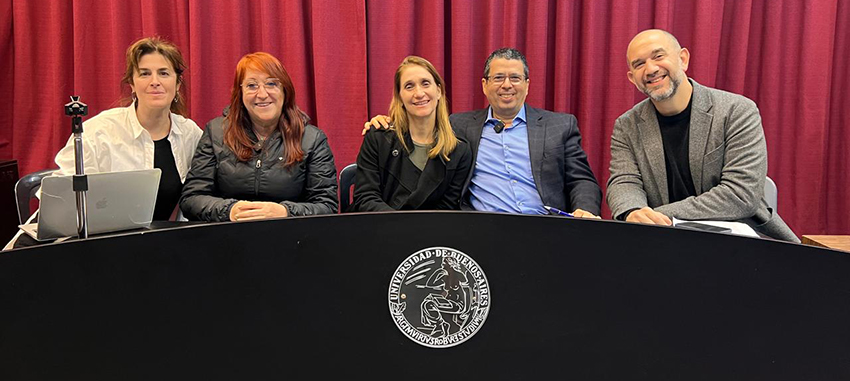
The event was moderated by Vernor Muñoz , a Costa Rican narrator, poet, essayist, academic, and human rights activist, accompanied by Pablo Vommaro , Executive Director of CLACSO; Camilla Croso , Executive Director of CLAA; and Laura Rovelli , Academic Tutor of the CLACSO-CLAA Academic Freedom Program.
The event included the presentation of some of the book's chapters:
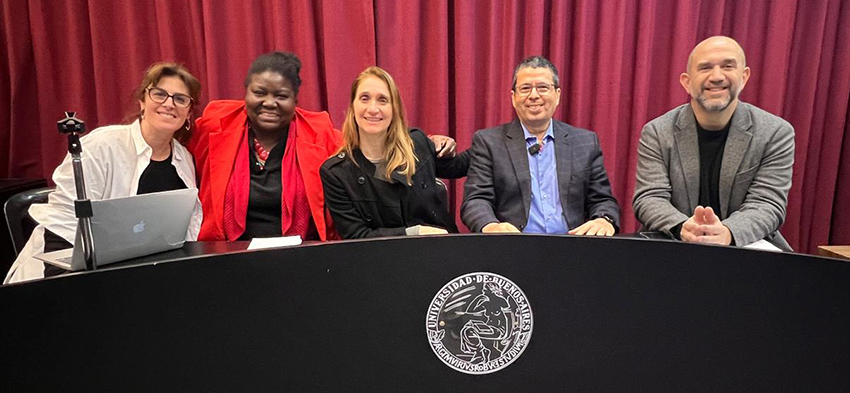
– Afro-diasporic academic freedom. Associations of Afro-descendant researchers and their role in the struggles against sexism and racism in academia . By Anny Ocoró Loango , co-authored with E. García Rincón, SG Finocchio, A. Bustamante Valdés and MC Landazuri.
“One of the most important findings in the research is associated with the challenge of overcoming traditional ways of doing science, that is, where emotions are suppressed under the pretext of safeguarding the supposed objectivity of science. Therefore, an epistemology of care for the other and of connection is proposed as a central axis for the development of scientific work. Affection does not appear here as a lack of rigor, but as the possibility of envisioning a more humane and ethical science, one that expands academic freedom by linking emotions with knowledge. Advancing academic freedom as a human right requires highlighting and transforming the institutional structures that have subordinated and marginalized Afro-descendant communities,” the work concludes.
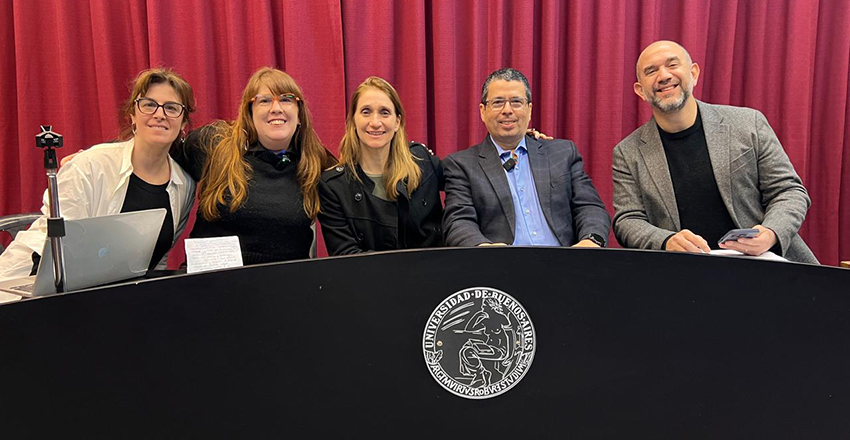
– Academic and environmental freedom in xeque: scientific and climate denialism of ultra-directiveness in Brazil and Argentina by Paula Lucero , co-author with Fernando Romani Sales , Paula Aldana Lucero and Rosario Figari Layus . The study concluded that “the recent rise to power of far-right governments in Brazil and Argentina must be analyzed from a broader perspective, encompassing the current process of democratic erosion worldwide. In this context, the study has contributed to the field of research on the different manifestations of authoritarianism, highlighting the similarities and nuances that cause anti-democratic rhetoric and practices to converge and diverge. Focusing on the recent attacks on academic freedom in both countries based on denialist discourses and practices, the comparative analysis of the Bolsonaro and Milei governments has shown that, despite their particularities, both have instrumentalized climate science denial as a political tool to support projects dismantling environmental protections and to promote extractive activities. This has had, and continues to have, similar consequences for both nations: the erosion of the scientific environment, the institutional weakening of environmental preservation and control mechanisms, and the exacerbation of the climate crisis in the region.”
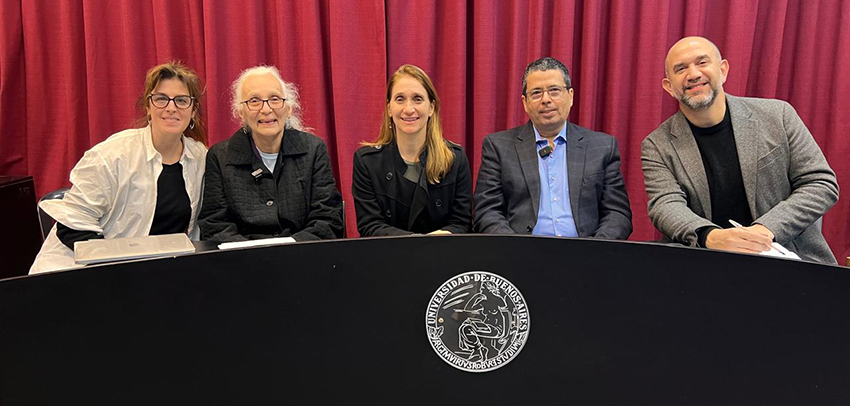
– Exploring the challenge of exercising the right to academic freedom and democracy: perspectives from Central American countries by Clara Arenas , author along with Elizabeth Moreno , Irene Palma , Estela Rivero and Rodolfo Rubio.
One of the chapter's conclusions is that “academic freedom in the countries studied is undergoing a profound structural crisis. This is not a marginal or transitory problem, but rather a visible symptom of democratic decline, the authoritarian concentration of power, and the exclusionary logic that dominates the configuration of societies and universities, especially public ones, and also, though with different emphases, the network of other centers and spaces for knowledge construction that are not university-based. In this context, the right to research, teach, and debate without reprisals is restricted, and in some extreme cases, such as Nicaragua, it is restricted through criminalization or co-optation, among other means.”
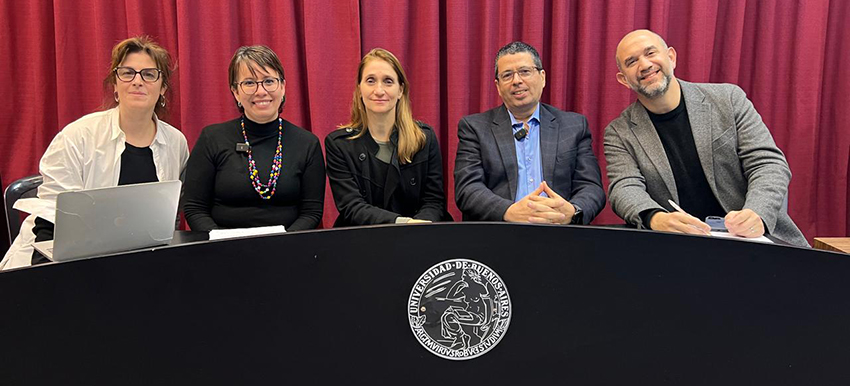
– Critical thinkers and the crises of academic freedom in Chiapas, Guatemala and El Salvador by Ana Lucía Ramazzini , co-author with Marisa G. Ruiz Trejo and Tania Mata Parducci.
“This chapter delves into the barriers and obstacles faced by various researchers, writers, activists, and artists in Chiapas, Guatemala, and El Salvador in exercising their academic rights and freedoms. It seeks to contribute to filling a theoretical and analytical gap by reconstructing the trajectories of some women and critical feminists who, at different historical moments, have faced forms of harassment, censorship, and control by various power structures that restricted their right to academic freedom,” the report introduces.
– Student academic freedom in times of inequality: a laboratory for reflection for Peru by Hatsumi Otsu , author along with Dynnik Asencios Lindo , Hatsumi Otsu and Milagros Badillo.
“The research demonstrates that academic freedom in Peru is a social practice deeply conditioned by the structural inequalities that permeate the higher education system. More than a fully guaranteed right, it constitutes a field of dispute where social origin, gender, territorial background, and cultural capital determine who can effectively exercise free thought. In this scenario, academic freedom is not experienced as a universal principle, but as a differentiated experience, shaped by material and symbolic hierarchies,” they argue. And they conclude: “Strengthening academic freedom in Peru requires transforming the material and symbolic conditions that sustain educational inequality. This implies guaranteeing teacher stability, sustained public funding, equitable access to technology, recognition of local knowledge, and mechanisms for effective participation.”
– Commodification, Credentialism and Political Capture: a historical-comparative study of the barriers to the development of academic freedom and university autonomy in Paraguay by Melisa Vera, co-author with Gustavo Setrini , Milena Pereira Fukuoka , Ever Enriquez , Pedro Pérez , Patricia Lima Pereira , Evelyn Mendoza and Magdalena Rivarola.
“How can we explain the mix of continuity and change in the process of institutionalizing university education in Paraguay? And what are its consequences for academic freedom?” the authors of the paper ask, and answer: “The theoretical arguments and empirical evidence presented demonstrate how the current characteristics of higher education institutions and the bodies that regulate the sector clearly reflect the balance of power that was configured in the critical juncture following the dictatorship. At that time, the coherence of the academic and scientific community as a social group and as political actors was still very weak, while social demands for credentials and business and partisan interests were much more developed. The latter sought to capitalize on university expansion to obtain economic and electoral benefits, and the resulting institutional design precisely reflected that balance.”
Finally, Nora González Chacón from Costa Rica also participated in the presentation to speak on “ Academic freedom and inclusive editorial management: towards a decolonizing model of publishing in Latin America ”.
The book emerged as an urgent response to the erosion of university autonomy in the hemisphere. Through research conducted in Argentina, Brazil, Mexico, Paraguay, Peru, and Guatemala, the work analyzes academic freedom not only as a pillar of democracy, but also as a fundamental and interdependent human right.
Faced with the rise of authoritarianism, the judicialization of teaching work, and the growing threats in digital environments, the texts explore the tensions between institutional autonomy and political or commercial pressures.
With an interdisciplinary approach and an intersectional perspective, this book is a vital tool for understanding the structural inequalities that affect knowledge production. It is, in essence, a collective call to protect the right to research, teach, and disseminate ideas without censorship.
Chapter Authors:
Anny Ocoró Loango. Clara Arenas. Dynnik Asencios Lindo. Milagros Badillo. Arbey Bustamante Valdés. Ever Enriquez. Rosario Figari Layus. Silvia Finocchio. Jorge Enrique García Rincón. María Camila Landazuri. Patricia Lima Pereira. Paula Aldana Lucero. Evelyn Mendoza. Elizabeth Moreno. Hatsumi Otsu. Irene Palma. Tania Marta Parducci. Milena Pereira Fukuoka. Pedro Perez. Ana Lucía Ramazzini Morales. Magdalena Rivarola. Estela Rivero. Fernando Romani Sales. Rodolfo Rubio. Marisa G. Ruiz Trejo. Gustavo Setrini. Maria Fernanda Silva Assis. Melisa Vera.

