
US Energy Geopolitics in Our America
Aníbal García Fernández[1]
In 2012, the United States designed a long-term energy strategy called Connecting the Americas 2022 (CA2022). The plan proposes to connect the continent to the internet, increase electricity generation capacity, open the energy market in Latin America, dismantle state-owned energy companies, and "improve the business climate," which translates into Structural Adjustment Programs (SAPs). This is part of a global strategy to control the oil and gas market, which partly explains US policy toward Russia, Iran, and Venezuela.
The US strategy has three major projects: a connection between the United States, Mexico, Central America, and the Caribbean; an Andean connection between Colombia, Ecuador, Peru, and Chile; and a connection of the Southern Cone.It links the State Department, the Department of Energy, and the United States Agency for International Development (USAID). It includes the Inter-American Development Bank, the World Bank, and the Organization of American States [https://cutt.ly/FtwN96e, p. 1]. It is intertwined with free trade agreements such as the renewed USMCA, as well as with subregional agreements such as the Pacific Alliance.
This is one of the high-level strategies for the US, as it will allow the export of unconventional gas by sea and land, and the sale of technology such as... fracking, highly polluting. The CA2022 modifies the State and the energy structure of Our America, making us consumers of liquefied natural gas and is part of the hegemonic US policy in the region, in the face of Chinese and –to a lesser extent– Russian advances in the energy and infrastructure sectors.
Latin American energy integration
One of the goals of the U.S., at least since the 1970s, is and has been to open up the main energy markets under the pretext of its national security. The first circle comprises Canada, the United States, and Mexico. In 2010, Mexico and the United States issued the “Declaration for 21st Century Border Management.” This project included the generation and interconnection of electricity and the safe and efficient exploration and exploitation of water and hydrocarbons (oil and gas).
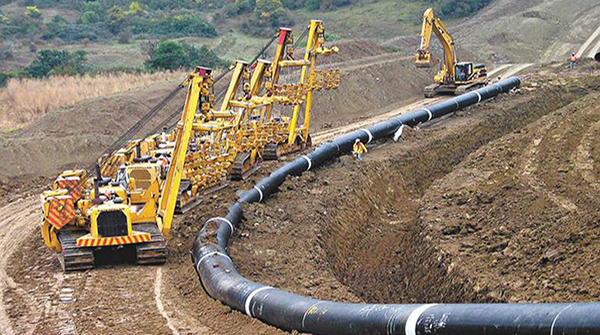
Mexico and Central America have agreements in the electricity and gas sectors. In 2015, Mexico approved the creation of a gas pipeline that would pass through Honduras, Guatemala, and El Salvador. The Ministry of Energy and the Federal Electricity Commission are promoting Mexico's energy integration with Central America through the "Central American Electrical Interconnection System" (SIEPAC) [https://cutt.ly/ztw0rhe]. This project is part of a much larger program called the "Mesoamerica Development and Integration Project," a continuation of the Puebla-Panama Plan. The pipeline connection is still incomplete, as the Texas-Tuxpan pipeline, intended to connect southern Mexico with Central America, began operating in September 2019.
One of the sectors included in the Pacific Alliance is energy, with the aim of connecting Colombia and Ecuador, constructing an electricity transmission line between Ecuador and Peru, and establishing a connection between Peru and Chile, financed by the Inter-American Development Bank (IDB). This interconnection would complete the Andean Electrical Interconnection System (SIEA). In 2018, the Chilean government, together with the IDB, presented a study on alternatives for harmonizing and connecting electricity systems with Argentina. In 2019, Peru, Colombia, and Ecuador, with Bolivia as an observer at that time, analyzed the harmonization of their electrical systems. These projects, in turn, were part of the Initiative for the Integration of Regional Infrastructure in South America (IIRSA) [https://cutt.ly/itvBKLw].
In the Southern Cone, integration is progressing primarily through the world's largest hydroelectric dam: Itaipu. Integration between Argentina and Brazil is not new; it has been underway for over three decades. However, the interconnection is advancing by linking both countries via gas pipelines from the Vaca Muerta shale formation in Neuquén, Argentina, to Brazil.
Infrastructure and strategic resources
There are two vital elements that complement the energy connection strategy: infrastructure construction and Latin American strategic resources, prey to foreign financial-oil capital.
First, the “America Grows” strategy, which began under the Trump administration, aims to implement a series of agreements between U.S. private companies and Latin American governments for the construction of energy infrastructure. Since December 2019, it has also included projects related to communications, cybersecurity, and the modernization of ports, highways, and airports—in other words, the infrastructure necessary for moving goods. USAID, the U.S. Trade and Development Agency, and the Overseas Private Investment Corporation (OPIC), which changed its name to the U.S. International Development Finance Corporation, are participating in the initiative. [https://cutt.ly/Wtw9yL4]
One of the most striking cases is that of Brazil, which, following the coup against Dilma Rousseff and the subsequent governments of Temer and Bolsonaro, essentially put itself up for sale. According to the Investment Partnership Program [https://www.investidorpetrobras.com.br/], there are tenders underway for concessions at thirteen airports. Six rounds of oil bidding have been conducted for the pre-salt fields under a production-sharing model. Companies such as Exxon, Shell, and Chevron, among others, have participated. Added to this is the sale of refineries, for which Petrobras hired Citigroup to sell 50% of its refining capacity: 1.1 million barrels per day, resulting in a loss of energy sovereignty, as well as the sale of assets in Colombia and Uruguay.
The infrastructure dispute between China and the US in the Caribbean highlights this subregion as a priority for US energy geopolitics, which aims to build hydroelectric dams, particularly in the Dominican Republic, and liquefied natural gas plants connected by sea to Panama, which will serve as a logistics hub for Central America. Furthermore, it promotes energy diversification toward renewable energy sources, which will be consolidated under the Caribbean Energy Security Initiative and the Caribbean 2020 Strategy.
Virus and oil
Since the coronavirus (COVID-19) first emerged in January 2020, economic repercussions were to be expected. China, the virus's original epicenter, began reducing its oil demand. Given this slowdown in the Chinese economy and the simultaneous spread of the virus to Europe and the US, it was only a matter of time before oil demand began to decline, and the same will happen in other countries that have already registered hundreds of infections. However, warnings of recession and economic crisis have been circulating for years.
In 2019, Rystad Energy, a Norwegian energy intelligence company, warned that the outlook for oil prices and production in 2020 would not be good due to the economic recession, the trade war between China and the US, and the OPEC+ plan. Furthermore, reports of declining shale gas and oil production in Texas were expected to lower US production. [https://cutt.ly/ztjqrbg]
The final straw was the OPEC+ meeting on March 6, where no agreement was reached with Russia to reduce production. On Monday, March 10, the oil market plummeted, leaving the price of a barrel at $34. By March 23, it had fallen to $23, and again on March 26, with variations across different types of oil. This price drop will have repercussions for the budgets of producing countries, such as Mexico, Venezuela, Brazil, and Ecuador, which took advantage of the situation to implement the IMF's austerity measures.
Despite the COVID-19 pandemic, resistance movements around the world continue unabated, as seen in Chile, Colombia, Brazil, and Haiti. More recently in Italy, the FIOM metalworkers' union decided to go on strike "for dignity" and to improve sanitary conditions in factories. As Gioconda Belli said, in the face of this international emergency, "solidarity is the tenderness of the people," and Cuba remains an example of this, despite the infamous blockade.
OIL PRICE (2007-2020)
(dollars per barrel)

Source: Investing
[1] Mexico, economist, doctoral student in Latin American Studies, UNAM.
Article published in No. 42 of the Bulletin "Our America XXI - Challenges and Alternatives", an initiative of the CLACSO Working Group on Crisis and the World Economy.
[+] Thinking about the pandemic

If you would like to receive more information about CLACSO's training programs:
[widget id=”custom_html-57″]
to our email lists.

