
Gender(s), city(ies) and territory(ies)
Seminar 1920
Chair: CLACSO
Coordination: Natalia Paola Czytajlo and Ana María Falú (GT: Gender, (in)equalities and rights in tension, Argentina)
Home: 22 / 07 / 2019 | Registration: 04/02/2019 al 21/07/2019
Teaching team: Natalia Paola Czytajlo, Ana María Falú, Lilian Susana Soto Badaui and Carmen Beramendi
Workload: 12 weeks – 90 hours.
Payment methods
If you have a link with a CLACSO Associated Center:
- Paying in one payment: USD 95 (includes issuance and shipping costs of the digital certificate).
If you have a link with a Network or Institution Associated with CLACSO:
- Paying in one payment: USD 140 (includes issuance and shipping costs of the digital certificate).
If you do NOT have a link with a CLACSO Associated Center:
- Paying in one payment BEFORE 14/07/2019: USD 150 (includes issuance and shipping costs of the digital certificate).
- Paying in one payment: USD 190 (includes issuance and shipping costs of the digital certificate).
Course presentation:
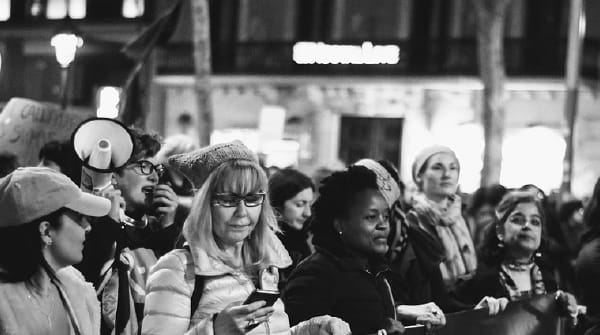
The feminist agenda in Latin America is marked by two almost paradoxical issues that gain relevance in the face of the neoliberal escalation in the region: i) the inequality(ies) and violence(ies) that are inflicted particularly on the bodies of women, but also on other dissident bodies and ii) the emergence of new social actors who also find new expressions in the public sphere in their demands and in particular the feminist movements in pursuit of rights.
The city is not neutral; it reflects power and gender relations. Inequalities are evident at multiple scales, and exclusion is material, subjective, and symbolic. The design, conditions, and quality of spaces influence their restriction, exclusion, or appropriation by individuals. Furthermore, increasingly disruptive initiatives challenging gender stereotypes are emerging in the public sphere. Both issues are examined in light of theory and the articulation of conceptual categories.
The proposal advances at the intersection of themes such as inequalities, violence, women's rights to live in and enjoy cities and territories, spatial logics and dynamics, the right to the city, and the role of public policies. It provides tools in the analytical, theoretical, and propositional dimensions, capable of explaining how and in what way the city constitutes a social process that structures and manages attributes of femininity and masculinity.
Contents:
- GENDER, WOMEN AND HABITAT IN LATIN AMERICA
- GENDER INEQUALITIES, CITY AND PUBLIC POLICIES. Keys to understanding and addressing them.
- BODY-TERRITORY AS RESISTANCE. Territorial (Dis)orders.
LANDSCAPE(S), GENRE(S) AND TERRITORY(IES). Emerging tools and cartographies. - GENDER PUBLIC POLICIES. Scenarios, actors and challenges in the neoliberal context.
- LOCAL AGENDAS AND PUBLIC POLICIES FOR EQUALITY. Gender and citizenship.
- THE RIGHT TO THE CITY IN LATIN AMERICA
- CITY, CARE AND GENDER. The public agenda.
- PUBLIC SPACE AND GENDER. Emerging expressions and demands.
- VIOLENCE, RIGHTS AND THE CITY.
- Feijoo, MC; Herzer, H. (1991) Women and life in cities. Buenos Aires: Grupo Editor Latinoamericano. IIED. AL.
- Falú, A. (2015) Quo vadis new urban agenda?: About the process and the contents. In Housing and City Magazine.
- Falú, A. (2013). Women's citizenship in the democracies of the Americas. Published by the Inter-American Commission of Women – OAS.
- Falú, A. (2008). Portraits of inequalities. Brazil: Institute of Applied Economic Research (IPEA) and UNIFEM.
- Czytajlo, N. Socio-territorial and gender inequalities in metropolitan spaces. Bitácora Urbano-Territorial Journal; Place: Bogotá; Year: 2017 vol. 27.
- Tabbush, C. Contributions of feminism to social protection: Revolution in the square, in the home and in the bed. Social Work Journal PLAZA PÚBLICA; Place: Tandil; Year: 2014 p. 126 - 134.
- Falú, A.; Morey, P., Rainero, L. (comp) (2002) City and everyday life. Asymmetries in the use of time and space. Argentina: Ed. Falú, Morey, Rainero.
- Tabbush, C. Caminotti, M. Gender equality and social movements in post-neoliberal Argentina: the Tupac Amaru Neighborhood Organization. Latin American Profiles Journal; Place: Federal District; Year: 2015 vol. 23 p. 147 - 171.
- Sarmiento, L. (2016) “Urban Bioethics in Care of the Collective Vitality of Territories”. Sustainability(s) Magazine; Santiago; Year: 2016, vol. 14.
- García Vázquez, C (2016) Theories and history of the contemporary city. Barcelona: Gustavo Gili.
- Ciocoletto, A. (2014) Spaces for everyday life. Urban Quality Audit with a Gender Perspective.
- Guide: The human dimension in public space: recommendations for analysis and design. Ministry of Housing and Urban Development / UNDP.
- ILPES, ECLAC (2016) ECLAC Manuals No. 4 Territory and equality: development planning with gender perspectives. Santiago, Chile: ECLAC.
- MASSOLO, Alejandra. "The local space: opportunities and challenges for the empowerment of women. A Latin American vision." Observatory Women and Political Participation, no. 4, pp. 4-8, 2003.
- Rodríguez Gustá, AL; Caminotti, M. Heirs of Beijing: the trajectories of gender mainstreaming in Montevideo and Rosario. Studia Politicae; Place: Córdoba; Year: 2016 vol. 39 p. 5 – 29.
- Soto, L. (2015) Guide for gender equality in municipal public policies in Paraguay. Ed. Network of Women Municipal Leaders of Paraguay. Asunción.
- Rodríguez Gustá, AL Municipal policies for equal opportunities: reflections on the requirements and local capacities for gender mainstreaming. PAMPA Journal. Interuniversity Journal of Territorial Studies; Place: Santa Fe; Year: 2008 vol. 4 p. 183 - 199.
- Falú, A. (coord.) (1999) Guide for the formulation and execution of municipal policies aimed at women (CISCSA-Red Mujer y Hábitat LAC, 1999), Quito: Urban Management Program. Working Paper No. 72. Córdoba, Argentina: Ed. CISCSA. May 2002.
- Carrión, F., Erazo, J. (coord) (2016) The right to the city in Latin America: visions from politics. Mexico, 2016.
- Ziccardi, Alicia (2012), “Public Space and Citizen Participation. The Case of the Community Neighborhood Improvement Program of Mexico City”, in Revista Gestión y Política Pública, thematic vol. Mexico: CIDE, pp. 187-226.
- Borja, Jordi (2011b), “The end of the postmodernist anti-city and the right to the city in metropolitan regions”, in Mireia.
- Aguirre, R., Batthyány, B., Genta, N. Perrotta, V. (2014) Care in the research agenda and in public policies in Uruguay. ICONOS Journal, Journal of Social Sciences. Year, 2014, No. 50.
- Llobet, V.; Milanich, N. (2014) Motherhood and women from low-income sectors in Conditional Cash Transfers. A contribution to the debate on care and gender relations. Zona Franca. Journal of the Center for Interdisciplinary Studies on Women; Place: Rosario; Year: 2014 vol. XXII p. 58 – 69.
- Falú, A. (2017) Care, an outstanding issue on the women's rights agenda. The case of Rosario. In Rico, MN; Segovia, O. (ed) (2017) Who cares in the city? Ed. CEPAL.
- Segovia, O. (2007) Public spaces and social construction. Towards an exercise of citizenship. SUR Editions, Chile.
- Del Valle, T. (1997) Scaffolding for a new city. Readings from anthropology. Madrid: Ed. Cátedra.
- Vargas, V. (2009) Gender violence: clues for an analysis. In Falú, A. (2009) Women in the city. Of violence and rights. Women and Habitat Network of Latin America. Santiago de Chile, Ediciones SUR.
- Falú, A. (2009) Women in the city. On violence and rights. Women and Habitat Network of Latin America. Santiago de Chile, Ediciones SUR. Jay Friedman, E.; Tabbush, C. (2016) #NiUnaMenos Not One Less, We Want Us Alive!: LATIN AMERICA - NACLA; Year: 2016.
- Massolo, A. Gender and Citizen Security: the role and challenge of local governments. Program “Towards the construction of a society without violence”. Permanent Seminar on Violence. June 2005. UNDP – El Salvador.
FAQ
The basic requirements for taking a seminar are:
- Availability of at least 4 hours per week to dedicate to the seminar course.
- Internet access.
- Reasonable handling of communication and computer tools.
- Language proficiency in the language in which the course will be taught. The official languages are Spanish and Portuguese.
|
|
Discount for one payment until 16/03 |
In one payment after 16/03 |
|
CM Plenos |
$75 |
$150 |
|
CM Associates |
$95 |
$190 |
|
No link |
$95 |
$190 |

