
Gaza between Israeli bombs and Palestinian resistance
By Martín Martinelli * and Santiago Montag **
“To justify itself, state terrorism manufactures terrorists: it sows hatred and reaps alibis. Everything indicates that this massacre in Gaza, which according to its perpetrators aims to eliminate terrorists, will only succeed in multiplying them.”
Eduardo Galeano, 2014
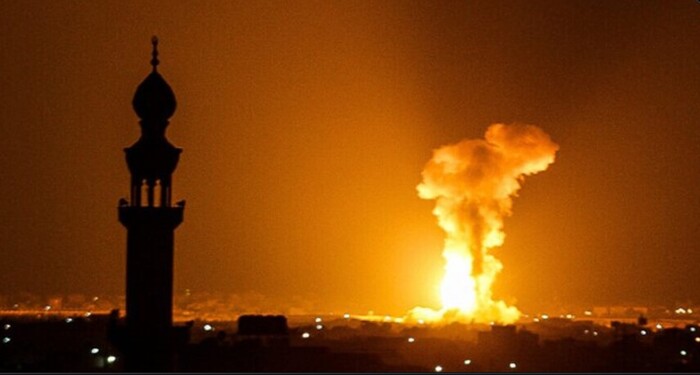
Between August 5 and 7, Israel launched a series of attacks on the Gaza Strip, dubbed “Operation Breaking Dawn.” According to Prime Minister Yair Lapid, it was a “preemptive strike” against the Palestinian Islamic Jihad (PIJ) armed group, which was allegedly planning an attack on Israel. Yet again, we witnessed an Israeli massacre of Palestinians, resulting in the deaths of 44 people, including 15 children, according to the Palestinian Ministry of Health in Gaza, as well as more than 350 wounded and at least 1.500 homes destroyed or damaged. This is just the first layer of the onion; this colonization began gradually in 1882.
Starting from this criminal act, we will undertake an analysis of various scales of a situational or tactical nature and others of a structural and strategic nature, intrinsically linked to each other and to the debates surrounding Palestinian organizations.
Notes on the current situation
On the night of August 1, Israeli occupation forces arrested IJI leader Bassam al-Saadi in Jenin (the region where Al Jazeera journalist Abu Akleh was recently murdered), in the West Bank. Anticipating a potential military response from Gaza (where the group has its largest concentration of weapons and fighters), the Israeli government implemented security measures along the line separating the occupied Palestinian territories and the Gaza Strip, ostensibly to preempt such an operation. Egypt (a US ally) attempted to intervene in the crisis as a mediator between the Israeli occupation government and the Palestinian Islamic Jihad movement. Egypt successfully persuaded IJI to suspend any potential military action.
However, Israel, with the support of US imperialism (under the premise that they "have the right to defend themselves"), amassed military forces on the Gaza border—closing settlements in the southern region, reinforcing existing forces, and mobilizing up to 25.000 reserve troops—not as a defensive maneuver but in preparation for a supposed "preemptive strike." First, they bombed the apartment where Tayseer al-Jabari, the commander of the Palestinian Islamic Jihad's northern region, was located. He was killed along with other fighters and several Palestinian civilians. This was followed by a Palestinian Jihad response of rocket attacks amidst three days of Israeli bombing until Egypt "mediated" to negotiate a ceasefire last Sunday night. But this ceasefire rests on a fragile balance, where Israel typically resolves its internal political crises through wars with Gaza or other regional enemies. Let's examine this further.
Elections and "reason of state"
New elections are approaching in the Jewish state. There is a context of total uncertainty in the Israeli electoral field as the fifth elections in almost three years approach, with the possibility of Benjamin Netanyahu's return even being considered. It is rare for Israel to end a round of fighting when and how it wants, with most of its conditions met and without Israeli casualties.
Prime Minister Yair Lapid, along with his Defense Minister Benny Gantz, aims to capitalize on this tactical victory and transform it into a strategic one. They seized the opportunity to position themselves as a “strong government” in the face of the perceived “Palestinian threat” from Gaza, which they see as attacks on Israeli towns and cities with rockets (most of which are intercepted by the Iron Dome air defense system) and incendiary balloons, and following the individual armed attacks that left approximately 15 Israelis dead earlier this year. In other words, they needed to demonstrate their ability to guarantee the safety of the “average Israeli.”
While this colonialist paradigm is not shared by all Israelis, as some oppose the occupation of the West Bank and want "peace" (and a few are actively working toward this goal), there is a right-wing social base that pressures the government in a more aggressive direction. Since the Second Intifada (2002), the far-right, nationalist-religious sector has grown, many of its members becoming settlers in Palestinian lands. These settlers act as Israel's spearhead for this policy, which seeks to further divide the Palestinian movement territorially, making the creation of a Palestinian state impossible. This social base has gradually gained importance in terms of votes in Israel; in other words, the occupation has become another facet of everyday politics.
On the other hand, there is also a sector of the establishment and the middle class that views the occupation as anachronistic since the end of the Cold War, where forms of accumulation by dispossession, Palestinian lands and resources, are linked to production and investment through the military apparatus (surveillance technology and state-of-the-art weapons), with the state as guarantor of subsidies that always generate deficits, but huge profits for military technology companies that use the occupation to sell weapons "tested in combat"—those proven in the field. Meanwhile, the globalist and financial private sector perceives it as an obstacle to opening up the market and positioning itself on different terms in the global marketplace.
The current Prime Minister, Yair Lapid, is a representative of this sector of the Tel Aviv-based bourgeoisie, which, despite its weak political capacity, seeks to limit the occupation (including the settlements), and therefore needed a “surgical war.” However, this becomes secondary when viewed from the Israeli perspective that there is a “reason of state” behind dismantling the Palestinians (in spatial, political, and ideological terms) by generating friction among them.
In this context, the timing of the attack on Gaza was crucial. It was impossible to predict with certainty whether Hamas would join the military response, but several structural factors pointed to a political victory for the interim government. Why? On the one hand, Hamas is trying to rebuild the cities after the deadly 2021 war, and Israel is allowing humanitarian aid, materials, and money (mainly from Qatar, which announced a new aid package) to enter, in exchange for Hamas not engaging in actions against Israel. Hamas is looking for ways to resolve its funding problems, which are likely caused by the increased import costs for the resource-poor Gaza Strip.
Recently, the implementation of a tax increase for merchants sparked minor protests, and in July, Hamas cut the salaries of state workers, demonstrating that increasing the tax burden on the population can undermine popular support for Hamas. Furthermore, Hamas displayed weakness by allowing Israel to bomb with impunity, deepening tensions with the Islamic Revolutionary Police (IRP).
This calculation, established by the interim government, may give it a slight advantage in the upcoming elections. However, the internal instability of Israeli politics constantly brings new surprises, which could very well be addressed with further attacks against the Palestinians.
Devastation on the shores of the Mediterranean
It is necessary to analyze what Gaza is for Israeli domestic politics in order to understand why bombs cyclically rain down on that small part of the world.
The Gaza Strip is the world's largest open-air prison, with 2 million Palestinians trapped by sea, land, and air. The Israeli army has invaded it in more than a dozen high-level operations since 2000 [ 1 ], particularly since its withdrawal in 2005 at the end of the Second Intifada. Hamas, short for "Islamic Resistance Movement," has governed Gaza since its victory in the 2006 elections—which are therefore not recognized—and thwarted a 2007 coup attempt orchestrated by Fatah and Israel. Consequently, the Israeli Security Cabinet declared it a "hostile entity," tightening restrictions on Palestinian movement within the territory. The entry of goods and services was reduced to what Israel defines as the “humanitarian minimum,” the export of goods was prohibited, fuel imports were reduced, and travel (already limited) between Gaza and the West Bank and Israel was drastically restricted, with a few exceptions. Israel began its “doctrine of separation” to erode cultural, familial, and identity ties, as well as ethnic and territorial continuity; a situation that makes the establishment of a Palestinian state impossible.
The false pretext for each of these offensives is usually to respond to the “Palestinian terrorist threat” from a political and territorial entity whose inhabitants live in a severely deteriorated standard of living. At the same time, these attacks seek to increase Israeli power in the Middle East region, with the support of the United States, and, since the first decade of the century, have aimed to end the Intifada and avenge the humiliation caused by 20 years of war in Lebanon against Hezbollah. This serves to increase Israel's deterrent capacity against its enemies, showcase its combat-tested weapons and know-how as a model of capital accumulation, and present it as a “security policy” vis-à-vis the Israelis.
“Operation Dawn” is part of this modus operandi, which unfolds within a context of internal political crisis in Israel and an unbearable burden placed upon the Palestinians, resulting in a popular resistance that refuses to surrender. To achieve this surrender, Israel deploys various tactics of control and surveillance, but above all, a strategy of divide and discipline to conquer.
Popular Discipline
Israel has been carrying out an offensive against the Palestinians in the West Bank [ 2 ] under the pretext of fighting armed groups since the end of 2021. While justified by individual attacks in Israeli cities by armed men, the army incursions that devastated Jenin and Nablus in the north, and Hebron in the south (especially in the refugee camps where the social situation is very precarious) were aimed at disciplining the popular resistance (especially of young people) that questions the occupation and the traditional Palestinian leadership.
These cities also have a long tradition of armed resistance, where Palestinian Islamic Jihad currently wields significant influence among young people seeking various ways to combat the occupation. This is no small matter, given the conditions under which the Palestinian population lives in that territory, with high rates of unemployment, poverty, extreme surveillance, border control, military harassment, and so on.
In 2021, the situation worsened following the Israeli offensive against the Palestinian neighborhood of Sheikh Jarrah and the Netanyahu administration's oppressive policies against worshippers traveling to the Temple Mount/Haram al-Qudsi al-Sharif in Jerusalem to pray during Ramadan (the Muslim holy month). Hamas began launching rockets at Tel Aviv, which allegedly provided the pretext for 11 days of Israeli bombing of Gaza, leaving 300 dead, thousands wounded, and hundreds of buildings destroyed.
But this offensive met with the most feared response: the Palestinian movement fighting in the streets in a unified manner against the bombings, and with a political program. Its most significant expression was the general strike across all territories (with international support), in the West Bank, Gaza, among those living in the diaspora (millions reside in refugee camps in Jordan and Lebanon), and those living in the so-called 48 territories (the so-called "Israeli Arabs," who live in what is now Israel). As the days passed, this movement gradually weakened, its initial momentum fading, leaving only isolated pockets of resistance. This was largely a consequence of the Palestinian Authority's policies, which, in order to maintain its privileges, sought to neutralize this movement that questioned the foundations of the Oslo Accords and the role of its leaders (not only Fatah, but also Hamas, and even leaders of the PFLP – Popular Front for the Liberation of Palestine). Thus, the lack of a unified (and revolutionary) political leadership to organize the youth resulted in the movement losing its strategic direction in confronting Israel and challenging the traditional leadership. However, the lesson is that the Palestinian resistance still maintains a national identity and the capacity to organize itself politically despite the segregation and colonialism of the Israeli occupation, and also despite its leadership.
If we fast-forward to a year after that struggle, Israel has selectively increased its repression, targeting, on the one hand, the leaders of certain political parties that demonstrate a degree of continuity in their struggle, such as those of the Palestinian Islamic Party (PIP), but with a particular focus on both popular resistance (as seen in Beita and Nablus) and armed resistance, which often operates outside of political leadership. This is evident in the number of activists killed in clashes, some with ties to multiple groups simultaneously, and others with no ties to any group at all. For Palestinians, resisting and fighting against the occupation is paramount, given their utterly truncated future, their lack of employment, their inability to move freely, and the escalating poverty they face. As we write these lines, the killings of Palestinians continue to rise. According to the Israeli newspaper Haaretz, of the 60 cases in which Palestinians died in “incidents” involving the Israeli occupation army (IDF –Israeli Defense Forces–) and the Border Police in the West Bank, 16 are currently being investigated by the Military Police. There were 70 such deaths in all of 2021, and 20 in 2019.
Gaza and the fragmentation of the Palestinian movement
To understand part of the current situation of the Palestinians, we must go back to 1979, a pivotal year for the Middle East and the world. That year, Arab nationalism, particularly Egyptian nationalism (Nasserism), revealed its significant historical limitations when Egypt signed a peace treaty with Israel, abandoning the Palestinian cause as the central focus of its regional policy. Simultaneously, the revolutionary process unfolded in Iran, culminating in the rise of Khomeini's Islamic leadership, which had an ideological impact on the entire region, affecting both Shia and Sunni Islam. The Soviet invasion of Afghanistan began, and Saudi Arabia (Sunni) seized the opportunity to expand the influence of Wahhabism [ 3 ]. In 1980, the Iran-Iraq War erupted in response to the Iranian Revolution. Those years opened a stage for the development of new ideologies linked to political Islam, consolidated on the basis of defeating the workers' movement and its leadership on several occasions, such as the communist parties, which often even supported regimes like Nasser's in Egypt, the Ba'at in Iraq and Syria, or even the rise of Khomeini in Iran, for geopolitical reasons that benefited the USSR.
In this way, Fatah (representing Palestinian Arab nationalism) began to weaken in the face of the emergence of new organizations. Among them was Palestinian Islamic Jihad, founded in 1981 within the framework of the "Islamic Republic" in Iran (Shia), which created the political conditions and fostered the growth of the Muslim Brotherhood's (Sunni) influence since its defeat in the 1967 war. Although it identifies as Sunni within Islam, the organization is broader in religious terms, with a bourgeois nationalist (Arab-Palestinian) program, but with the objective of establishing an Islamic state, which gives it considerable flexibility in forming alliances. Its guerrilla strategy allowed it to absorb militants from the PFLP who sought to continue the armed struggle after the fall of the USSR.
Shortly thereafter, Hamas emerged in 1987, also in Gaza, amidst these regional influences (Hezbollah in Lebanon, the Islamic Salvation Front in Algeria) during the First Intifada—which, it should be remembered, began as a movement without political leadership, characterized by weekly general strikes and intense riots. The Oslo Accords (1993–1995) [ 4 ] were part of a strategy by both Israel and the PLO (which lost its Soviet ally after 1991) to bring order to a situation where many had high hopes of returning to their homes and improving their living conditions. From that moment on, Israel managed to "delegate" much of the social administration and security responsibilities to the newly formed Palestinian Authority in the West Bank and Gaza (until 2007), but due to its authoritarian policies and capitulation, it gradually lost effective control of the Palestinian movement. This subjugation led to precarious living conditions and the proletarianization of the vast majority of Palestinians.
As a result of this political and economic defeat of the Palestinians, the Second Intifada began, further deepening the PLO's collaborative role. Thus, in the lead-up to the 2006 elections, Hamas presented itself to the Palestinian parliament with a 39-point government program [ 5 ] that could be broadly assessed as a reformist program from a social and bourgeois nationalist perspective regarding the Palestinian conflict. This offered new hope, especially to the Gazans.
The years of military occupation and gradual colonization, coupled with these political defeats, pushed most Palestinians toward the two Intifadas, leading them to question their leadership and even embrace radical ideologies such as political Islam and armed struggle as a last resort. A recent Israeli incursion into Nablus, which claimed the life of a young fighter, Al-Nabulsi, exemplifies this. Although his father belongs to the Palestinian Authority, he had no clear organizational affiliation but was in contact with members of Tanzim, an al-Fatah activist group, many of whom have resumed armed struggle against the IDF in the last two years, operating independently of the central leadership. In Nablus and Jenin, local cells comprised of members from various organizations are determined to confront any military operation in Palestinian cities with weapons without the approval of their leaders.
On the other hand, there are Hamas, Islamic Jihad, and other groups whose political programs and methodologies are necessarily open to debate, but it is also crucial to remember the root of the problem: the Zionist colonial project. Before the founding of these political organizations, there was ethnic cleansing, massacres, settlements, and mass incarceration by Israel.
The State of Israel was built on the bones of the Palestinians; it is sustained by policies of aggression, displacement, and apartheid against the indigenous peoples, driven by a colonialist logic and acting as the armed wing of imperialism. As a result, all attacks against Gaza, regardless of the pretext, occur within this context of annexations, the construction of segregation walls, legal and “illegal” or outpost settlements, and Israeli checkpoints in the West Bank. This also includes the invention of “firing zones” to displace pastoral villages. [ 6 ]
But on the other hand, we see that ultimately the bourgeois and petty-bourgeois parties we have analyzed—Fatah, Hamas, Islamic Jihad, and the PFLP—have proven incapable of consistently pursuing any kind of “national liberation.” And considering their international alliances (such as Qatar’s alliance with Hamas, Iran’s alliance with Islamic Jihad, or Fatah’s limited US funding), the prospects are clearly far removed from a genuine struggle for Palestinian self-determination.
The situation for Palestinians is worsening in this new phase of the global crisis. However, it could open up new possibilities, given the significant uprisings that have taken place in several countries around the world, including the Middle East. The path of the national general strike adopted by the Palestinians in 2021 demonstrated their capacity for struggle and independent organization, enabling them to impose their own agenda despite the traditional political parties that have repeatedly shown themselves to be collaborators with Israel.
Sources:
Étienne, Bruno (1996). Radical Islamism . Siglo XXI.
Finkelstein, Norman (2015). Method and Madness: The Hidden History of Israel's Attacks on Gaza . Ed Akal.
Kepel, Gilles (2002). The Jihad . Ed. Panínsula.
Pappe, Ilan (2015). The idea of Israel . Ed Akal.
Sayigh, Yezid (1997). Armed Struggle And The Search For State, The Plaestinian National Movement,. 1949-1993 .” Ed Oxford Press.
Footnotes
[ 1 ] The most significant were: Cast Lead (2009), Pillar of Defense (2012), and Protective Edge (2014), and the most recent and emblematic was Guardian of the Walls (2021). These attacks resulted in the deaths and injuries of thousands, many of them children, leaving terrible psychological scars for the survivors.
[ 2 ] Unlike Gaza, the West Bank suffers from a different set of restrictions linked to a daily military occupation across much of the territory, with checkpoints, controls, and soldiers ubiquitous in the daily landscape. Official Israeli documentation refers to this territory as Judea and Samaria, a biblical land that Israel aspires to conquer in the long term through Palestinian ethnic cleansing and to establish “Greater Israel.” This is a project of the most radical wing of Zionism, combining nationalism and religion. Arguably, it is the most aggressive wing, and its influence within Israeli society is steadily growing. Its territorial ambitions extend into parts of Iraq, Saudi Arabia, Syria, and Egypt.
[ 3 ] Rigorist current of Sunni Islam originating in Saudi Arabia
[ 4 ] The West Bank region was divided into three administrative areas: A, B, and C, resulting in a layout similar to an archipelago. Area A, under the administration and security of the Palestinian Authority, would become a semi-autonomous government; Area B comprised zones controlled by a hybrid of Palestinian municipalities and Israeli military control; and Area C would have complete Israeli control of public administration and military operations. At the same time, this did not halt the expansion of settlements; rather, the expropriation of Palestinian land through various mechanisms intensified. The agreements had left the door open for this policy to continue.
[ 5 ] Among them was the right of return for all refugees expelled by the State of Israel, the recognition of resistance in its various forms as a legitimate right of the Palestinian people to end the occupation and regain national rights, improve the living conditions of citizens and encourage social solidarity, expand the health and education network and develop services for the population.
[ 6 ] Today we see it in the hills of Masafer Yatta where hundreds of families are being dispossessed of their lands. See: Siege and resistance in the southern West Bank.
Access the article in English by visiting: https://www.leftvoice.org/gaza-between-israeli-bombs-and-palestinian-resistance/
* Martín Martinelli (Argentina). He holds a PhD in Social Sciences, is a Professor of History at the National University of Luján, and co-coordinator of the Al Zeytun Journal / CLACSO Special Group “Palestine and Latin America”.
** Santiago Montag (Argentina). He is an editor in the international section of Izquierda Diario, covering Maghreb, Africa, the Middle East, and Asia.

