
Climate Justice and Care Forum
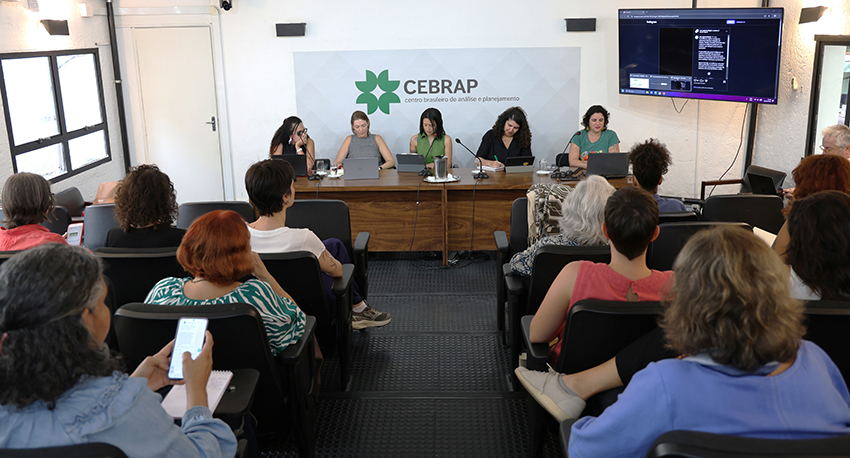
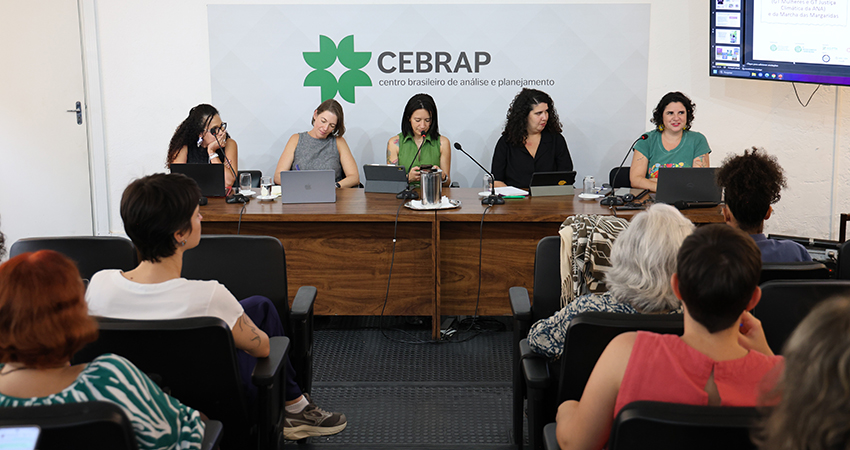
The Brazilian Center for Analysis and Planning (CEBRAP), the Latin American Council of Social Sciences (CLACSO) and the International Development Research Centre (IDRC) Canada / International Development Research Centre of Canada (IDRC) hosted the “ 1st Climate Justice and Care Forum ” on April 30th , held within the framework of the “ CLACSO – Brazil Dialogues 2026 ”.
The seminar, titled “ From Science to Advocacy: Innovations and Challenges in Linking Research and Action Agendas on Climate Change, Gender, and Care Work, ” brought together researchers, public officials, and representatives of social movements from Brazil, Uruguay, Colombia, Honduras, and Mexico to discuss the connections between climate change, care work, and gender inequality. Pablo Vommaro , Executive Director, and Gloria Amézquita Puntiel , Academic Director, participated on behalf of CLACSO.
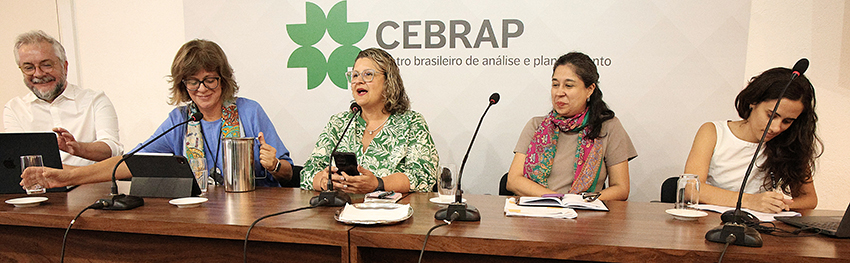
The seminar was structured into two tables: the first dedicated to scientific production on the three agendas and their interdependencies; the second focused on the so-called “impact”: how social actors working on these issues can improve their decision-making processes based on the knowledge generated by research.
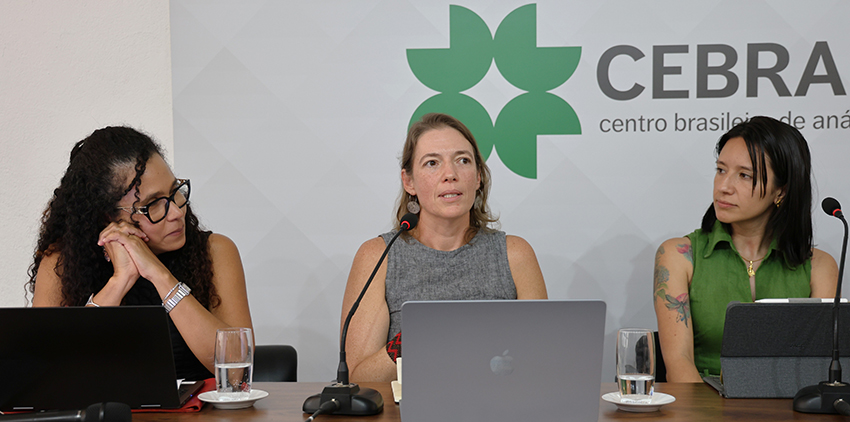
Arilson Favareto , scientific director of CEBRAP, placed the event within the broader framework of the institution: over two years, the project aims to generate ideas on how climate policies can incorporate measures designed to strengthen care from a gender perspective and reduce inequalities.
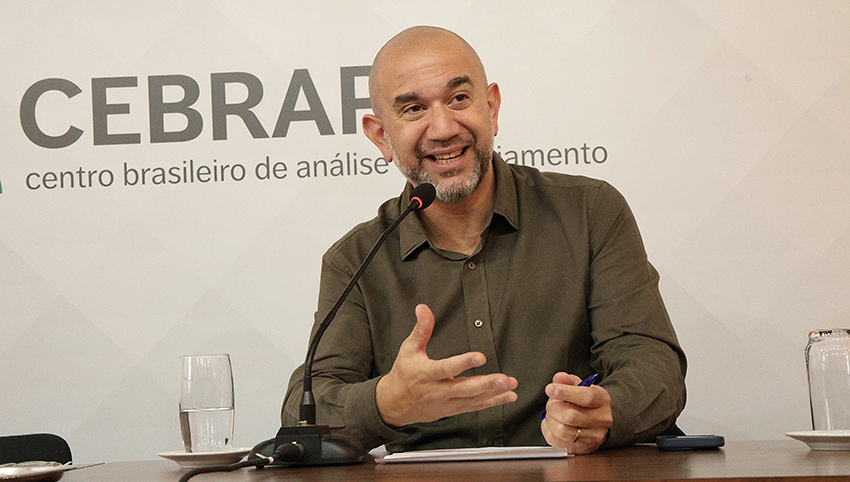
Pablo Vommaro , Executive Director of CLACSO, placed the forum within a series of meetings organized by the Latin American Council of Social Sciences that week in Brazil, in collaboration with PUC-SP, USP and UNESP, dedicated to topics such as democracy, sovereignty and participation.
Nadya Guimarães , coordinator of the CuiDDe Network, highlighted the importance of the meeting for the institution in multiple aspects. Beyond its historical dimension, she emphasized that the forum allowed two areas of the institution that had not traditionally worked together—the environment and care—to come together around a common agenda. The diagnosis that motivated this convergence is precise: the climate agenda is practically blind to the issue of care, and vice versa, even though, empirically, both phenomena are deeply intertwined. “The entire environmental problem affects, for example, the distribution of women's time in care work. The entire debate on community care largely relates to the issue of territory, the environment, preservation, and what we call good living,” she stated.
Karina Batthyány , former executive director of CLACSO and coordinator of the project, reinforced this argument: “These are two major crises facing our societies: the care crisis and the environmental and climate crisis. It is important to establish a dialogue between them.” According to her, although both affect people’s daily lives, the intersection between these two agendas has not yet been sufficiently researched or addressed in the realm of public policy.
Sarah Moreira , from the National Agroecology Network (ANA), contributed to the debate by highlighting the agroecological movement's role in responding to the climate crisis. For her, agroecology is already, in practice, a form of adaptation and mitigation: it guarantees the production of healthy food, strengthens local communities, and demonstrates that it is possible to respond to the climate emergency in an integrated way while also caring for life, especially for women in rural, forest, and aquatic communities.
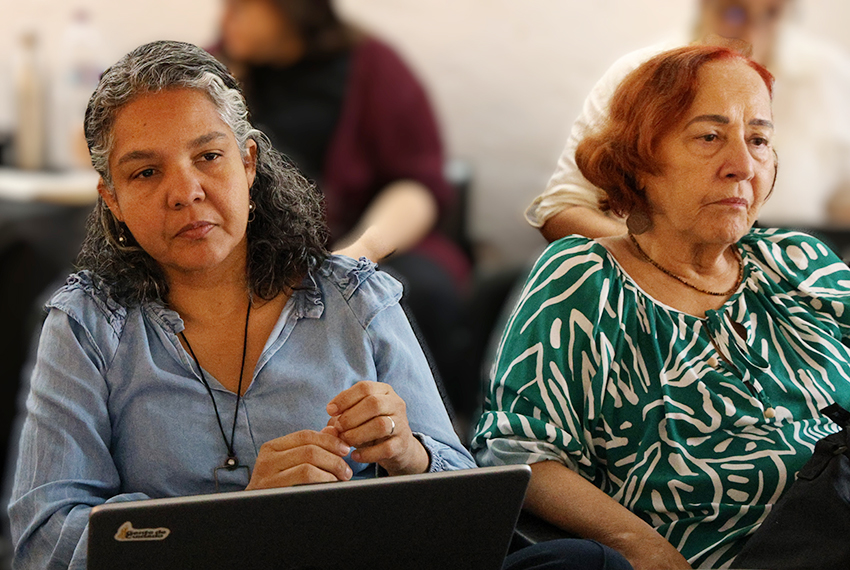
The forum concluded with a call to make visible the experiences of historically marginalized sectors in order to build a climate response that is socially just and focused on the sustainability of life.
This meeting is part of a comparative research project being conducted simultaneously in the five participating countries, with a planned duration of two years. Its objective is to generate concrete proposals for climate policies to incorporate measures aimed at strengthening care work from a perspective of reducing gender inequalities.
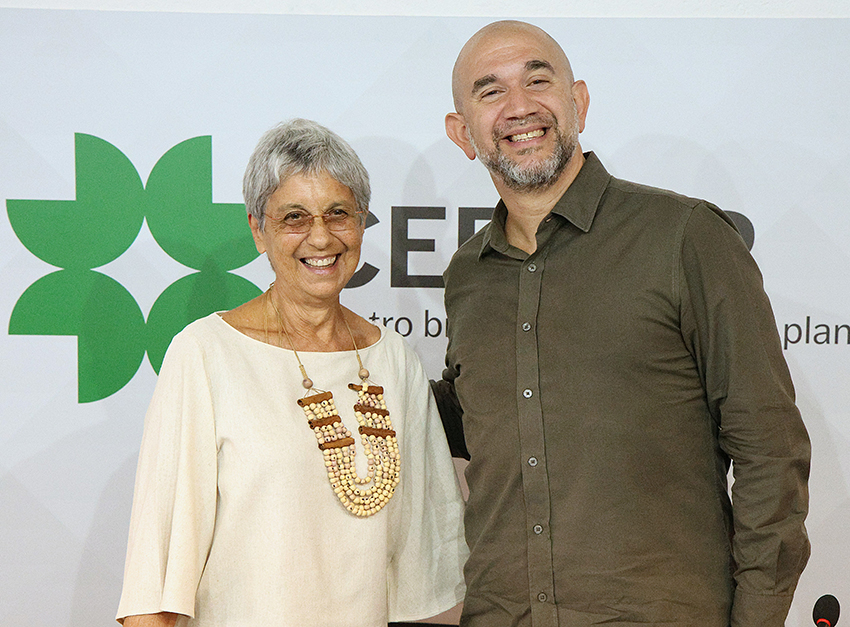
Nadya Guimarães and Pablo Vommaro
The Brazilian Center for Analysis and Planning (CEBRAP) is a research institution based in São Paulo, Brazil, founded in 1969. It is recognized as a leading think tank in the analysis of Brazilian reality, focusing on public policy, inequality, democracy, and interdisciplinary studies.
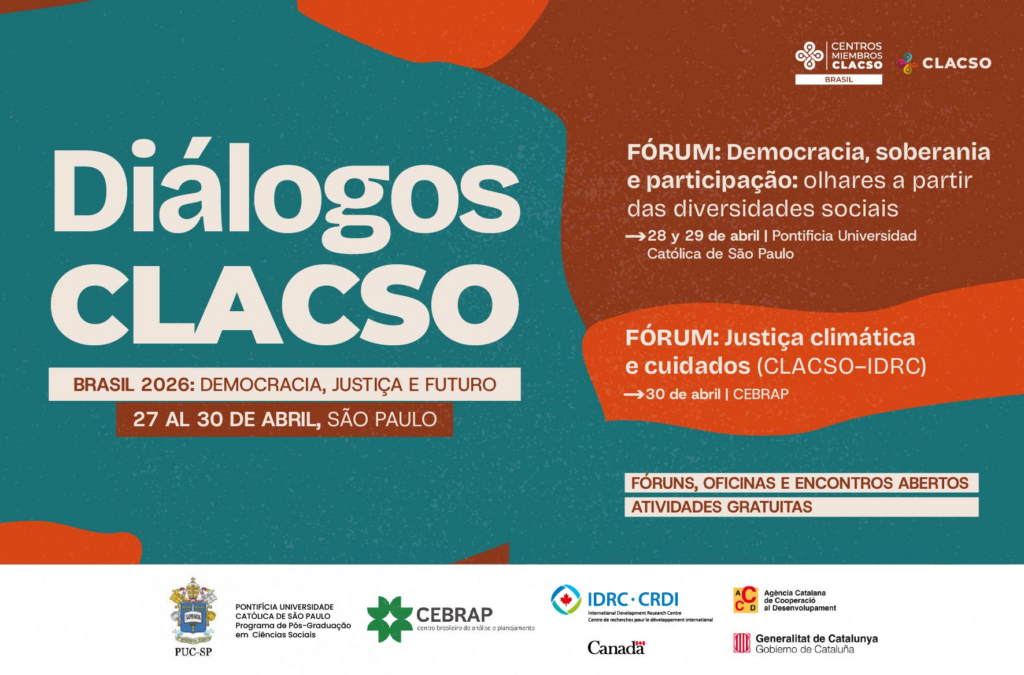
CLACSO Dialogues – Brazil 2026: Democracy, Justice and the Future

