Fiocruz and CLACSO seal an alliance to strengthen cooperation in health, territory and open science in Latin America and the Caribbean
The two institutions signed a Memorandum of Understanding and a 2026–2030 work plan that focuses on territorial governance, climate and collective health, data sovereignty and the production of critical knowledge for social transformation.
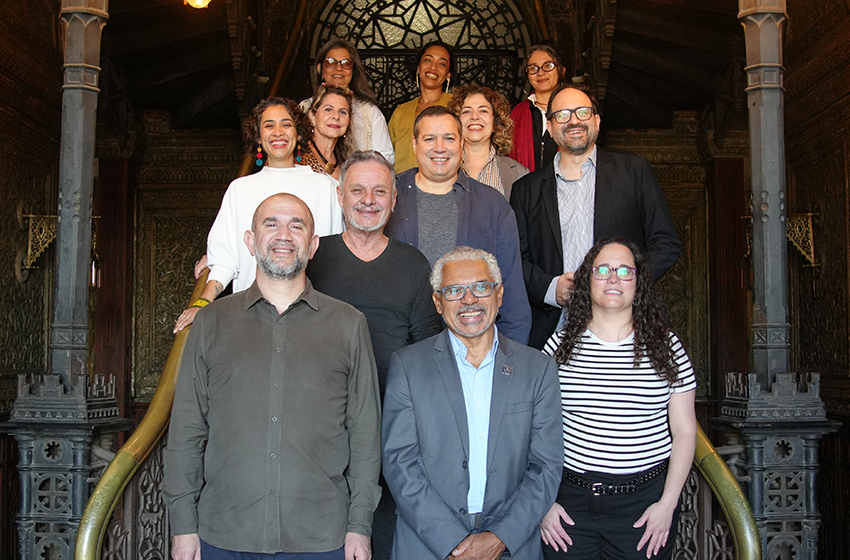
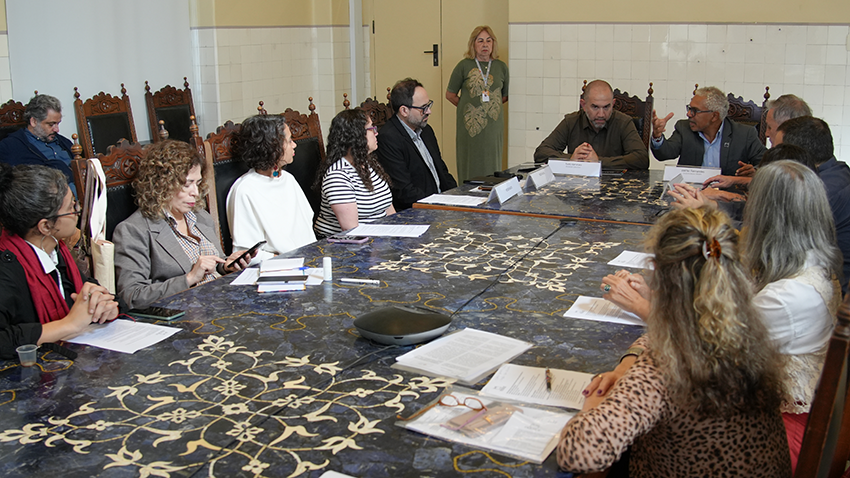
At a meeting held on July 28, 2026, at the Moorish Castle of the Oswaldo Cruz Foundation (Fiocruz) in Manguinhos, Rio de Janeiro, CLACSO and Fiocruz took a decisive step in their joint work with the signing of a Memorandum of Understanding for International Cooperation. The choice of venue was not accidental: the Moorish Castle, a symbol of Fiocruz and part of its historical and architectural heritage, embodies more than a century of Brazilian science and public health history, a setting that lent particular significance to this new institutional commitment.
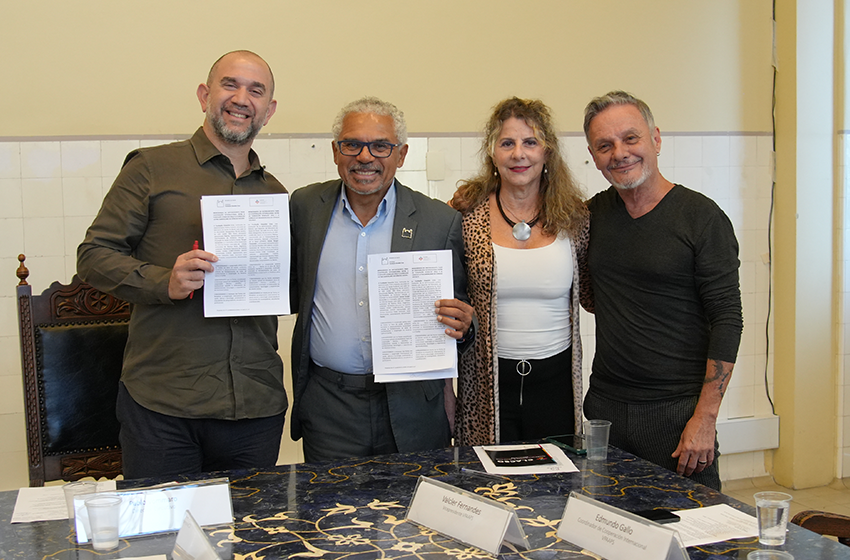
The instrument was signed by the Executive Director of CLACSO, Pablo Vommaro, and by the Vice President of Environment, Care and Health Promotion (VPAAPS) of Fiocruz, Valcler Rangel Fernandes, on behalf of their respective institutions.
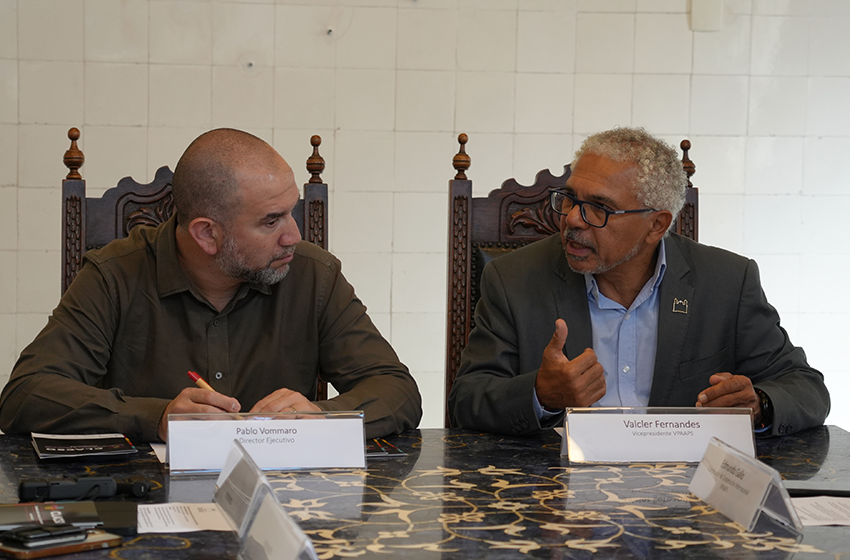
The agreement consolidates and deepens a long-standing relationship: Fiocruz is already formally part of the CLACSO network as a member center and actively participates in initiatives such as the International Health and Health Sovereignty Working Group, along with other projects related to the environment, education, and publications. Also participating in the meeting on behalf of CLACSO were Fernanda Pampín, Director of Publications, and Gustavo Lema, Director of Communication and Information.
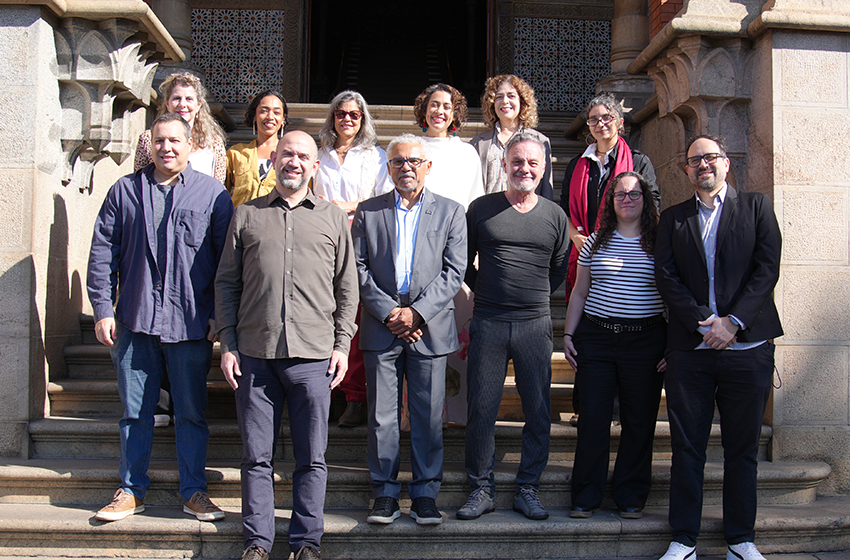
A central role in coordinating this cooperation is played by Edmundo Gallo, International Cooperation Coordinator for the VPAAPS at Fiocruz and coordinator of the joint work plan, and Julia Borges, from the Marangatu Network and Fiocruz, who is part of the coordination team for the CLACSO Special Group “From the Mountains to the Sea: Biocultural Governance and Production of Territory and Climate Justice,” along with Claudia Pilar Lizárraga Araníbar (JAINA Studies Community, Bolivia) and Yohana Coñuecar Llancapani (Mapuche People, Chile). Alongside them, the Fiocruz delegation brought together a large team: Leonardo Freitas, General Coordinator of the Observatory of Sustainable and Healthy Territories (OTSS); Ana Helena Gigliotti, Advisor for the Americas; and Helena Distelfeld, Coordinator of Agreements in the Directorate of Strategic Planning. Fabio Sacramento, Priscilla Azevedo, Alexandre Porto, Lizandra Soares and Livia Ferreira e Silva, from the international cooperation area and the vice presidencies involved.
For CLACSO, this alliance expresses a profound convergence of values and visions: the production of rigorous yet critical knowledge, grounded in anti-colonial, anti-racist, and social equality principles; the recognition of diversity; and a firm commitment to open science as a public good, capable of being socially appropriated by citizens. In his remarks during the meeting, Pablo Vommaro emphasized that CLACSO promotes multi-stakeholder dialogues between academia, social movements, and public policy, and noted that knowledge is not produced solely in formal settings, but also in Indigenous communities, peasant communities, and Black and Afro-diasporic communities, whose territorial power is central to understanding territorial governance.
The Memorandum is accompanied by a Work Plan entitled International Cooperation for Governance, Innovation, Territory, Climate Health, Equity, and Digital Technologies in Latin America and the Caribbean, planned for the period 2026–2030. Its activities will be conducted by the CLACSO Special Group in conjunction with Fiocruz, under the coordination of Edmundo Gallo, and are organized around three strategic axes: Climate and Environmental Health; Sustainable and Healthy Territories; and Digital Health. The latter integrates social technologies, ancestral knowledge, and advanced digital technologies, including artificial intelligence, from a perspective guided by the principles of data sovereignty and algorithmic justice.
The plan aims to promote joint projects and knowledge production, strengthen regional cooperation and advocacy networks, foster academic training and mobility, and implement dissemination and publishing strategies. Inspiring examples include the Observatory of Sustainable and Healthy Territories of La Bocaina (OTSS) and Marangatu – International Citizen Science Network, both benchmarks in the collective development of public policies through dialogue between scientific and traditional knowledge.
From Fiocruz, Edmundo Gallo recalled a trajectory of almost three decades in the construction of a territorialized health perspective and the work in contexts of climate emergency, aimed at building technological ecosystems that integrate scientific, traditional and popular knowledge to produce modes of governance capable of transforming social reality in a democratic sense.
On the publishing front, Fernanda Pampín proposed moving forward with co-editions that have their own distinct identity and with a Fiocruz collection within the CLACSO repository, whose library brings together collections from more than 450 member centers and registers over nine and a half million downloads annually from more than 150 countries. She also invited Fiocruz researchers to contribute to the scientific journal Tramas y Redes. For his part, Gustavo Lema emphasized that if scientific knowledge does not reach local communities, something essential is missing, and he called for strengthening science outreach and communication to promote its social appropriation.
With a network of 980 research and training centers throughout Latin America and the Caribbean, CLACSO welcomes this alliance, which will deepen its collaborative work with Fiocruz in the region and the Global South. Both institutions agreed on their commitment to expanding this cooperation in the coming years, in defense of democracy, human rights, Latin American and Caribbean integration, and the multiple sovereignties currently under threat.