
Evocation amidst socio-economic and health crises
Carlos Fidel [1]
In recent years, the increasingly rapid turnover and expansion of the global financial sphere, coupled with the increased absorption of surplus fictitious capital, has led to an over-incidence of financial capital. This has occurred within a process that has tended to operate autonomously from the structures of technologies for the accumulation of concrete and localized capital. This is how the possibilities for a crisis in the reproduction of goods and services have arisen. In the context of globalization, this crisis can have almost instantaneous effects on a planetary scale.
The rapid and widespread transmission of the global COVID-19 pandemic created conditions that disrupted the flow of production and distribution of goods and services. Added to this was the erratic and unilateral government response, which broke down regional blocs that had been developing institutionally for decades. These factors exacerbated the risks and the looming economic and financial crisis.
Among other issues, he highlighted the fragility and health, urban and environmental inequality of capitalism on a global scale, and especially how its repercussions are more serious in countries that have adopted neoliberal government strategies.
Faced with this crisis scenario, we observe the resurgence of certain measures, of heterodox policies that aim at state intervention, using a varied set of tools derived from Keynesian thought.
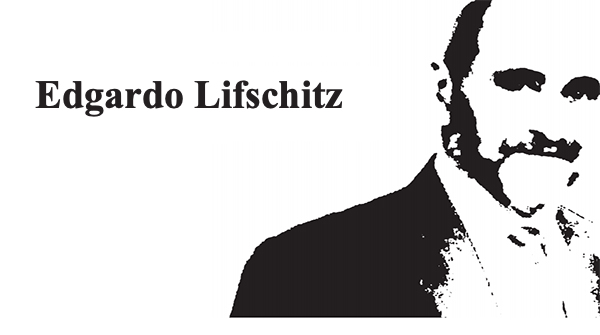
It is precisely at this time that it is fitting to remember the Argentine economist Edgardo Lifschitz (1941-2016). He was one of those who initiated the studies of the so-called “production complexes,” a methodology that acknowledges the antecedents of the “input-output” matrix approach, models developed by the Russian-American economist Wassily Leontief (1906-1999).
Edgardo Lifschitz began his work using the "productive complexes" methodology in Argentina; later, during his exile from the last civic-military dictatorship, he continued it in Mexico, at the Autonomous University of Mexico, Acapulco campus (UAM-A). Upon returning to Argentina, he continued this work at the Ministry of Economy. Finally, he carried out his last projects at the School of Engineering and Natural Sciences (EEyN) of the University of San Martín.
The condensed idea of the analytical methodology is to design a productive map of the marketing of goods and services in a country, based on assembling the chain of relationships established in the generation and distribution of a product or service. The method involves processing empirical data, which is how the network of relationships between the different phases of a country's activities is configured.
Once a representative map of the productive sectors has been drawn up, it is possible to match the business actors that operate in each phase of the activity circuit and, subsequently, determine if the agent has an association (and what form it takes) with a more developed economic group at the national or transnational level.
As a result of applying this methodology, a precise and up-to-date description of material and virtual reproduction is obtained, focusing on the formation of business societies that operate in a specific rural or urban environmental geography.
At this time that Argentina and other countries, especially in Latin America, are going through, the policies that are aimed at overcoming the adverse effects of the epidemic and the socio-economic-financial crisis are hampered by concentrated business groups.
One of the storm fronts is the unjustified increase in prices by businessmen who take advantage of monopolistic positions in some phase of production and/or distribution.
Another problematic issue is the shortage of certain products, a situation that is surely also explained by business concentration at some point in the supply chain.
Another aspect of the transition, considered in the medium term, is achieving increased production within the framework of a fairer income distribution, accompanied by a social policy based on social equality and the right to access basic goods: education, health, food, housing, among others. These aspects require the design of a state intervention strategy that involves:
- Support from social actors who promote employment and industrial development.
-regulate profit margins, preventing the obtaining of extraordinary profits and rents.
-reduce the unproductive phases of the production, distribution and marketing chain.
- Support and development of the social economy sector.
-expand the production of basic goods and services for the disadvantaged segments of the population.
The State's tasks and challenges are far greater. It must act intelligently, decisively, and precisely, using the full force of the law.
To achieve this, the government team must persevere in collecting concrete and rigorous information on the functioning of the real and financial circuits of the economy, determining rural and urban location.
When state intervention becomes active, the work carried out by Edgardo Lifschitz is not only memorable, but essential to guarantee effective, efficient government intervention with specific goals.
[1] Consulting research professor at the National University of Quilmes (UNQ). Co-coordinator of the CLACSO Working Group on Poverty and Social Policies.
If you would like to receive more information about CLACSO's training programs:
[widget id=”custom_html-57″]
to our email lists.

