
“We are in a scenario of strangulation of public universities.”
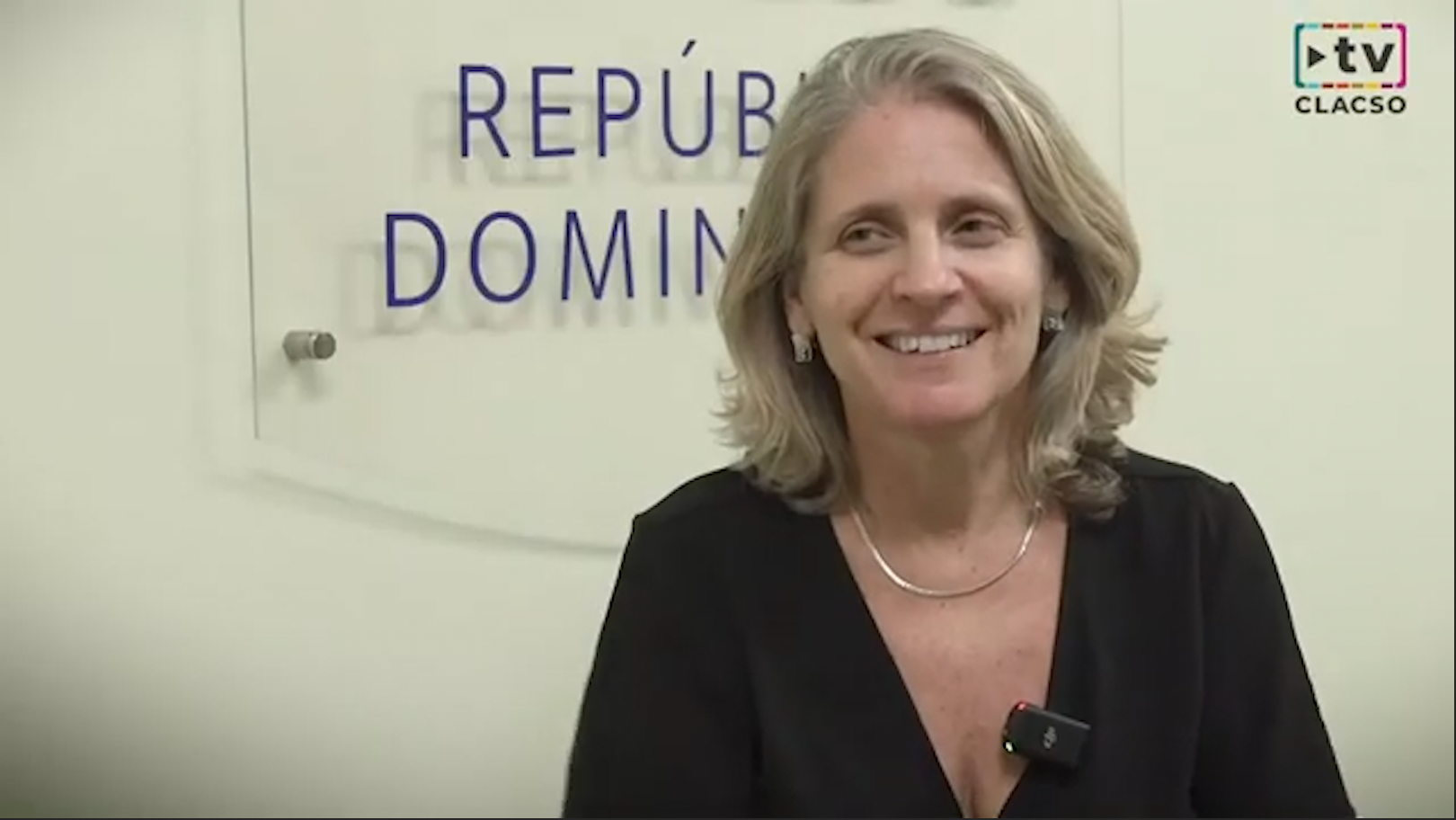
Within the framework of the 2nd International Postgraduate School of the Network of Contemporary Latin American and Caribbean Social Studies, held from October 31 to November 2, prior to the XXXIV ALAS Congress of the Latin American Sociological Association, Ana Laura Rivoir, Uruguayan sociologist, coordinator of the Postgraduate Program in Latin American Studies at the school, spoke with CLACSO.tv.
Referring to the event, the Professor from the University of the Republic highlighted “the diversity of perspectives and the moment of transition and construction that we are experiencing. All these changes in the world, and in Latin America in particular, with millions of events, everything related to socio-ecological issues, the topic of authoritarianism or, to put it another way, the reinvention of democracy…”.
Regarding the above, he noted: “There is also a number of persecutions and strangulations worldwide, especially in public universities, of social science programs. It's a rather complicated scenario that has something to do with the establishment of individualism as a central value for many things. Therefore, sociology, the social sciences, are easy to dismiss. When we know that social complexity has actually been increasing. So, we are living through these challenging times, to put it positively, but very hard, very difficult times. And where new glimmers of hope and new strategies are also emerging, defending existing spaces but also new ways of doing sociology and creating in the social sciences and producing knowledge and teaching.”
“We are living through a complex time for the social sciences, a time that can be one of creation, but we are also aware of the aggression that the social sciences, and sociology in particular, are experiencing, given that we are in the context of ALAS and that I am a sociologist. All of this, in some sense, affected the exchanges, the debates, and I think also an emotional side,” she added.
Interviewed by Gustavo Lema.
If you would like to receive more information about CLACSO's training programs:
[widget id=”custom_html-57″]
to our email lists.

