
Global spaces for the expansion of transnational capital in the Americas
Seminar 1926
Chair: CLACSO
Coordination: Juan Manuel Sandoval Palacios and Alejandro Fabián Schweitzer (GT Borders, Regionalization and Globalization)
Teaching team: Alejandro Fabián Schweitzer, Juan Manuel Sandoval Palacios, Rafael Sandoval Álvarez, Marcela de Lourdes Orozco Contreras, Silvia Carina Valiente, William I. Robinson, Marcela Orozco, Horácio Antunes, Edgar Talledos Sánchez, Luis Martínez, Luz Dary Rivera, Bárbara Jeréz (GT Borders, regionalization and globalization)
Home: 29 / 07 / 2019 | Registration: 04/02/2019 al 27/07/2019
Workload: 12 weeks – 90 hours.
Payment methods
If you have a link with a CLACSO Associated Center:
- Paying in one payment: USD 95 (includes issuance and shipping costs of the digital certificate).
If you have a link with a Network or Institution Associated with CLACSO:
- Paying in one payment: USD 140 (includes issuance and shipping costs of the digital certificate).
If you do NOT have a link with a CLACSO Associated Center:
- Paying in one payment BEFORE 19/07/2019: USD 150 (includes issuance and shipping costs of the digital certificate).
- Paying in one payment: USD 190 (includes issuance and shipping costs of the digital certificate).
Course presentation:
This course will analyze and discuss the theoretical foundations of global capitalism in the current scenario, from the particular perspective from which the concepts of transnational state, transnational capitalist class and global spaces for the expansion of transnational capital, as well as specific spaces or zones of accumulation, are derived.
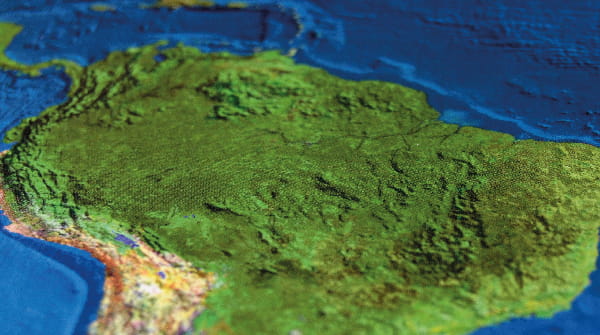
We recognize at least four global spaces in the American continent: 1) the Mexico-United States Border, 2) the region encompassed by the Mesoamerica Project (from south-southeast Mexico to Colombia), 3) the Amazon and 4) the Southern Andean-Patagonian Region.
In this comparative course, we will emphasize how these spaces have been constructed and intertwined. We will study the processes of constitution of "national" classes subordinated to the transnational class, the policies they implement—with varying degrees of conflict—in territories, and the resulting processes of spatial production. We will address the strategies of territorial appropriation and control, as well as the projects that materialize them in the form of strategic plans and megaprojects.
An essential element in our Working Group is the development of action research, which allows us to collaborate with social organizations. For this reason, we will dedicate a module to discussing the question of the subject from critical methodologies, incorporating experiences from social movements.
Contents:
- International and global scenario.
- Global spaces. Definition and presentation of global spaces.
- Research methodology. The perspective of the subjects and the territory.
- Geostrategic plans. Geopolitics of global spaces.
- Specific spaces for capital accumulation.
- Borders and geographical expansion of capital.
- Megaprojects within the framework of the expansion of transnational capital.
- Political ecology of global spaces.
- Political economy of global spaces.
FAQ
The basic requirements for taking a seminar are:
- Availability of at least 4 hours per week to dedicate to the seminar course.
- Internet access.
- Reasonable handling of communication and computer tools.
- Language proficiency in the language in which the course will be taught. The official languages are Spanish and Portuguese.
|
|
Discount for one payment until 16/03 |
In one payment after 16/03 |
|
CM Plenos |
$75 |
$150 |
|
CM Associates |
$95 |
$190 |
|
No link |
$95 |
$190 |

