
School of Evaluators: towards responsible evaluation within the framework of open science as a common good
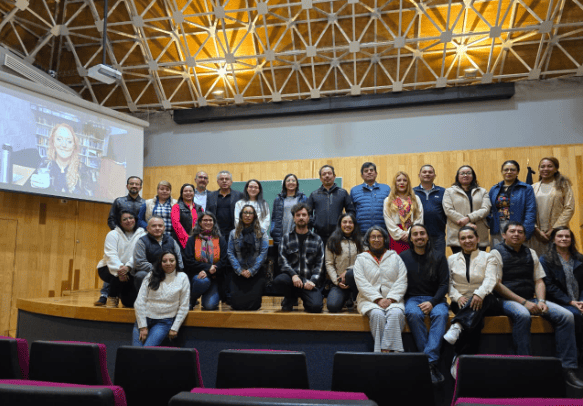
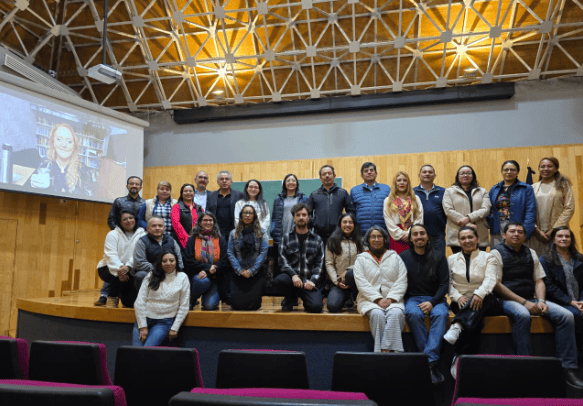
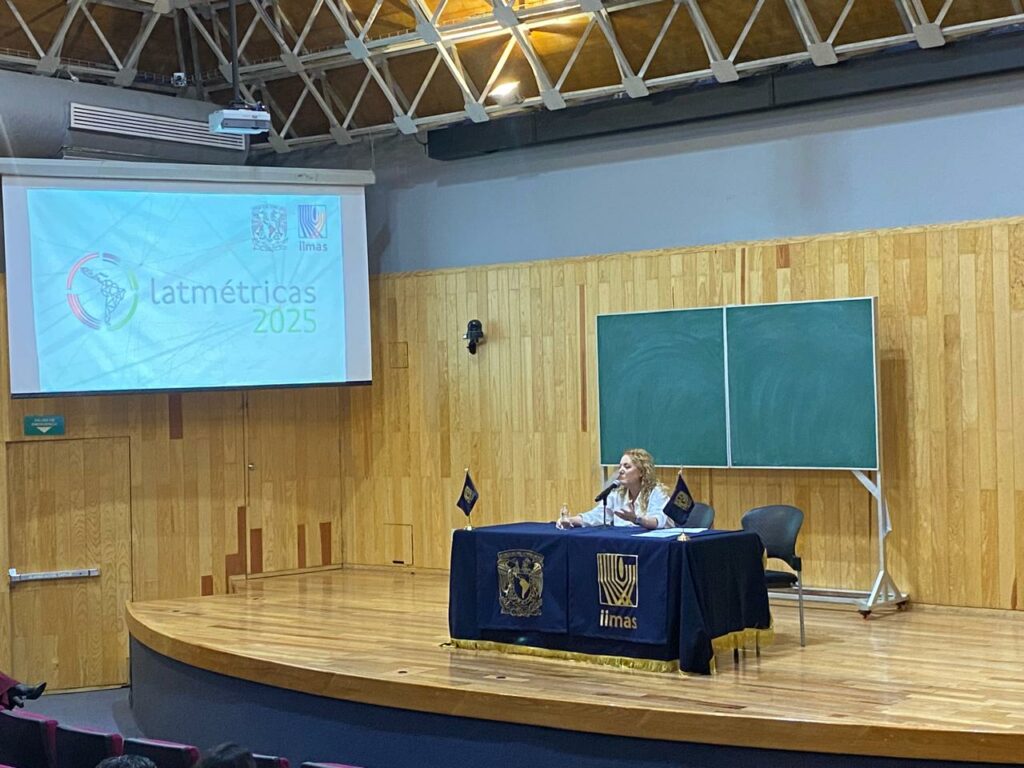
From 3 to 7 November 2025, In CDMX, was carried out FOLEC-CLACSO School of Evaluators, within the framework of the event LATMETRICAS 2025: “Contextual metrics for scientific and technological agendas”, organized by the Institute of Research in Applied Mathematics and Systems (IIMAS) and the Interinstitutional Seminar of Interdisciplinary Studies on Science, Technology and Innovation (SEICTI) of the National Autonomous University of Mexico (UNAM).
The School —titled Intensive seminar on situated and responsible scientific evaluation within the framework of open science as a public and common good— was coordinated by Judith Naidorf (FOLEC coordinator and academic coordinator of the School) and Matías Alcántara (co-coordinator of FOLEC and general coordinator of the School). This new edition consolidates FOLEC-CLACSO as a Latin American training space focused on counter-hegemonic scientific evaluation, aimed at strengthening the analytical and political capacities of researchers, managers, university authorities and actors in science policy in Latin America and the Caribbean, promoting open, inclusive and socially relevant evaluation models.
A hybrid, open and collaborative format
The School was offered in a hybrid and free format , combining in-person classes, synchronous online sessions, and recorded materials for asynchronous work. In-person sessions were held in the IIMAS Auditorium (UNAM), while live online sessions allowed for the participation of faculty from across the region. Recordings and supplementary materials will be available on the CLACSO platform to ensure open and sustained access to the shared knowledge. This pedagogical approach aims to broaden the geographic reach and diversity of perspectives, while promoting the collective construction of knowledge. Participants had access to spaces for dialogue, case studies, guided debates, and activities focused on transforming scientific and academic evaluation systems.
Five modules to rethink scientific evaluation
Over five thematic days, the School addressed the main contemporary debates on responsible scientific evaluation, articulating epistemic, institutional, technological and geopolitical perspectives.
Module 1 – Open Science and Evaluation Criteria
Monday November 3
Teachers:
- Judith Naidorf (CONICET; University of Buenos Aires; FOLEC-CLACSO, Argentina)
- Saray Córdoba González (University of Costa Rica, Costa Rica)
- Arianna Becerril García (Autonomous University of the State of Mexico; Redalyc/AmeliCA, Mexico)
- Mariángela Nápoli (University of Buenos Aires, Argentina)
- Melisa Cuschnir (University of Buenos Aires, Argentina)
This module introduces the normative, political, and epistemological framework of open science as a transformative horizon for the systems of knowledge production, circulation, and evaluation. It analyzes how openness, collaboration, and transparency critically challenge hegemonic models of academic evaluation centered on individual performance and commercial metrics, promoting criteria based on cognitive justice and the commons of knowledge.
Module 2 – Responsible and situated evaluation
Tuesday 4 noviembre
Teachers:
- Matías Alcántara (FOLEC-CLACSO; University of Buenos Aires, Argentina)
- Judith Sutz (University of the Republic, Uruguay)
- Mauro Alonso (CONICET; University of Buenos Aires, Argentina)
This module focuses on the principles and challenges of constructing contextualized, inclusive scientific evaluations committed to the public and common good. From a situated perspective, it analyzes evaluative practices that recognize the diversity of trajectories, languages, actors, and modes of knowledge production, and discusses tools for assessing social and collaborative impacts, promoting scientific autonomy and regional relevance.
Module 3 – Metrics, openness and impacts
Wednesday November 5
Teachers:
- Ismael Rafols (CWTS, Leiden University; INGENIO, CSIC-UPV, Spain)
- Dominique Babini (CLACSO, Argentina)
- Patricia Muñoz Palma (The Reference; ANID, Chile)
- Gabriel Vélez-Cuartas (University of Antioquia, Colombia)
This module critically examines traditional metrics for evaluating academic output and their effects on epistemic diversity and the visibility of knowledge from the Global South. Alternative instruments and regional experiences—such as Redalyc, AmeliCA, and LA Referencia—will be presented, and international proposals from DORA, CoARA, and UNESCO, aimed at developing more open, contextualized, and accountable metrics, will be discussed.
Module 4 – Evaluating the evaluation
Thursday November 6
Teachers:
- Ivonne Lujano Vilchis (DOAJ, Mexico)
- Fernanda Beigel (CONICET; National University of Cuyo, Argentina)
- Laura Rovelli (CONICET; National University of La Plata; FOLEC-CLACSO, Argentina)
- Alejandro Uribe Tirado (University of Antioquia, Colombia)
This module offers a space for meta-reflection on evaluative practices and institutions. It examines national evaluation systems, their dominant criteria, and recent transformations, and promotes the analysis of calls for proposals, scientific journals, and accreditation processes to collectively develop proposals that guide reform toward more democratic, participatory systems that are consistent with the values of open science.
Module 5 – International Experiences
📅 Friday November 7
Teachers:
- Yang Liying (Chinese Academy of Sciences – CAS, China)
- Ma Zheng (Chinese Academy of Sciences – CAS, China)
- Barbara Rivera Lopez (Barcelona Declaration; National Research and Development Agency – ANID, Chile)
- Christian González-Billault (DORA, Chile)
The final module proposes a comparative reflection on the internationalization of science and its implications for evaluation. Through the experiences of the Chinese Academy of Sciences (CAS), the Barcelona Declaration on Open Research Data, and the San Francisco Declaration (DORA), efforts to transform global evaluation systems toward more open, collaborative models that are sensitive to contextual diversity are discussed.
A school within the framework of the Bogotá Manifesto
This edition of the School is part of the political and epistemic horizon of Bogotá Manifesto (2023), promoted by FOLEC-CLACSO together with multiple open science networks and organizations in the region.
The manifesto proposes a comprehensive transformation of evaluation systems, guided by three principles:
- La science as a public and common good, focused on collective well-being and the resolution of social problems.
- La socially relevant evaluationthat recognizes the diversity of knowledge, practices, and contexts of knowledge production.
- La epistemic and technological sovereignty, which promotes open infrastructures, multilingualism and autonomy in the management of data and scientific results.
In this sense, the FOLEC School of Evaluators constitutes a key educational and political instrument to advance the materialization of these principles, acting as a bridge between the regional consensuses expressed in the Manifesto and the concrete evaluation practices in universities, agencies and research centers.
A pedagogical strategy for institutional transformation
In keeping with FOLEC's pedagogical strategy, the School is conceived as a collective learning laboratory , aimed at translating political agreements into concrete institutional practices. Its approach combines critical analysis, collaborative work, and the co-design of policy tools, integrating teachers, administrators, researchers, and evaluation professionals from across the region. From this perspective, training is not merely a space for knowledge transmission, but a mechanism for cultural and institutional transformation, where the values of openness, participation, and cognitive justice that guide FOLEC-CLACSO's work are put into practice.
The FOLEC School of Evaluators reaffirms CLACSO's commitment to a more open, inclusive and socially relevant scientific evaluation, contributing to the consolidation of a sovereign, collaborative Latin American and Caribbean science at the service of the common good.

