
Those deaths that leave us breathless

Mara Viveros Vigoya 1
Racism and intersectionality in the times of Covid-19
Black Feminism has taught us a way of thinking about sexism, classism, and racism together, in their intersecting and deeply intertwined nature, and a way of fighting against them at the same time.
On May 25, in Minneapolis, George Floyd, a 46-year-old African American man , was arrested on suspicion of using a counterfeit $20 bill at a supermarket. Placed on the ground in front of the vehicle of four white police officers who intervened to arrest him, he was suffocated by the knee of one of them, pressed firmly against his throat for approximately eight minutes, while he repeatedly said he couldn't breathe. Shortly after being taken away by ambulance, he was pronounced dead.
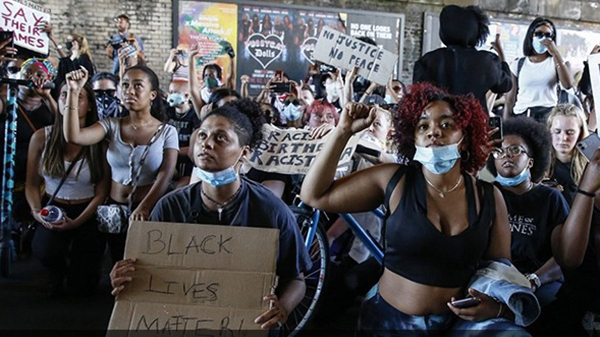
Following the release of the video capturing the scene on social media, a wave of demonstrations and protests erupted, spreading to other cities in the United States and around the world. The incident caused outrage for several reasons: first, because it provided objective evidence of the manner in which he was arrested and how the police officers indifferently ignored his pleas for his life. “I can’t breathe,” were his last words, heard by witnesses at the scene; the exact same words that Eric Garner, another African American man, had repeated eleven times in 2014 to the police officer who put his arm around his neck to restrain him, and who died after his arrest. He was 44 years old and sold cigarettes on a sidewalk in New York.
The similarity between these two cases of police violence and their connections to a long history of abuse, dehumanization, and terror inflicted on Black men to oppress them and their communities is undoubtedly the second reason for the explosion of anger that has been unleashed. These harrowing scenes are neither isolated nor new: the list of Black men of all ages, at different times in American history, as well as Black transgender and gender non-conforming people, who have been victims of police brutality is far too long; and far too many mothers in the African American community are still forced to teach their children, from early adolescence, how to behave in the street, how to dress, and what to do while running in a park so as not to arouse suspicion and become the target of mistakes that could cost them their lives.
The third reason is the social context in which this murder occurred: the Covid-19 pandemic, which laid bare the disproportionate ethnic distribution of the approximately 100.000 victims of the virus in the United States. African Americans are almost three times more likely to die from the virus than members of the country's white, Latino, and Asian communities. And they have more comorbidities, such as diabetes and obesity, linked to poverty. Class and race are closely intertwined in the United States in the inequalities that structure this society and intertwine racism, unemployment, lack of adequate healthcare and decent housing, disproportionate numbers of African American men, women, and children incarcerated, and harsher and longer prison sentences. No one can ignore the color line that continues to fracture American society, nor the old anger against years of mistreatment and discrimination that is expressed in street protests, even amidst a pandemic, knowing full well that the African American community is the most threatened by it.
The massive protests—rooted in grassroots transnational connections and networks that transcend the structure of nation-states—in Amsterdam, Toronto, Sydney, Paris, Berlin, Copenhagen, Dublin, Krakow, and Milan are intertwined with local cases of racial discrimination. The death of George Floyd has transformed his last words into a rallying cry and his image into a symbol of a historic struggle that has been reignited and is now a rallying cry not for a single racial group, but for all people aware that the fight against racism is everyone's responsibility.
Let us hope that the gravity of these events allows us to understand what is at stake behind situations that are also described in our country, Colombia, as isolated and insignificant cases: an example of this is the recent death in Puerto Tejada (Cauca) of Anderson Arboleda, a young Afro-Colombian soccer player, who died after being beaten by a police officer. The blow to his head with a baton was the patrolman's response to Anderson's protest against a citation he received for allegedly violating the national preventative isolation measures during the pandemic. Neither the police nor the municipal administration have commented on what happened so far. But the local community, the neighbors, and the women and men of his family have spoken out and are demanding justice.
The pain and outrage caused by these deaths is, paradoxically, opening some encouraging doors. Expressions of solidarity, street protests defying not only the police but also the disease itself, political mobilization, and the refusal to accept the silencing of news stories like the death of Anderson Arboleda, the political assassinations of Afro-descendant leaders, and the living conditions of Afro-descendant communities that exacerbate the impacts of COVID-19, are acts of resistance against the logic of death and the normalization, denial, or minimization of systemic and everyday racism. Black movements and their allies from all ethnic and racial groups, globally and locally, are cracking that solid block of outrageous injustice that oppresses us and leaves us breathless.
1- School of Gender Studies, National University of Colombia
If you would like to receive more information about CLACSO's training programs:
[widget id=”custom_html-57″]
to our email lists.

