
Surveys on the impact of the pandemic on women
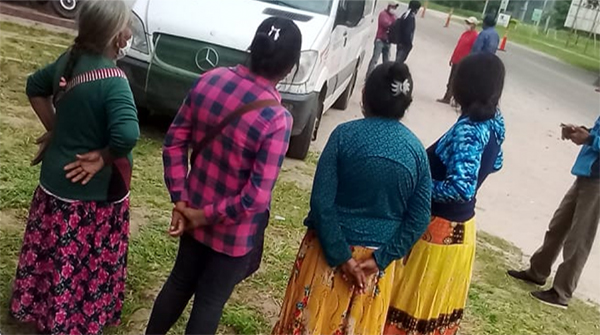
Karina Bidaseca, a researcher at IDAES and CLACSO, is leading an online survey to understand how the lives of the most vulnerable women in Argentina have been reorganized since the start of the pandemic. The initiative is supported by the COVID-19 Unit. Previous studies show that inequalities have increased.
A group of dozens of researchers from various academic institutions have begun a survey on the impacts of COVID-19 on vulnerable women in Argentina, with support from the COVID-19 Unit of the Ministry of Science, the National Agency for Scientific and Technological Promotion (ANPCyT), and the National Scientific and Technical Research Council (CONICET). The project, titled “The Impact of COVID-19 on the Lives of Afro-descendant, Indigenous, Peasant, Migrant, Trans, and Dissident Women, Workers in Cooperatives, the Solidarity Economy, and Low-Income Neighborhoods,” is led by Karina Bidaseca, a researcher at CLACSO and CONICET at the Institute of Advanced Social Studies (IDAES) of the National University of San Martín (UNSAM) and scientific coordinator of the Institutional Networks Oriented to Problem Solving (RIOSP) in Human Rights at CONICET.
The research data source consists of two self-administered online surveys. One is aimed at rural and Indigenous women, and the other at Afro-descendant, migrant, trans, and gender-diverse women, as well as women working in cooperatives, the solidarity economy, and low-income neighborhoods. Both surveys have the same structure: five sections of questions that can be answered in approximately 15 minutes. The first section aims to reconstruct the sociodemographic profile; the second, the impact of the coronavirus on the respondent's life; the third focuses on the distribution of domestic and caregiving tasks; the fourth explores community actions; and the fifth addresses gender-based violence.
FORM: THE IMPACT OF CORONAVIRUS ON THE LIVES OF RURAL AND INDIGENOUS WOMEN
FORM: THE IMPACT OF CORONAVIRUS ON WOMEN'S LIVES
The study aims to reach vulnerable women throughout the country using the "snowball" method, with the participation of more than 100 organizations located in the Autonomous City of Buenos Aires, the Province of Buenos Aires, Misiones, Santa Fe, Córdoba, Chubut, and other provinces. The surveys were distributed via WhatsApp between May 19 and June 1, 2020 (the eighth and ninth weeks of quarantine).
When asked about the project's origins, Bidaseca explained that the COVID-19 emergency is having specific impacts on the most vulnerable populations. “International organizations and researchers are talking about the deepening of inequalities based on class, gender, ethnicity, and race, among others, both within households and in healthcare facilities, hospitals, access to employment and education, and forms of political participation, among other areas. Furthermore, some emerging studies show how rates of gender-based violence, femicides, and transphobic murders have been increasing,” she said.
The professor from UNSAM also explained that the health emergency does not affect women and LGBTQI+ populations in the same way as heterosexual men, but that there are no statistics on this. The report they will produce as a result of this research will seek to address this gap. “In addition to the persistent historical inequalities and the vulnerability of Indigenous, Afro-descendant, and LGBTQI+ populations, there is the lack of statistics that makes the differentiated impact invisible. We felt it was very important to analyze the impact of COVID-19 from an intersectional feminist perspective using a situated, decolonial feminist methodology of participation and action,” Bidaseca stated. In that vein, they also launched the #QuarantineWithRights campaign so that marginalized women and femininity can amplify their voices.
Women who are not experiencing historical injustices, such as Indigenous and Afro-descendant populations, or who are not in precarious employment, vulnerable due to their gender identity, or victims of gender-based violence, are not considered vulnerable in this study. “For this study, vulnerability is structural and intersectional, as conditions of class, gender, race, ethnicity, age, and others multiply these oppressions and make life more precarious. We must keep in mind that COVID-19 disproportionately affects these populations, especially because it exacerbates pre-existing inequalities. This new paradigm of necropolitics, as defined by Achille Mbembe, dictates who should live and who should die,” Bidaseca stated.
The surveys are anonymous and adhere to the ethical guidelines for providing information to Indigenous peoples (ILO). They are not representative of the entire population of vulnerable women because they primarily focus on the situation of women affiliated with over 100 organizations collaborating on the project.
When asked about the collaborative work, Bidaseca said: “We received support from the Extension Secretariat of IDAES/UNSAM, and from each of the National Universities in Córdoba, La Plata, Catamarca, Mar del Plata, Salta, and Chubut, where colleagues and researchers made themselves available. We also received support from RIOSP in Human Rights, created in 2015 within CONICET, the Ministry of Science, Technology and Innovation, the cabinet offices of the Ministries, the National Secretariat for Human Rights, and recently, the Ministry of Gender,” she stated.
This research is an initiative of the IDAES's "Postcoloniality, Border and Transborder Thinking in Feminist Studies" and "UNIAFRO" programs. It is being conducted in conjunction with the "Sociology and Postcolonial Studies: Gender, Ethnicity, and Subaltern Subjects" Chair at the Faculty of Social Sciences (FSOC) of the University of Buenos Aires, with support from the RIOSP (Institutional Networks Oriented to Problem Solving) of Human Rights/CONICET, and the CLACSO South-South Program. The Ministry of Science, Technology and Innovation (MINCyT) supports the research within the framework of actions carried out through the COVID-19 Coronavirus Unit.
In Brazil, the Núcleo de “Gênero e Ruralidades” of the Postgraduate Program in Development, Agriculture and Society – CPDA/UFRRJ, Instituto PACs – RJ, GT Mulheres da Articulação de Agroecologia do Rio de Janeiro- AARJ, Rede Feminismo e Agroecologia do Nordeste, Núcleo JUREMA: Feminismos, participate. Agroecologia e Ruralidades da UFRPE e Casa da Mulher do Nordeste- CMN/ PE, Polo da Borborema e ASPTA – PB, Universidade Federal do Ceará -UFC, Centro de Estudo do Trabalho e Assessoria ao Trabalhador – CETRA/CE, Centro de Pesquisa e Assessoria – ESPLAR/CE, Movimento dos Atingidos por Barragens-MAB do Ceará.
If you would like to receive more information about CLACSO's training programs:
[widget id=”custom_html-57″]
to our email lists.

