
“Decentering from a feminist perspective”
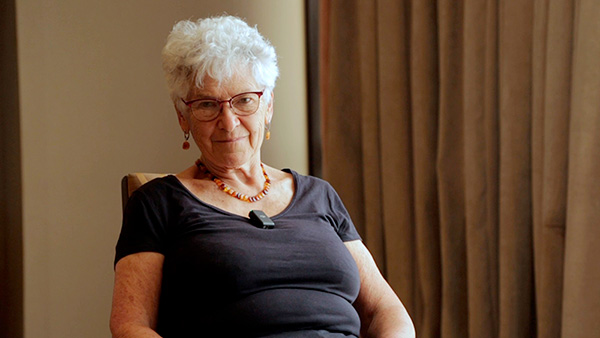
In the context of March, Women's Month, CLACSO Executive Director Karina Batthyány held a dialogue with Argentine sociologist Elizabeth Jelin , whom she introduced as "my teacher since several of her texts", recalling that the Latin American Council of Social Sciences has published her work in the open access collection of Essential Anthologies of Latin American and Caribbean Critical Thought.
When asked about the critical issues facing the social sciences in our region, Jelin considered that “one way to think about it would be to focus on thematic issues, and we can't ignore climate change. It has been somewhat neglected in the history of the social sciences, so bringing it to the forefront now is undoubtedly essential. The social inequalities that are so blatant, so deeply ingrained, so crystallized, so difficult to overcome globally, but even more so in our region, are another major issue. One can approach it thematically. Perhaps for me, more than the specific themes—though these two would certainly be at the top of my agenda—it seems to me that the issue also involves how we approach research and how we frame our questions. There is an aspect that one could say involves an academic responsibility for the advancement of science, to use a broad term, which I don't disregard. I think there is much to be done and much work to be done, especially in the sense of decentering the focus. That is, we come from a Eurocentric academic tradition with a hegemony also held by the The United States, but basically we learned the disciplines and the division between political science, sociology, anthropology, and history, which was an import of a 19th-century European distinction that we bought into and that I now think we have to re-examine. One could say it's a remnant of old imperialism. When I say decentering, I mean trying to find a way to see the world from the local to the global at all scales, but from situated locations, from places that are not universal, because abstract universalism doesn't exist. That's a philosophical current of individualistic liberalism with which we don't entirely agree. So, what we're talking about is knowledge that is situated but that asks the big questions; being situated doesn't mean we get stuck on the small stuff. It's a special challenge for those of us in the Global South.”
“In my career, another decentering was very important, which is from a feminist perspective,” added the author, among many other works, of the CLACSO Essential Anthology: “The plots of time: family, gender, memories, rights and social movements.”
If you would like to receive more information about CLACSO's training programs:
[widget id=”custom_html-57″]
to our email lists.

