Latin American children's critical thinking in the face of the pandemic
Eliud Torres Velázquez [1]
Dedicated to all the boys and girls who will never read this text
The reflections shared here have been partly motivated by CLACSO's initiative "Thinking about the Pandemic" in the writings available on the Social Observatory of Coronavirus since March 2020. They are also a consequence of what we have shared during our mutual confinement with others, on our collective journeys with children and adolescents, experiencing personal anxieties and professional concerns in this turbulent context. At times (sometimes for such prolonged periods) it is difficult to delve with clarity, but the freshness of children's perspectives, feelings, and activities grants us certainty and serenity in mind and heart.
If the virus dies with soap…why don't they make a vaccine with soap?!
Making various aspects of COVID-19 and the pandemic understandable to children has been an important task for adults at all levels. We have seen leaders and high-ranking officials dedicate specific sessions to explaining things in detail and answering children's questions and concerns. However, on more than a few occasions, this has been done with the traditional condescending tone of adults, encouraging children to meekly accept protective measures such as staying home, behaving well, doing their homework, and obeying. The message is that they shouldn't be spoiled, that they shouldn't question adult impositions and inconsistencies, or point out their irresponsibility; that they should only offer their opinions when asked and that they shouldn't doubt that everything is for their own good.
Initiatives have also emerged during the pandemic to understand children's opinions and perceptions, making it clear that children want to be involved, to confirm that their voices matter, that they want to participate in decision-making, that they have a unique perspective on the coronavirus, and that they can creatively express their opinions in many ways. They want to actively contribute to improving the situation at home and in the community, or to the fight against the spread of the virus. This has led to a surge in webinars, discussions, online talks, and expert conferences on the importance of listening to children, the value of their willingness to collaborate, their sense of solidarity with those who are struggling, and their critical thinking regarding the actions of adults and governments.
From time to time, thoughtful adult discourses on serious and complex topics give way to the frank and fresh opinions of children. Government authorities say they listen to their voices and implement their proposals, while the media gives space to children's experiences that showcase their actions as social beings. And while it is essential to advocate for, lobby for, and demand social policies in favor of the most vulnerable children, many Latin American children cannot wait for a welfare state that may never arrive, nor for water, food, electricity, or internet access. This is why Luis Ángel decided to take to the streets to exchange his toys for food in Mexico City , or why Lautaro confronts the consequences of the pandemic by running a soup kitchen for other children in the province of San Juan, Argentina. And why Santiago, as a remote learning assignment, conducted his own survey to explore what children and adults think about what would happen if there were a world without humans.
So, suddenly, just suddenly, faced with the grim prospect of the post-pandemic future, it seems that all those little drawings for children to express themselves, consulting them to give voice to the voiceless, answering their curious questions, or (im)patiently listening to their opinions, don't change much. Although it's clear and undeniable that making children visible during the pandemic is essential, as they are a generation much more aware of their human rights than previous ones, but whose ability to exercise them will be limited initially due to health restrictions. However, it's necessary to ask other kinds of questions, because, as Noam Chomsky has reflected, "It's time to teach children to understand the world." Questions that are needed include, for example, what role do banks like the one that promoted that video by the American linguist and critic play?
To accompany children's reflections and encourage intergenerational questioning about some of the many injustices and problems associated with the causes, persistence, and consequences of the presence of the coronavirus in Latin America and the world: why staying home is not for everyone, how informal workers are coping, what expressions of various forms of domestic violence are increasing, who has caused inequalities in health and education care, what differences exist between countries in addressing the disease, what the regional consequences will be, what conditions exist between those who live in cities and in rural areas, etc.
Towards critical thinking in children…
It's not that adulthood awakens children's critical thinking, since children always generate ideas and suspicions about everything they experience, witness, and learn. The point is to share perspectives, accompany their investigations, and mutually enrich their ideas about what's important, overcoming the barrier of immediacy and urgency—as Mafalda would know. Children's perception of the risks surrounding the virus is, in many cases, clear, which shouldn't surprise us or lead us to try to justify to them adult behavior that denies the pandemic or doesn't comply with health measures to reduce the risk of spreading the infection. In other cases, it is essential to discuss with children why some people don't stay home because they don't have the means, or to do analytical exercises on the media content that has flooded us with information of all kinds and in every format, provoking mixed feelings.
Therefore, decoding pandemic information is arduous but necessary, because how can we share with children the tools they need to identify fake news when adults are primarily responsible for creating and spreading it? In many cases, there's little understanding of the consequences of spreading unverified information, walking that fine line with fake and malicious news that also makes us victims of ignorance, as seen in " The sum of all fears: Covid-19 in WhatsApp chains in Chiapas ."
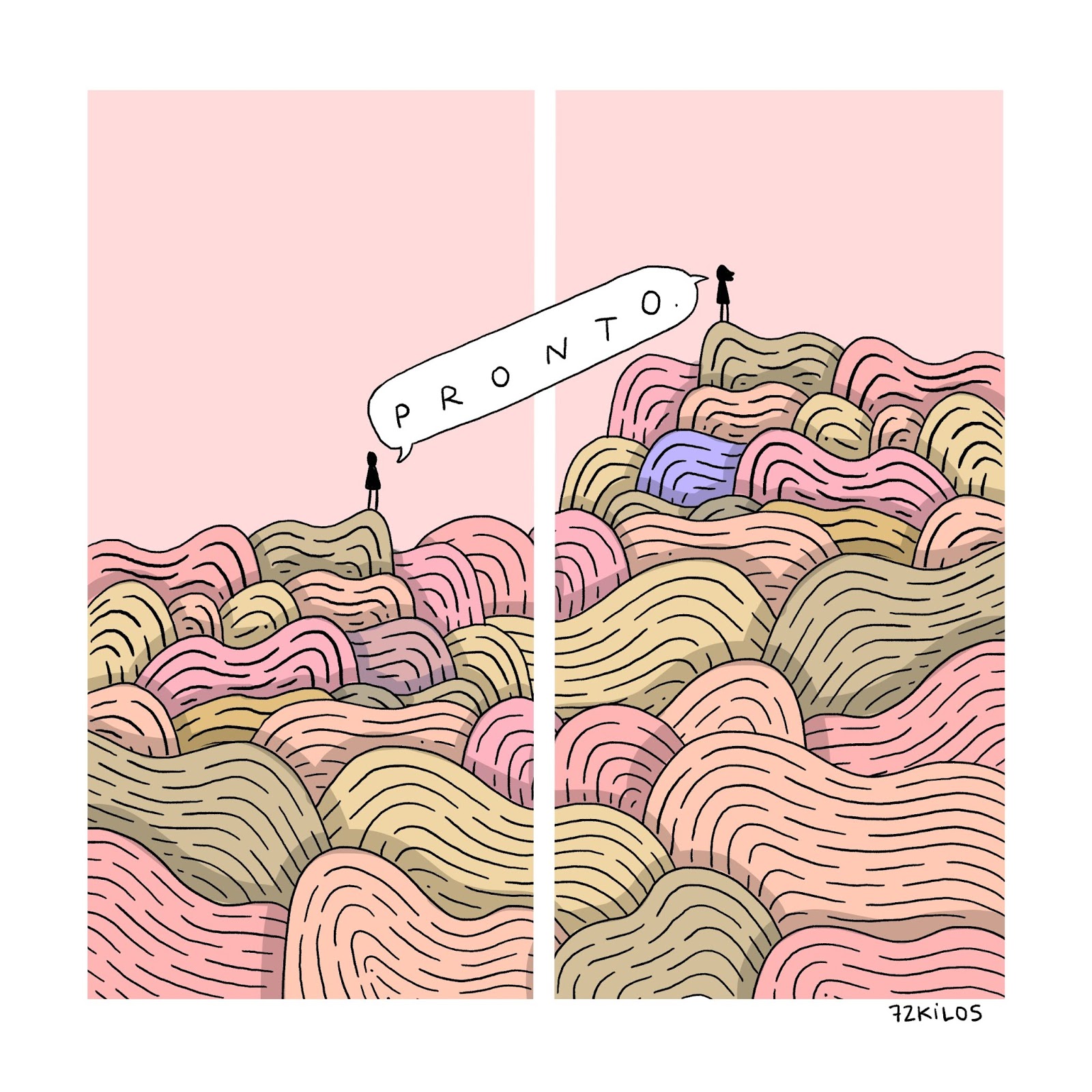
But it's also vitally important to share memes with children, who spend more time in front of screens during lockdowns, since humor, laughter, irony, and intelligent, metaphorical language are essential parts of critical thinking. Given their visual appeal, illustrations and graphic art are also a powerful way to convey critical content to children, such as Banksy in Game Changer ; Liniers thanking readers of Mafalda in Happy Birthday, Quino ; the 72kilos comics summarized in PRONTO ; and even Gran OM with his poster We Will Learn More From Children Than What Adults Teach Them . Thus, the terrible nature of the pandemic loses its somber force in children's subjectivities through understanding and reflection, playfulness and creativity, arts and cultures, patience and tenderness, always tenderness as an opposition to the multiple forms of violence that children experience at an early age, so as never to normalize them.
But also, through analytical exercises to make aspects of this complex reality comprehensible, it's helpful to ask children many questions, especially in the current context of the pandemic. How do we explain to them that the exorbitant numbers of infected and deceased in Brazil and the US are largely a consequence of their presidents' disregard for health measures and underestimation of the virus? Why point out that the concept of a good death and a good life went to hell in a handbasket in Guayaquil during April when cardboard beds became coffins due to the Ecuadorian government's incompetence? Or how do we tell them that in Colombia and Mexico, in recent months, there have been just as many or even more deaths due to political, criminal, and gender-based violence? Some may think it's unnecessary, or not yet time, to let them know that the number of children orphaned by the pandemic isn't so far removed from the number of those orphaned by femicides, murders, and state violence.
How can we explain to children that, despite being a small country and suffering an economic blockade for over 40 years, Cuba sends medical missions to support 16 countries? Why emphasize that during the pandemic, the harassment of the Venezuelan people by the US government and military has not ceased, exacerbating the crisis? Or what is the point of telling them that the Bolivian and Chilean governments are manipulating the pandemic for electoral purposes? There will also be voices arguing that children are not yet old enough to get involved in political matters or to be encouraged to value international solidarity.
Why try to make them understand the deepening global economic crisis that is coming and that will plunge thousands more Latin American families into poverty and hunger? Or how can we draw their attention to national socio-political issues and events in our Latin American societies without adult impositions or dogmatism? Is it worthwhile to share with children the outrage over the injustices and suffering of our Latin American peoples, exacerbated during this pandemic? Fortunately, we have many experiences in Latin America and the Caribbean that show us that the development of critical thinking among Latin American children is progressing.
In Chile, high school students took to the streets in March under the slogan "Student Backpack Protest," demanding universal access to higher education. The government, of course, ended the student backpack protest in Valparaíso with the use of pepper spray . Meanwhile, children from China and Cuba exchanged messages of support in the face of Covid-19, joining their voices and drawings in a video to express solidarity, support, and respect for the Caribbean nation. At the same time, Brazilian children from families belonging to the Landless Workers' Movement drew , cultivated , collaborated , and sang with adults while harvesting and donating tons of food from their crops to families affected by the crisis.
In southeastern Mexico, since March, due to the coronavirus, the EZLN has closed its Caracoles (Zapatista autonomous communities) and called for continued struggles , recommending that its organizational structure follow extraordinary hygiene measures, while youth health and education committees do the same in their communities. In San Cristóbal de Las Casas, Melel Xojobal is supporting Indigenous working children in defending their rights by consulting them about their experiences during the pandemic . East of Mexico City, the Francisco Villa Popular Organization of the Independent Left (OPFVII) is carrying out community activities with children, presenting the story " The Days When Everything Stopped" and launching "More Crops in the Face of Crisis!" by preparing raised beds for its urban agriculture project.
In Argentina, the Andando Network keeps its doors open, offering food and peace of mind in neighborhoods, seeking new ways to strengthen ties because community centers are also essential . Meanwhile, young educators from La Miguelito Pepe organize and run soup kitchens in working-class neighborhoods because they know that the solution to emancipation is collective, without adult-centrism. The Latin American and Caribbean Movement of Working Children and Adolescents (MOLACNATS) also highlights the solidarity of the people in its Open Letter to National and International Organizations regarding the COVID-19 pandemic , and draws attention to the irrelevant information they receive and the impact it has on their mental health.
The National Coordination of Working Children and Adolescents (CONNATs) of Paraguay raises its voice in its May Day statement: "We want to be heard and we demand that our rights and those of our families be respected." They ask, "When will the government address the root causes of poverty?" Meanwhile, in Peru, the Movement of Working Children and Adolescents of Christian Workers (MANTHOC) emphatically declares, "We want you to count on us to overcome this global crisis," in its May 1st statement . For its part, the National Movement of Organized Working Children and Adolescents of Peru, along with other national youth organizations, expresses its concern and proposals regarding the pandemic in a statement , in addition to promoting dialogue with representatives of international organizations and requesting a meeting with President Vizcarra . And in Venezuela, grassroots groups from the Regional Coordination of Working Children and Adolescents show on their social network CORENATs that, accompanied by collaborators, they are organizing to work, study and play in the midst of the Covid-19 pandemic.
Thus, in these and many other Latin American experiences of collectives, organizations, and communities building autonomy and resistance in defense of lands and territories, the pandemic has also served to strengthen collective bonds and foster care for nature and common goods with children. With words and actions, learning and labor, smiles and heartfelt devotion, flowers and songs, organized adults accompany younger generations so that this global crisis, exacerbated by the coronavirus, may also be a period of shared lessons, both rebellion and tenderness. May this time of pandemic be a learning experience for life to flourish, as dictatorships were for many Latin American children, the war against oblivion for Zapatista children, or the disappearance of the Ayotzinapa students for so many other children. We must add complexity with imagination, diversify to multiply acts of mutual care and to encourage children's critical thinking, even though we adults sometimes lack the energy and patience to cope with so many worries and uncertainties. Because no one can steal our hope; if solidarity is the tenderness of the people, then tenderness is our righteous anger.
[1] Co-coordinator of the CLACSO Working Group on Critical Studies of Rural Development. PhD in Rural Development from UAM Xochimilco, Mexico.
If you would like to receive more information about CLACSO's training programs:
[widget id=”custom_html-57″]
to our email lists.