
The future of evaluation and publication in open science contexts
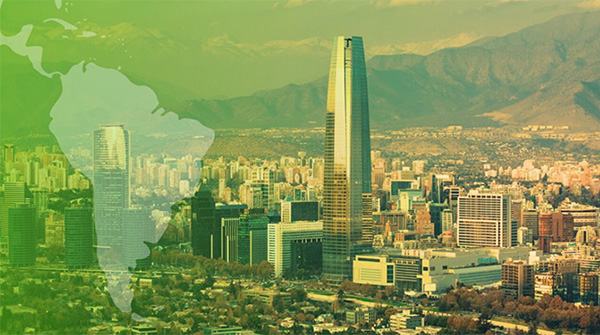

On Wednesday, April 10, Karina Batthyány, Executive Director of CLACSO, participated as moderator of the panel “The future of evaluation and publication in open science contexts” within the framework of the “Dialogue on global knowledge for Latin America and the Caribbean”, organized by the International Council for Science.

She was accompanied by Pablo Vommaro, Academic Secretary of CLACSO; Dominique Babini, Member of the steering group of the ISC project “The future of scientific publications” and Open Science advisor of the Latin American Council of Social Sciences; Graciela Díaz de Delgado, Member of the ISC RFP-LAC Liaison Committee, Vice-President of the International Union of Crystallography; Daniel Peluffo, Member of the IUPAB and RFP-LAC Committee; Silvina Ponce, Member of the ISC RFP-LAC Liaison Committee, IUPAP/ CODATA Cooperation; Elisa Reyes, Member of the ISC RFP-LAC Liaison Committee, Social Sciences Advisory Council, Brazilian Academy of Sciences; Rodrigo RoaExecutive Director, Chile Data Observatory, CODATA; and Laura Rovelli, Member of the ISC steering group “The future of research evaluation”, coordinator of the Latin American Forum on Research Evaluation (FOLEC-CLACSO).

On Thursday 11th, Karina Batthyány She participated in a panel discussion on the next steps for the regional focal point for Latin America and the Caribbean: turning dialogue into action. She shared the closing remarks with Helena Groot, Director of the ISC Regional Focal Point for Latin America and the Caribbean (RFP-LAC), President of the Colombian Academy of Exact, Physical and Natural Sciences; Cecilia Hidalgo, President of the Chilean Academy of Sciences; Salvatore Arico, Executive Director of the International Scientific Council; Ana RadaCo-Chair of the ISC Regional Focal Point Liaison Committee for Latin America and the Caribbean; and Luis Sobrevia, Co-chair of the Liaison Committee of the ISC Regional Focal Point for Latin America and the Caribbean.
Peer review of research results is the primary mechanism for evaluating science, a fundamental component of scholarly communication and research assessment. It therefore makes a crucial contribution to the scientific record. Peer review processes have long been developed to ensure, as far as possible, the robustness and rigor of scholarly publications, but the shortcomings of pre-publication peer review have recently been well documented. Increasingly diverse publication modes are making peer review more challenging, such as preprints on platforms that use post-publication peer review, and also in repository collections other than journals.
Global Knowledge Dialogue for Latin America and the Caribbean
From April 9th to 11th at the Icon Hotel in Santiago, Chile.
If you would like to receive more information about CLACSO's training programs:
[widget id=”custom_html-57″]
to our email lists.

