
The Future of Democracy
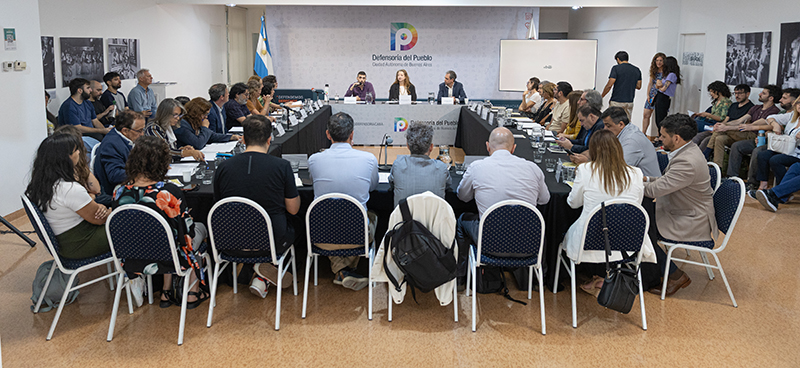
On December 16, the Ombudsman's Office of the City of Buenos Aires presented the results of an investigation that addressed the expectations, meanings and values regarding democracy, its institutions and rights.
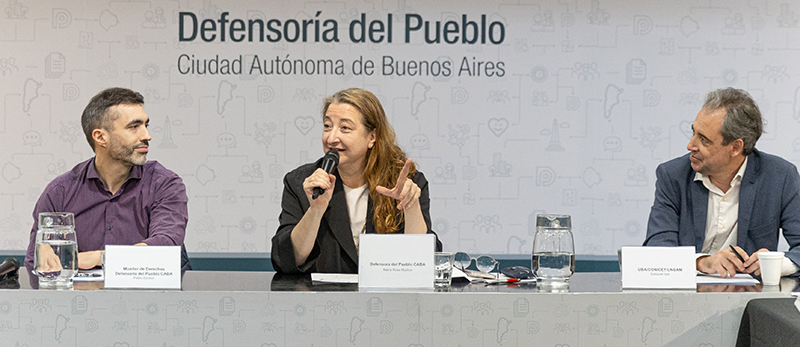
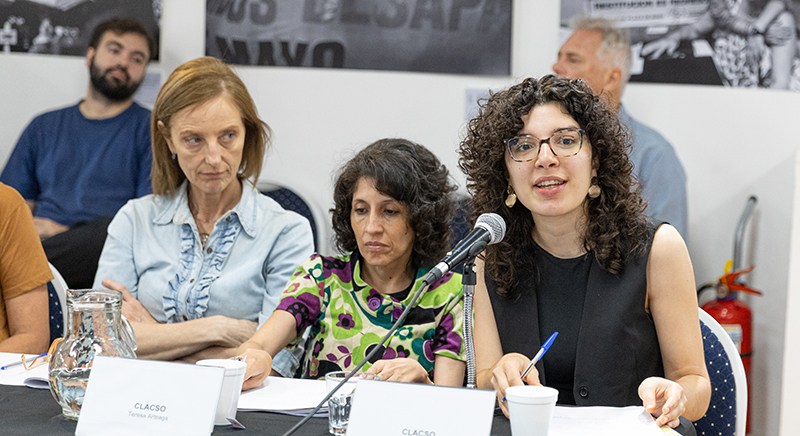
The activity was led by the Ombudsman, María Rosa Muiños , and by the head of the organization's Rights Monitor, Pablo Gordon , and was attended by Sofía Torres (Projects and Cooperation) and Teresa Arteaga (Research Promotion) representing CLACSO .
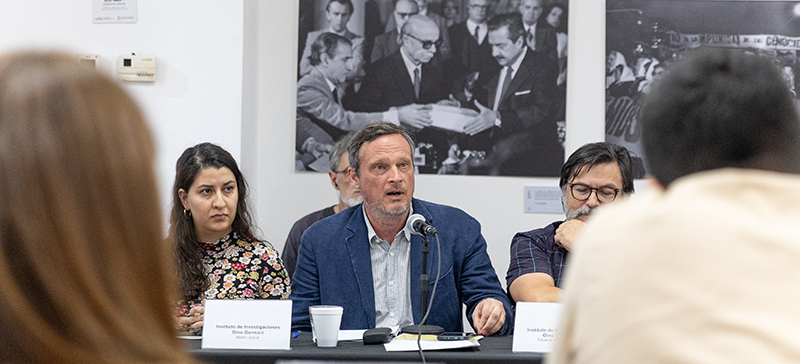
Also participating in the meeting were Lucía Álvarez (FUNDAR), Martín Plot (UNSAM-CONICET), Flavia Costa (TecnocenoLab-UBA), Larisa Kejval (Director of Communication Sciences-FSOC-UBA), Alejandro Bottini Bulit (Institute of Public Policies-UNTREF) and Martín Unzué (Director of the Gino Germani Institute-UBA), among others, as well as members of the Association of Ombudsmen of the Argentine Republic (ADPRA) and the Ombudsman's Office of the City of Buenos Aires.
The study, conducted in collaboration with the Laboratory for Studies on Democracy and Authoritarianism (LEDA) at the University of San Martín (UNSAM), falls under the "Democracy of Rights" research line. The central objective of this initiative is to reflect on the state of democratic principles in the City and to promote a debate around the construction of a substantive democracy.
The research employed a qualitative methodology based on ten focus groups conducted between September 25 and 29, 2025, allowing for the collection of information from a wide range of socioeconomic, territorial, and generational perspectives. The central themes of the analysis revolved around the principles of equality and solidarity, xenophobia, and human rights.
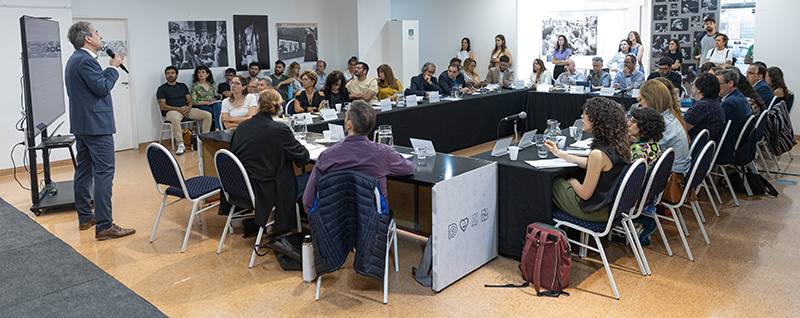
Following the presentation of the report by Ezequiel Ipar (LEDA), a round table was held with specialists, academics and representatives of civil society to discuss its findings.
Agreement between CLACSO and the Ombudsman's Office of the City of Buenos Aires
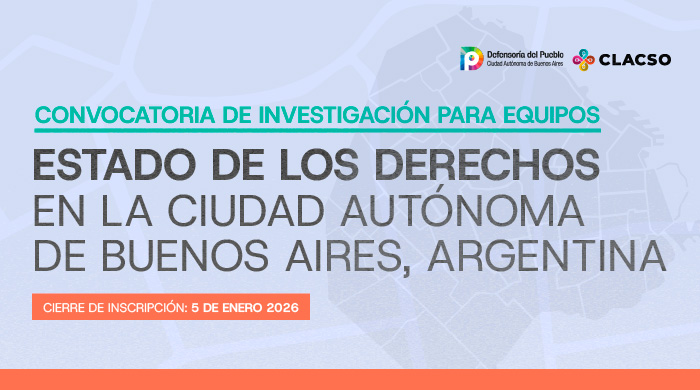
On September 5, the Latin American Council of Social Sciences (CLACSO) and the Ombudsman's Office of the Autonomous City of Buenos Aires (CABA) signed a Framework Cooperation Agreement to establish the foundation for joint initiatives aimed at strengthening research, knowledge production, and the promotion of human rights. Within the framework of this agreement, both institutions agreed to jointly launch a Research Call on the State of Human Rights in the Autonomous City of Buenos Aires.
REGISTRATION CLOSES: JANUARY 5, 2026
MORE INFORMATION AND REGISTRATION
This initiative seeks to promote research that contributes to diagnosing, analyzing, and understanding the progress and setbacks in guaranteeing fundamental rights in the City, identifying structural or persistent violations, and proposing public policy responses to address them. It aims to generate useful and socially relevant knowledge that can inform public administration, citizen oversight, and accountability.
The spirit of this initiative is rooted in the collaboration between academia, public policy, and social organizations. It stems from the recognition that knowledge is not produced solely within academia; it is also constructed through state practices, public institutions, and spaces of collective action. Therefore, this initiative promotes a dialogue of knowledge and experiences that strengthens the design of public policies based on consistent data and contributes to a broader, more pluralistic, and contextualized understanding of the exercise of rights.
The Ombudsman's Office of the Autonomous City of Buenos Aires, in its role as a human rights watchdog and promoter of rights, is mandated to build reliable, transparent, and accessible public information that allows for the evaluation of the city's situation not only from a legal perspective, but also in terms of budgetary investment and the effectiveness and impact of public policies. In this sense, the knowledge generated by this call for proposals seeks to enrich this institutional function, offering diagnoses and analyses that can be used both to propose modifications to existing policies and to design new strategies aimed at guaranteeing the rights of all people who live in and travel through the city of Buenos Aires.
The Autonomous City of Buenos Aires, home to just over three million inhabitants but receiving a daily influx of several times that number, presents a complex scenario where urban problems, territorial, social, and economic inequalities, as well as various forms of rights violations and exercise, intertwine. Conducting research situated within this local context will not only allow for a better understanding of its internal dynamics but also enable comparisons and lessons learned from other Latin American capitals, contributing to the regional debate on the right to the city, social justice, and democratic strengthening.
This call for proposals also responds to the need to deepen the production and use of public data, moving beyond purely statistical or descriptive analysis. The aim is for the research results to allow any resident to evaluate the state of public policies in terms of the effective fulfillment of rights, and to generate concrete proposals for improvement in the face of any shortcomings. In this way, the research teams will provide strategic input for dialogue between the Ombudsman's Office and different government agencies, contributing to the formulation of fairer, more inclusive, and more effective policies.
This call for proposals represents a commitment to public science and to knowledge as a common good. The results produced with these public funds will be open access, free of charge, and reusable, both for policymakers and for social organizations, citizen movements, and academic communities. In this way, the aim is to foster a virtuous cycle of knowledge production, dissemination, and appropriation, geared towards strengthening the right to the city, democracy, and rights-based public policies.
Finally, this collaborative construction between CLACSO and the Ombudsman's Office of the Autonomous City of Buenos Aires reaffirms the importance of inter-institutional alliances for the promotion and protection of human rights, and consolidates a space where science, public management and civil society converge in the search for a more equitable, more democratic and more public city.

