
The right to care in urban strategic planning
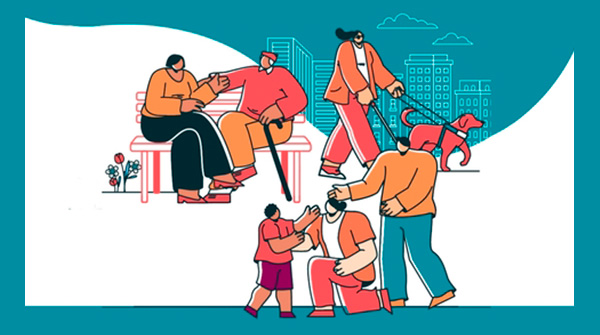

On Wednesday, July 16, the guide “The right to care in urban strategic planning: How to address it? Practical guidelines for local governments” was presented, one of the products of the project “Incorporation of the right to care in urban strategic planning, from a gender perspective”, an undertaking of the Ibero-American Center for Strategic Urban Development (CIDEU) in alliance with CLACSO.

This is one of the six projects selected in the II Call for Projects for the programs, initiatives and projects attached to the Ibero-American Cooperation, carried out by the Ibero-American General Secretariat – SEGIB, with the aim of supporting those who contribute to improving groups in vulnerable situations.
The publication was prepared by CIDEU, the Latin American Council of Social Sciences and UN Women, with the support of Mercociudades and the assistance of AECID.
The opening remarks were delivered by Lorena Larios , Secretary of the Ibero-American Cooperation Secretariat (SEGIB); Pablo Vommaro , Executive Director of CLACSO; Cecilia Alemany , Deputy Regional Director of UN Women for the Americas and the Caribbean; and Rosa Arlene María , Executive Director of CIDEU. CLACSO researcher Paola Mascheroni , along with Laura Pérez Castaño , both co-authors of the guide, will explain how they approached the topic, how the guide is structured, and how it can be used by different levels of local government.

In his speech, Pablo Vommaro specified "two fundamental axes from CLACSO's perspective for thinking about the right to care in an urban and regional context:
– Collaboration between academia, public policy, and social organizations: At CLACSO, we emphasize the importance of situated, pluralistic, and socially engaged knowledge production that informs the formulation of public policies based on evidence, local experiences, and diverse knowledge. It is crucial to recognize that public policies on care must be grounded in robust and diverse empirical knowledge, incorporating statistics, community experiences, and life stories. This implies building bridges between academic spaces, local and national governments, and the social organizations that sustain care networks in their communities every day. Furthermore, we must center the dimension of inequality in care: who provides care, under what conditions, for whom, and with what support. This leads us to consider policies at the local and community levels, as well as from an intersectional, gender, and class perspective.
– South-South and South-North Articulation: Another central axis is the need to strengthen the dialogue of knowledge and policies among countries of the Global South, and also between the South and the North. Latin American experiences have much to contribute in this regard: Uruguay's care policy is a pioneering example that has sparked great interest in other countries, including in Europe. Spain, for example, can draw on these lessons to rethink its own strategies. In a context of global crisis and setbacks in international cooperation mechanisms, it is urgent to revalue these exchanges, build learning and collaboration networks, and maintain spaces for dialogue that recognize the power of critical thinking from the Global South. 👉 This webinar, with more than 160 people connected, is a concrete example of this articulation in action: pluralistic, regional, interdisciplinary, and committed.
The guide provides conceptual and practical tools for strategic city planning to incorporate the guarantee of the right to care, promoting its redistribution and socialization; it develops practical and methodological recommendations for planning, incorporating the feminist approach to care; and it presents inspiring practices for incorporating the gender and care approach into urban strategic planning in Ibero-America, in its different phases (design, implementation and evaluation).
Webinar times: 9:00 Central America, Mexico / 10:00 Colombia, Ecuador, Panama, Peru / 11:00 Bolivia, Cuba, Chile, Puerto Rico, Dominican Republic, Venezuela / 12:00 Argentina, Brazil, Paraguay, Uruguay / 16:00 Portugal / 17:00 Spain

If you would like to receive more information about CLACSO's training programs:
[widget id=”custom_html-57″]
to our email lists.

